Exploring the Monuments of Angkor
This Angkor Travel Guide is created to help you discover what the ruins of Angkor, and offer you useful information on how to get there.
The Monuments of Angkor stand as one of the greatest ruins of an ancient civilization. The ancient Khmers have been so prolific in temple building that even today, scientists are discovering and studying newly ruins that have previously been lost under rubble and the jungle.
Today the ruins of Angkor lend themselves to a new life, as a major tourist attraction and top income earner for the otherwise poverished nation of Cambodia. The majority of these ruins are located in the vicinity of the town of Siem Reap, especially the area to the north of the town, that today forms the Angkor Archaeological Park. But not all the ruins are confined within the archaeological park. Those of the Roluos Group are located to the east of Siem Reap, Banteay Srey and Kbal Spean are to the north while Phnom Krom is by the banks of the Tonle Sap.
On this page I am pleased to share with you one of the most complete documentation of the monuments of Angkor. I create it out of the many visits I have made to the ruins, as well as through the help of a few people who wrote to me after seeing this page. If you have explored Angkor, and would like to help me make the information richer, I look forward to hearing from you.
The monuments of Angkor was the first property in Cambodia to be inscribed as a UNESCO World Heritage Site. Since then, the World Heritage Committee has inscribed a second site, the Temple of Preah Vihear.
1 February 2010 Update: I have been assisted by an online friend, Nic Boulton, who has just explored some of the lesser-known ruins of Angkor. I am added to this list the sites which Nic has explored.
Angkor World Heritage Site Inscription Details
Location: N 13 26 E 103 50
Inscription Year: 1992
Type of Site: Cultural
Inscription Criteria: I, II, III, IV
Angkor Unesco World Heritage Site is the star attraction of any visit to Siem Reap. Let me take you to explore the ruins of Angkor from the comfort of your desk. On this page is one of the most comprehensive list of the monuments of Angkor that is available on the Internet. Each of the thumbnail below is linked to detailed explanation on the sight mentioned. If you are reading this as part of your planning for a trip to Angkor, note the star rating below. The top three monuments at Angkor are given 4 stars. Next comes monuments of major interest, 3 stars; monuments of significant interest, 2 stars; and monuments of minor interest, 1 star. Please be aware that these are my own rating of the monuments, based on my personal preference, and forms part of my recommendation to you, as you prepare to visit Angkor.
   Top 3 Monuments at Angkor
  Monument of Major Interest
 Monument of Significant Interest
Monument of Minor Interest
Obscure Monument of Limited Interest
Angkor Hotels
Everybody stays in the town of Siem Reap, and from there make excursion to explore the ruins. Before you book your hotel in Siem Reap, it is wise to compare prices offered different hotel booking websites. You will be surprised to find that the same hotel room is priced differently at different sites. So do your homework! Use this free Siem Reap Hotel Search Engine to look at and compare prices offered by different booking sites for your hotel rooms. That way, you can make an informed decision that will stretch your travel budget in Angkor.
Moving About Angkor
It's too time consuming to walk from Siem Reap to the ruins. You are better off hiring either a bicycle or a motorcycle, or get a tuk tuk to drive you around. You can make the arrangements when you are in Siem Reap.
Food in Angkor
In front of many major ruins are stalls selling food and drinks. The biggest are located in front of Angkor Wat and across from the Terrace of the Elephants at Angkor Thom. These are usually local fare peppered with a generous supply of roadside dust. If you can't stomach that, then you should head back to your hotel in Siem Reap for lunch, and return for the afternoon sojourn.
Elephant Rides in Angkor
You won't get far, but at least you travel in style, like the Khmer kings of old. Elephant bookings can be done at their stations at Bayon and at the foot of Phnom Bakheng.
And now, the Ruins of Angkor
|
 | Ak Yum
A small, out-of-the-way ruin which happens to be the oldest in the Angkor area.
|
|
 | Angkor Thom   
Ancient Khmer city with many significant ruins within its walls.
|
|
 |
Angkor Wat    
The largest temple ruin in the world, Angkor Wat is the biggest and most significant sight in the whole area.
|
|
 |
Bakong  
An early Angkor ruin from the Rolous Group, Bakong is the prototype pyramid temple that set the style for more to come.
|
|
 |
Baksei Chamkrong 
A relatively insignificant ruin located close to the south gate of Angkor Thom.
|
|
 |
Banteay Kdei  
A huge, sprawling monastery complex, Banteay Kdei is one of the significant ruins.
|
|
 |
Banteay Prei 
A small, unimpressive, and incomplete ruin located close to Neak Pean.
|
|
 |
Banteay Samre  
A smaller version of Angkor Wat, Banteay Samre is slightly out of the way, but worth a visit to appreciate its excellent carvings.
|
|
 |
Banteay Srei    
Although much out of the way and small in size, Banteay Srei, with some of the most exquisite carvings in Angkor, is very much one of the star attractions.
|
|
 |
Baphuon  
The world's biggest jigsaw puzzle, the Baphuon is one of the biggest pyramid temples in Angkor, but is still undergoing massive restoration.
|
|
 |
Bayon    
A favourite among many visitors, this Temple of Stone Faces is the icon of Angkor.
|
|
 |
Chapel of the Hospital 
One of the two ruins of hospital chapels still standing in the Angkor area.
|
|
 |
Chau Say Tevoda 
This small ruin to the east of Angkor Thom is similar in design to Thommanon, located on the opposite side of the road.
|
|
 |
East Mebon  
A temple that once stood on an island surrounded by the now dry manmade reservoir East Baray.
|
|
 |
Hariharalaya 
Ancient Khmer City that gives rise to the ruins of the Roluos Group.
|
|
 |
Jean Commaille's Tomb 
Tomb of the first director of the conservation of Angkor.
|
|
 |
Kbal Spean 
Very much out of the way, Kbal Spean are carvings of linggas on the Siem Reap river flowing down Phnom Kulen.
|
|
 |
Krol Ko 
An insignificant ruin not far from Preah Khan.
|
|
 |
Krol Romeas 
A small Angkor monument connected with the water channelling of the East Baray
|
|
 |
Kuk Dong 
Prasat Kuk Dong is an obscure ruin to the south of Prasat Prei Monti.
|
|
 |
Kutisvara 
One of the most insignificant - and difficult to find - ruin in the Angkor area.
|
|
 |
Lolei 
An early Angkor ruin from the Rolous Group.
|
|
 |
Mangalartha 
One of the most obscure ruins in Angkor, Mangalartha requires some searching to find.
|
|
 |
Neak Pean  
Neak Pean is unique in its design among Angkor ruins.
|
|
 |
North Khleang 
One of the ruins in Angkor Thom is an advanced state of dilapidation.
|
|
 |
Phimeanakas  
Phimeanakas is a steep pyramid temple with a local legend associated to it.
|
|
 |
Phnom Bakheng   
A favourite site for sunset views of Angkor Wat, Phnom Bakheng is a state temple of an early Angkor empire, similar to the Bayon.
|
|
 |
Phnom Krom 
Out of the way, and requires climbing, Phnom Krom rewards visitors with scenic views of the surrounding Angkor region.
|
|
 |
Prasat Bat Chum 
Off the beaten path, Prasat Bat Chum is a small insignificant ruin.
|
|
 |
Prasat Bei 
An obscure temple between Phnom Bakheng and the moat of Angkor Thom.
|
|
 |
Prasat Kravan  
Prasat Kravan is significant for its carved reliefs on bricks.
|
|
 |
Prasat Prei 
An insignificant laterite ruins near Neak Pean.
|
|
 |
Prasat Prei Monti 
Obscure Angkor ruin within the Rolous Group.
Photo Credit: Benny Yap & Nic Boulton
|
|
 |
Prasat Prei Monti 
An insignificant early ruin in the Rolous Group.
|
|
 |
Prasat Suor Prat 
They appear impressive from afar, but these twelve towers are not impressive when viewed up close.
|
|
 |
Prasat Top 
An insignificant ruin within Angkor Thom.
|
|
 |
Prasat Totoeng Thngai 
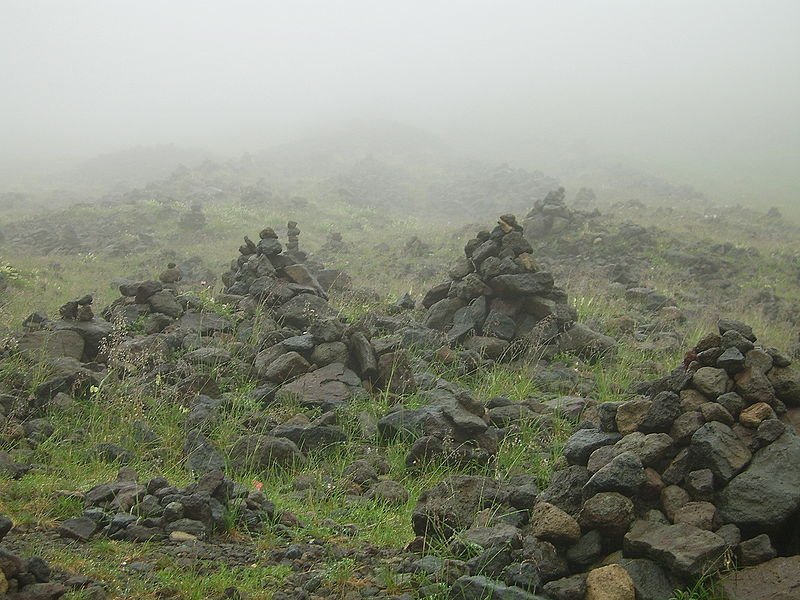
Stonehenge-like ruins on the southern part of the Roluos group.
Photo Credit: Nic Boulton
|
|
 |
Prasat Trapeang Phong 
Prasat Trapeang Phong is a lone sanctuary to the south of Prasat Prei Monti.
Photo Credit: Nic Boulton
|
|
 |
Preah Khan   
A massive monastery complex, Preah Khan has much to offer in terms of variety. It is the only ruin in Angkor with a two-storey structure.
|
|
 |
Preah Ko 
The first major temple of the Rolous Group, of early Angkor.
|
|
 |
Preah Palilay 
Tucked away from view, Preah Palilay is a tower of sandstone and laterite in Angkor Thom.
|
|
 |
Preah Pithu 
Preah Pithu is not one, but five small, insignificant temple ruins grouped as one.
|
|
 |
Pre Rup  
Temple mountain with beautiful carving of false-doors on its gopuras.
|
|
 |
Roluos Group 
Early Angkor monuments located near the village of Roluos.
|
|
 |
Royal Palace of Angkor Thom 
Nothing much remains of the royal palace, except for its stone walls and a few ponds.
|
|
 |
South Khleang 
Like the North Khleang, an insignificant ruin within Angkor Thom.
|
|
 |
Spean Thma 
Remains of a stone bridge from the Angkor period.
|
|
 |
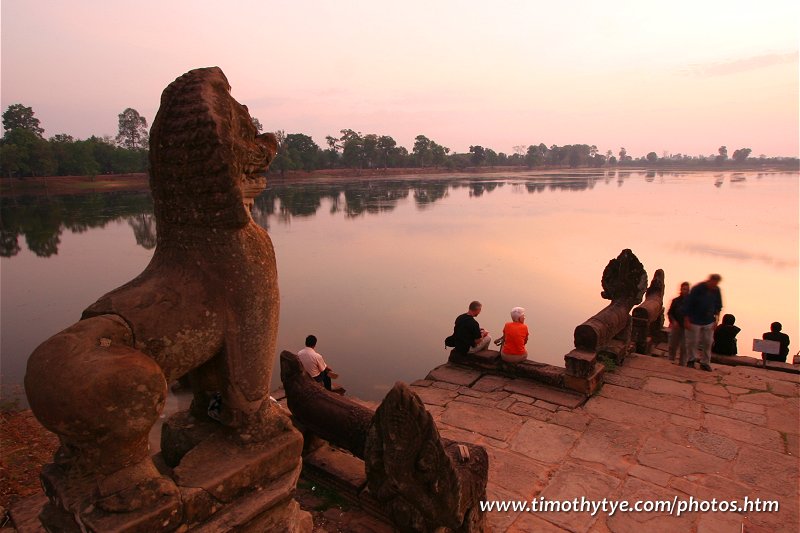
Srah Srang  
One of the smallest baray, Srah Srang is significant as a site for viewing sunrise in the Angkor area.
|
|
 |
Svay Pream 
Svay Pream is an obscure ruin to the south of the Roluos Group.
Photo Credit: Nic Boulton
|
|
 |
Ta Keo  
Huge in size, but relatively inferior in its carvings, Ta Keo is quite likely an incomplete Angkor temple.
|
|
 |
Ta Nei 
Located deep in the jungle, Ta Nei is difficult to find.
|
|
 |
Ta Prohm   
A beautiful temple complex, Ta Prohm is famous for being left in the state of disrepair. This is where you find giant fig trees wrapping their roots over the ruins.
|
|
 |
Ta Prohm Kel 
Ta Prohm Kel is another of the two hospital chapels remaining in the Angkor area.
|
|
 |
Ta Som 
The farthest temple ruin within the Grand Circuit, often given a miss by those in a hurry.
|
|
 |
Tep Pranam 
A long walkway with the Buddha statue at the end, Tep Pranam is one of the less significant sights in Angkor Thom.
|
|
 |
Terrace of the Elephants  
An impressive platform carved with marching elephants, a centrepiece of Angkor Thom.
|
|
 |
Terrace of the Leper King  
This terrace is significant more for its base carvings rather than for the statue of the Leper King (which incidentally, is a replica).
|
|
 |
Thma Bay Kaek 
A small, obscure ruin between Baksei Chamkrong and the south moat of Angkor Thom.
|
|
 |
Thommanon 
Almost identical to Chau Say Tevoda, Thommanon is a small, attractive temple east of Angkor Thom.
|
|
 |
Vat Preah Ngok 
Buddhist chapel to the northwest of the Bayon.
|
|
 |
Vihear Prampil Loveng 
Buddhist terrace to the east of the Royal Palace of Angkor Thom.
|
|
 |
West Baray 
The biggest manmade reservoir in Angkor, the West Baray is still a massive body of water today.
|
|
 |
West Mebon 
Difficult to reach, West Mebon is an insignificant ruin surrounded by the West Baray.
|
|
|
Sights in the Vicinity of the Angkor Ruins
Introducing Angkor
View Larger Map
The Angkor Archaeological Park, to the north of Siem Reap, is a UNESCO World Heritage Site, and the main focus of visitors coming to view the ruins of Angkor.
Angkor. The name conjures images of the exotic, distant from our everyday existence. Whether it's sunlight on Angkor Wat, or the parting of rain-drenched foliage to unveil the stone faces of Bayon, Angkor has enthrilled visitors over many generations. With calm finally settling on the troubled lands of the Khmers, a new wave of visitors can now come up close and admire the works of a mighty civilisation, lost, but now rediscovered and once again appreciated.
The word Angkor is a corruption of the Khmer word nokor or ongkor, which means "capital". It is derived from the Sanskrit nagara, the same word that yielded the Thai nakhorn and the Malay negara and negeri. As its name indicates, Angkor is a city, an ancient one of massive scale.
The Angkorian period in Cambodian history is generally considered to extend from AD 802 to 1431. These dates should be treated as open-ended, as there were Khmers in the Angkor region before it became a capital, and Angkor was not completely deserted when the capital was moved, first to Oudong then to Phnom Penh.
Angkor Location
The temples of Angkor are located in the vicinity of the town of Siem Reap. The name Siem Reap means "The Siamese are defeated". It is the main town where all the hotels and creature comforts are available. Except for the Roluos Group of temples, which are 13kms east of Siem Reap, the majority of the important ruins are all located 7-25km north of Siem Reap, with the closest and biggest being Angkor Wat.
Visiting Angkor
To visit the ruins of Angkor, particularly those within the archaeological park, you will need an Angkor Pass which is available for durations of one day (US$20), three days (US$40) and seven days (US$60). The pass is obtainable at the checkpoint enroute to Angkor Wat. For those getting multiple-day passes, a photograph of you will be shot at the checkpoint itself, and printed onto the pass, which acts as a souvenir of your visit to the Angkor Archaeological Park. At time of updating this page (June 2009), the authorities are in the process of modifying the rules so that in future (perhaps by the time you read this), visitors holding the 3-day pass can use it on any 3 days of a week, and those holding the 7-day pass can use it on any 7 days of a month. Visiting hours are from 5:00am until sunset. There's a US$30 to US$40 fine for not possessing a valid pass.
Is Cambodia safe? As the founder of AsiaExplorers, I would say it is. Naturally, one should be cautious at all times, the same as one should be back home. I have walked the streets at night without fear of harm. Unless you take reckless risks, you should be assured of a safe and enjoyable trip.
'Angkor' literally means 'Capital City' or 'Holy City'. 'Khmer' refers to the dominant ethnic group in modern and ancient Cambodia. In its modern usage, the term 'Angkor' has come to refer to the capital city of the Khmer Empire that existed in the area of Cambodia between the 9th and 12th centuries AD, as well as to the empire itself.
|
|