This is the Country Guide for Cambodia. If you are preparing for a trip to Cambodia, read also the Cambodia Travel Guide for other useful tips.
Cambodia is a destination that presents a unique travel experience. Torn apart by years of civil war, during which time whole cities were drained of its population, and most of its interllectuals were brutally murdered, Cambodia has crawled out of the abyss, rediscovered peace, and is tasting the fruits of tourism. And with tourism, prosperity.
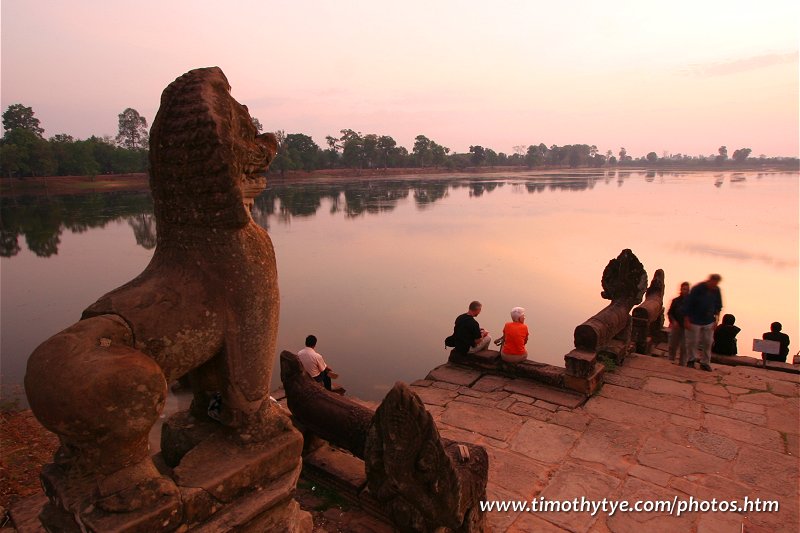
There is much to see in Cambodia. This is the country where you find Angkor, surely one of the biggest religious monuments in the world. The only way to appreciate the magnitude by which Angkor was built was to pay it a visit, to walk the stone causeway towards Angkor Wat, to admire the bas-reliefs and the apsaras, to absorb the atmosphere around you.
There is more to Angkor than simply Angkor Wat. Although it is the biggest and most famous sight in the Angkor area, there are dozens of other Angkor ruins that are worth visiting, many of these in various degree of restoration. Yet each presents its unique style. Indeed a visit to Angkor is hardly complete if we confine ourselves to only Angkor Wat. At AsiaExplorers, we will show you all the major ones.
The ruins of Bantaey Srei is one of the many highlights of a tour to Angkor
Phnom Penh
And then there's Phnom Penh. Despite years of apocalyptic rule under the Khmer Rouge, when the whole city was depopulated, and its people marched off into the countryside to work -- many to their death -- the city was becoming alive once more. Today we can once again admire its blend of Cambodian and French architecture. Sidewalks cafes are once again operating near the riverbank of the Tonle Sap River.
Phnom Penh is also the place to visit the reminders of those dark Khmer Rouge years. They manifest in the form of the Genocide Museum, which was once a school, and the Killing Fields. I am not showing any photographs of the Killing Fields, however, out of respect to those who died there. Nevertheless, there's lots else to thrill you, including a very detailed section on the ruins of Angkor.
If you are looking for souvenirs, Cambodia is famous for its stone carvings. In the town of Siem Reap, you will come across numerous replicas of Jayavarman VII, the most famous Khmer king from Angkorian period.
Photographs of those who lost their lives, on display at the Genocide Museum in Phnom Penh
Quick Facts
Cambodia covers 181,035 sq. km (69,900 sq. miles). Located 7 hours ahead of Greenwich Mean Time (GMT), it is bordered by Thailand, Vietnam and Laos. The capital is Phnom Penh. The language spoken is Khmer. Theravada Buddism is practised by 90% of the population of 11 million. The currency is called the riel. As of October 6, 2005, 3958 riel = US$1.00. Electricity runs on 220V AC Circuit running on two-prong flat or round sockets. International Dialling Code is 855.
Climate
The southwest monsoon between May and October brings heavy daily rainfall. The northeast monsoon between November and March brings cooler temperature and lower rainfall. Coolest months are between November and January. Driest months are January and February, while the wettest months are September and October. The best time to visit is during the cool season. April is the hottest.
Geography
Two water features dominate the Cambodia landscape: the Mekong River and the Tonle Sap (great lake). The Mekong enters Cambodia from Laos, near Stung Treng. It flows for around 500km (300 miles) across Cambodia, growing to 5m wide in some places, before passing into Vietnam on its way to the South China Sea. The river splits into two in Phnom Penh, the first major division as it forms a delta. The broader, northern branch retains the name Mekong (or rather, Lower Mekong), while the southern branch is known as the Bassac River.
Getting there
The main international gateway for flights are Phnom Penh's Pochentong Airport and Siem Reap Airport. Those arriving by road enter via Poipet on the Thai border, and Moc Bai and Chao Doc on the Vietnamese border.
Attire
As Cambodia is hot the whole year round, it is unnecessary to bring a lot of thick clothing. A raincoat is useful during the monsoon season. If you are Angkor, be prepared for a lot of climbing around, so wear good firm shoes. I would recommend a hat and sunblock as well.
Food
I love Cambodian food. It is difficult for me to imagine how from 1975 to 1978, over a milion people in Cambodia starved to death. But their starvation has nothing to do with the fertility of the land, but more a direct consequence of gross incompetence of the then Khmer Rouge government of Democratic Kampuchea.
Cambodian cuisine borrows heavily from its Thai neighbours and Chinese immigrants. French colonial influence is still apparent in the form of the baguettes that are ubiquitiously available, even on dusty roadside stalls. Most of the upscale restaurants in Phnom Penh and Siem Reap are Chinese.
The following are some of the popular Cambodian dishes:
soup: somla machou banle (sour fish soup), somla machou bangkang (sour and spicy prawn soup, akin to the Thai tom yam), somla chapek (pork soup with ginger), moan sngor (chicken and coriander soup),
dishes: nun banh chock somla khmer (rice-noodle in Khmer brooth) is a common Cambodian breakfast. Other popular dishes include nun banh chok tuk kerry (rice noodles in a curry broth), hamok (fish with coconut milk steamed in banana leaf, saich moan chha khnhei (stir-fried chicken with ginger), somla machou saich koh (sour beef stew). Other dishes and specialities include an sam jruk (sticky rice wrapped with pork and mungbean). A Cambodian delicacy is pong tea kon, fertilised duck egg containing an embroyo, a definite acquired taste. Grilled (aing) dishes include grilled fish (aing trey), grilled chicken (moan aing), grilled beef (saich koh aing) and so on. Common condiments are prahok (fish paste), tuk trey, which is fish sauce similar to the Thai nap pla and the Vietnamese nuoc mam but with ground roasted peanuts.
Dances
Dance has a particularly long history in Cambodia, dating back to beyond Angkor period. Carved on the walls of Angkor Wat and many other Angkor ruins are celestial dancers called apsaras. Dance as an artform suffered a major setback during the Khmer Rouge regime. Under Pol Pot, an orchestrated attempt was made to destroy the Cambodian Royal Ballet. Musicans and dancers were brutally killed. Fortunately one or two dancers survived this holocaust, as did Princess Bupphadevi, favourite daughter of King Sihanouk, who was in exile in France. Since the collapse of the Khmer Rouge regime, the princess has been instrumental in helping the Royal Ballet rebuild.
Classical Khmer dance form bear a striking resemblance to that of the Thai. Training takes many years, and the dances involve elaborate costumes and headdresses.
Music
Visitors to ruins such as the Ta Prohm may come across disabled musicians playing by the footpath. This is another manifestation that music plays an integral role in Cambodian society. Music has long flourished in both royal and commoner circles. Among the traditional musical instruments are the pinn (angular harp), korng vung (circular frame gongs), skor yol (suspended barrel drum), chhing (small cymbals) and sralai (quadruple-reed flute). These items developed into the pinn peat ensemble.
Architecture
While the rest of Southeast Asia was still very much undeveloped jungle, the Khmers have achived their pinnacle in architecture, constructing elaborate and beautiful temple complex between the 6th and 15th centuries. By comparison, modern Cambodian temple architecture is a disappointment.
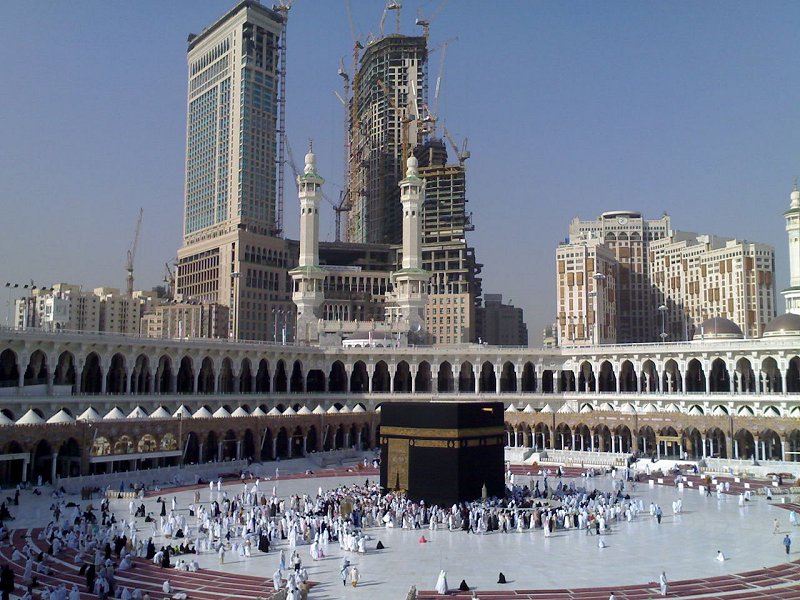
Many modern temples were destroyed or desecrated by the iconoclastic Khmer Rouge regime between 1975 and 1979. Fortunately, the Royal Palace and Silver Pagoda were spared, probably because Sihanouk was in house arrest there. Elsewhere, temples were blown up, Buddha statues decapitated. Angkor temples were spared, however, though they do bear bullet marks, and their statues lose their heads to looters.
The temple architecture of ancient Khmer, both the Hindu and Buddhist, is readily identifiable. Building materials include laterite surmounted by structures of sandstone and/or stucco-covered brick. Elaborate carvings on the lintels and bas-reliefs feature scenes from the Hindu pantheon, commonly the Churning of the Ocean of Milk.
A central feature of the classical Khmer temple is a stylised representation of Mount Meru from Hindu mythology. Main entrances faces the rising sun, the East, with the notable exception of Angkor Wat, which faces west. Entrances are marked by a decorated gateway, called a gopura. The central temple is set within several concentric enclosure walls, and is usually characterised by the presence (in the case of Hindu temples) of the lingam, the male phallic symbol, and the female yoni. Another common figure from Hinduism is Nandi, the bull, which is the mount of Shiva, and the garuda, the half-bird, half-human mount of Vishnu. The deities represented are Shiva, Vishnu, Brahma, Parvati or Uma, the wife of Shiva, their sons Skanda, the god of war, and the elephant-headed Ganesh, god of knowledge.
Hari-Hara, a particularly Khmer deity, is a composite of Shiva and Vishnu. When Buddhism gradually replaced Hinduism in the 11th century, images of Buddha and scenes from Ramayana were used in temple consecration and decoration.
What to Buy
The town has Siem Reap has an abundance of souvenir awaiting visitors, and hard a temple ruin is without vendors selling their wares. Among the usual utems for sale are stone carvings of Jayavarman VII, picture postcards, travel books, silk scarfs, and other trinkets.
Unesco World Heritage Sites in Cambodia
The above logo denotes that a site is designated a World Heritage by Unesco. The sites inscribed into the World Heritage list in Cambodia is:
Angkor (1992)
Newspapers in Cambodia
The following are newspapers published in Thailand that are available on the web:
AsiaExplorers provides you one of the most detailed documentation on Angkor, Unesco World Heritage Site, for you to explore from the comfort of your desktop.
About the Author: AsiaExplorers is researched and written by Timothy Tye. We take reasonable care to check and verify the accuracy of the content. However, we disclaim any responsibility for any inconvenience, mishap, injury or death resulting from following the advice provided directly or indirectly by AsiaExplorers and the comments on its pages. All the photographs in AsiaExplorers are available for publication. Please contact AsiaExplorers at the following email address for your enquiries: