Prasat Kravan
@ Prasat Kravanh, Cardamon Sanctuary


The sight is located within Angkor. To prepare for your visit, read the AsiaExplorers Angkor Travel Guide for useful information. Visitors to Angkor stay at the town of Siem Reap. If you are looking for budget accommodation in Siem Reap, use the Cambodia Budget Accommodation Guide to find a place to stay.

Built in the first half of 10th Century
by King Harshavarman I (reigned circa 910-923)


Prasat Kravan means
"Cardamon sanctuary"


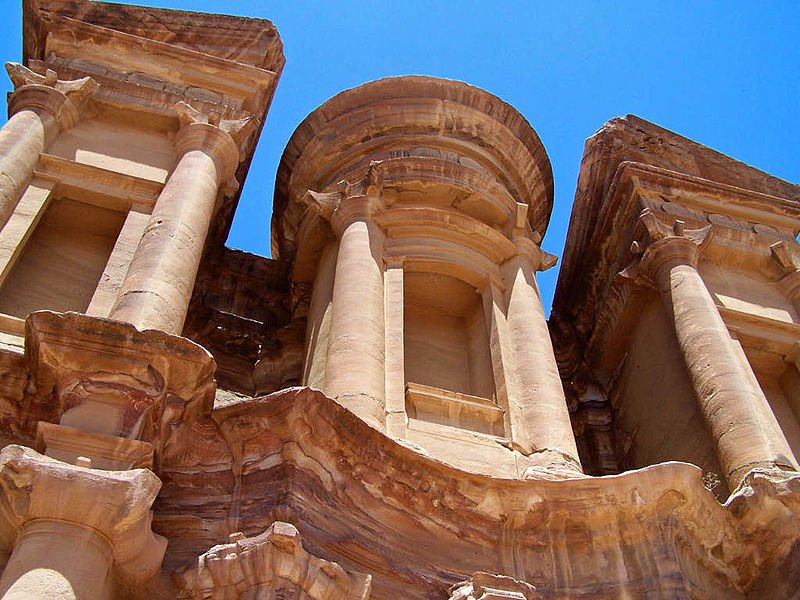
Prasat Kravan is a brick structure reknowned for its remarkable brick sculptures, a unique and very different style from the other temples at Angkor. I have visited it more than once, and on my last visit, I was fortunate to be able to photograph it against a very blue sky (see picture above).


Prasat Kravan


The name Prasat Kravan is a modern name. It means cardamon sanctuary, and refers to a cardamon tree that stood there. It was built by high officials during the short reigns of Harshavarman I or Isanavarman II. It was one of two such temples - the other is located south of Phnom Penh, and is called Prasat Neang Khmau. Both Prasat Kravan and Prasat Neang Khmau are dedicated to Vishnu.

Prasat Kravan consists of five sanctuary towers or prasats arranged in one row, from north to south. They face east, as do most Angkor temples, and all stand on the same platform. In front of the five prasats is a terrace with the base of what used to be the gopura.

Today only the central and the southernmost prasats have still a superstructure, which consists of receding tiers, each step smaller than the before. The towers were restored in the 1960s, and today Prasat Kravan appears clean and meticulously upkept. During the restoration process, it was natural that the restorers had to introduce bricks to the temple that are not part of the original. These bricks have the marking CA on them, representing Conservation Angkor.

No mortar was used in the construction of Prasat Kravan. Instead the Khmer technique of that period called for the use of a unique vegetable gum to hold the bricks together. There are two things to look for and admire when you explore this temple.

First of all, look at the lintels and the octagonal colonettes at the front entrance of all the five sanctuaries. while the sanctuaries themselves are of bricks, the lintels and colonettes are of sandstone, and they stand out as being of a different colour. The best preserved lintel is on the southernmost sanctuary. It shows Vishnu on a garuda, and the garuda is clutching the head of a naga.

Only two of the five prasats have interior carvings. These are the northern and central prasats. The motif on all three walls of the central prasat is Vishnu. The left wall shows Vishnu in the guise of a dwarf, or Vamana avatara, stepping over the ocean, which is represented by the wavy lines below him. In his four arms are the four attributes: discus, lotus, mace and conch shell. On the wall directly in front is another Vishnu carving, this one having eight hands, with six rows of attendants, with images of reptiles under him. The Vishnu on the right wall is shown riding the garuda.

The northernmost prasat also has its three walls carved. Here we see Lakshmi, Vishnu's consort. The wall on the left shows a four-armed Lakshmi holding her attributes. Attendants knelt before the deity.


Another view of Prasat Kravan.


Prasat Kravan, as seen from the terrace in front of it.


Front façade of Prasat Kravan.


The brick towers of Prasat Kravan are hollow - here's a view looking up from the inside.


The carving depicting Vishnu Crossing the Ocean at the central sanctuary of Prasat Kravan.


More carvings on the walls of the central sanctuary shows an eight-armed Vishnu with attendants, left wall, and Vishnu on Garuda, right wall.


Inscriptions on the doorway of Prasat Kravan.


CA on the brick stands for Conservation Angkor, denoting new bricks added when restoration was carried out.


How to go to Prasat Kravan

Most tuk tuk driver will be familiar with the route to Prasat Kravan. If you are travelling independently from Siem Reap, the most straightforward way to reach Banteay Kdei is to take the road from Siem Reap to Angkor Wat. When you see the moat of Angkor Wat, turn right (not left, turning left takes you to Angkor Thom). After a short distance, you will reach Prasat Kravan on your right.


Angkor, Unesco World Heritage Site

Exploring Angkor, Unesco World Heritage Site

AsiaExplorers provides you one of the most detailed documentation on Angkor, Unesco World Heritage Site, for you to explore from the comfort of your desktop.

Angkor, Unesco World Heritage Site


Siem Reap

Siem Reap Travel Guide

If you are visiting Angkor, it's almost definite that you will be staying in a hotel or guesthouse in Siem Reap. You will probably also need to hire a tuk tuk to take you around. Click the thumbnail on the left to view vital details to make your stay in Siem Reap more pleasant.

Siem Reap Travel Guide


Expedia.com


Copyright © 2003-2008 AsiaExplorers.  All rights reserved.

About the Author: AsiaExplorers is researched and written by Timothy Tye. We take reasonable care to check and verify the accuracy of the content. However, we disclaim any responsibility for any inconvenience, mishap, injury or death resulting from following the advice provided directly or indirectly by AsiaExplorers and the comments on its pages. All the photographs in AsiaExplorers are available for publication. Please contact AsiaExplorers at the following email address for your enquiries: