The sight is located within Angkor. To prepare for your visit, read the AsiaExplorers Angkor Travel Guide for useful information. Visitors to Angkor stay at the town of Siem Reap. If you are looking for budget accommodation in Siem Reap, use the Cambodia Budget Accommodation Guide to find a place to stay.
Built in the late 12th Century
by King Jayavarman VII (reigned 1181-1220)
Ta Som is a relatively small temple, a sort of mini Ta Prohm. In fact, the prasats of Ta Som look very much like those at Ta Prohm or Banteay Kdei. Located far away from the rest of the Angkor monuments, Ta Som receives correspondingly fewer visitors compared to the closer and bigger temples. This, in itself, is good news to those who wish to explore without bumping into other visitors.
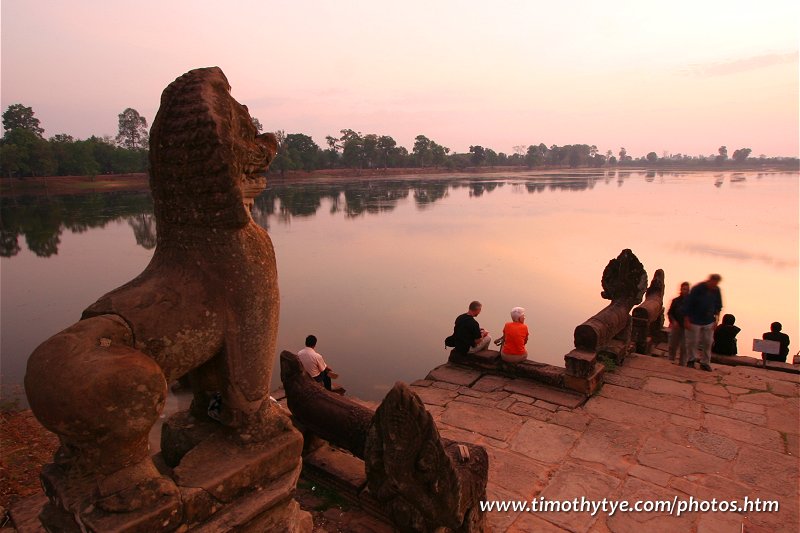
I photographed Ta Som for AsiaExplorers towards the end of the day, as I was finishing my exploration of that day. A huge ficus tree wraps itself on the east gopura, a dramatic example of the intertwine of nature and art. Minor restoration is visible during my visit.
Ta Som
Ta Som is located on the eastern side of the East Baray (which is now dry, and hence, it's difficult to make out). It is north of the east-west axis formed Preah Khan and Neak Pean. There was a stele in Preah Khan that mentioned Ta Som, but by its ancient name Gaurasrigajaratna, which means "Jewel of the Propitious White Elephant". As with all Angkor ruins, the name we know it today is a modern name, far different from its original ancient name as found on the stone inscriptions.
Ta Som consists of three concentric enclosures. It is much simpler in design compared to Ta Prohm, Banteay Kdei and Preah Khan. Ta Som's outermost enclosure wall measures 240 meters by 200 meters. After you have entered the west gopura, you will notice the moat around the second enclosure. The fact that the moat is inside the outer enclosure rather than outside it indicates that the outer enclosure was constructed after the moat was built.
Like Ta Prohm, modern-day visitors approach it from the western entrance, even though its intended main gopura is on the east. Similar to Ta Prohm, Banteay Kdei and Preah Khan, the gopuras of Ta Som also consists of towers with stone faces, but at smaller scale. In fact, the temple of Bayon also has gopuras with face towers - these are the entrances to Angkor Thom. These are the "trademark" of Jayavarman VII.
If you're approaching Ta Som from the east, your first sight would be its East Gopura with a huge strangler fig tree almost enclosing the whole gopura. I read somewhere that the tree died in the 1970s, but I can tell that there still is a tree wrapped over the gopura today, and it's pretty much alive - though, judging from its leave, it's not a fig tree.
I explored Ta Som towards the end of the day, and to a certain extend, had to hurry up before the sun goes down. From Ta Som, I still have one more temple to explore before calling it a day, which is Prasat Batchum.
How to go to Ta Som
Ta Prohm is located on the right side of the road on the way from East Mebon to Neak Pean. If you're coming from East Mebon, follow the road north for 2.5km and look out for it on the right. From Neak Pean, follow the road east for 1.8km before it turns south. The entrance to Ta Som is on your left, a further 300 m down the road.
Angkor, Unesco World Heritage Site
AsiaExplorers provides you one of the most detailed documentation on Angkor, Unesco World Heritage Site, for you to explore from the comfort of your desktop.
Siem Reap Travel Guide
If you are visiting Angkor, it's almost definite that you will be staying in a hotel or guesthouse in Siem Reap. You will probably also need to hire a tuk tuk to take you around. Click the thumbnail on the left to view vital details to make your stay in Siem Reap more pleasant.
AsiaExplorers is researched and written by Timothy Tye. Reasonable care is taken to check and verify the accuracy of the content. AsiaExplorers disclaims responsibility for any inconvenience, mishap, injury or death resulting from following the tips and advice provided directly or indirectly by this website. All pages may be printed out for your own personal, non-commercial use. Photographs not credited to a third party belong to Timothy Tye and may not be reused in any form unless you are first given permission. Write in to inquire if interested. Third party photographs are governed by their respective licenses. The author is a Christian. Click here if you are interested to know more about his Christian beliefs. To contact AsiaExplorers, use the following email address: