Beijing Travel Guide


Preparing for Beijing? Let us help!
History of Beijing
Getting into Beijing
Getting Around Beijing
Accommodation in Beijing

Beijing Travel Guide introduces the capital of China and prepares people who are planning a trip there. Beijing, formerly written in English as Peking, is one of the four municipalities in the PRC with equal status as provinces (the other three are Shanghai, Tianjin and Chongqing). Beijing is located in northern China, and is the second largest city in China after Shanghai. Beijing is the political, educational and cultural centre of the People's Republic of China. It is also the transportation hub, with railways, expressways and flight routes converging on the city.


Beijing is also one of the four great ancient capitals of China, which includes Xian, Luoyang, and Nanjing (though the cities that had been a Chinese capital are far more numerous). More than just an administrative capital, Beijing is the second most populous city in China after Shanghai. The mood in Beijing is especially exciting as the city gears to be the host of the 2008 Summer Olympics, with much of the city getting a facelift. Covering a big area on the northeast of China, Beijing is ringed in rectangular fashion by six or seven ring roads.


History of Beijing

The area in which Beijing is located has been inhabited since the 1st millenium BC. The capital of the State of Yan, during the Warring States Period (473-221BC), was in present-day Beijing. Subsequent dynasties also used the Beijing area as a local administrative centre. During the Tang dynasty, it was the headquarters of the military operations. In 938AD, Beijing became a secondary capital during the Liao Dynasty (907-1125), and was even called Nanjing. The Jurchen Jin Dynasty then annexed the Liao Dynasty in 1125, and in 1153, they moved their capital of the Liao's Nanjing and called it Zhongdu. Zhongdu is located slightly southwest of central Beijing.

Zhongdu was devastated by Mongol forces in 1215. The Mongol leader Kublai Khan founded the Yuan Dynasty and established his capital at Dadu, north of Zhongdu, and north of present-day central Beijing. It is situated in the area now bordered by the northern stretch of the 2nd Ring Road, stretching to the 3rd and 4th Ring Roads. Dadu is also called Daidu in Mongol as well as Khanbaliq and Cambuluc, both meaning "great city of the Khans". Beijing appears in Marco Polo's chronicles as Cambuluc.

With such a long history, it is understandable that Beijing had been known under a different name during different ages. In addition to the names aforementioned, it was known as Beiping, meaning Northern Peace, between 1368 and 1405, and again from 1928 and 1949, when the capital was moved to Nanjing, the first time under the Hongwu Emperor of the Ming Dynasty, and once again under the Kuomintang government of the Republic of China. When the Communists made Beiping their capital, they changed the name back to Beijing, where the word "Jing" means capital. In addition, Beijing is also known informally as Yanjing, in reference to the State of Yan which existed in the area during the Zhou Dynasty.

Getting into Beijing

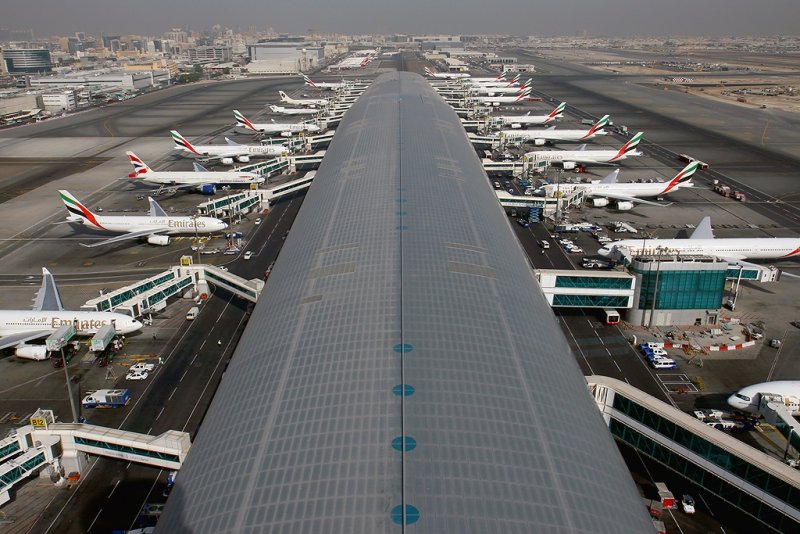
Most international visitors arrive at the Beijing Capital International Airport (PEK), 26km from city centre. In anticipation of the 2008 Summer Olympics, the airport is presently undergoing massive expansion. Be forewarned that prices for food at the two terminals are outrageous - be prepared to pay RMB20 for a KFC meal.

Taxi: A taxi from the airport to the city will cost you ¥70-120. Beware of touts and imposters who pretend to work for the taxi companies. Taking a wrong taxi, with a false meter, will cost you ¥200-300 to reach the city.
Airport Shuttle: This is a relatively inexpensive option to leave the airport. It costs ¥16 for a trip to the city.
Subway: Subway line to the airport is still under construction in time for the 2008 Summer Olympics.

Getting Around Beijing

Subway

The easiest and cheapest way for a foreigner to get around Beijing is probably by subway. There are now four subway lines, with another seven under construction in time for the Olympics. The four existing lines are:
  • Line 1 follows Chang'an Dajie, the main thoroughfare in Beijing. It goes from Pingquoyuan in the west to Sihui East in eastern Beijing.
  • Line 2 follows the 2nd Ring Road (which, despite the name, is actually the first ring road) in a loop.
  • Line 13 makes an extended northern loop from Dongzhimen to Xizhimen and connects to Line 2.
  • Batong Line runs from Sihui to Tuqiao.

    At the moment, the subway runs on a flat fare (which is expected to change to one depending on distance, perhaps next year). Lines 1 and 2 costs ¥3. Transferring between these two lines are free. Line 13 costs ¥3 on its own. If you need to ride on both Lines 2 and 13, then it costs ¥5. Batong Line is ¥2 on its own, and ¥4 combined with Line 1.

    Buses

    Buses are numbered 1-999. Numbers 1-300 serve the city centre while numbers above that ply between the city and more distant areas. Buses numbered above 900 go outside Beijing and into the rural areas. Fare can be paid in cash or via Smart cards. Lines 1-199 charge a flat rate of ¥1 per journey. Lines 300-899 charge according to distance: ¥1 for the first 12km and then ¥0.50 for each additional 5km. Air conditioned buses start at ¥2 while night buses (numbered 200-299) charge ¥2 per journey. Passengers paying by Smart card enjoy a discount. Lines 1-499 charges a flat rate of ¥0.40 while lines 500-899 offers a 60% discount.
    Taxis

    All taxis have a starting fare of ¥10 and an additional ¥2 per kilometer after the 3rd km. Meters continue to run even when speed is slower than 12km per hour, and five minutes of standing in a traffic jam equals 1km. You can hire a taxi for the whole day for ¥400-600 - get your hotel to make the arrangements for you.
    Most of the Beijing taxi drivers do not speak English, so get someone to write down your destinations/sights in Chinese. Also, get your hotel card that shows its address in Chinese, so that you can get a taxi to bring you back.

    Car rental

    Not recommended. It may cost ¥1000 per day, so it is probably better, safer, and less of a hassle to rent a taxi.


  • Expedia.com

    Click here to return to the AsiaExplorers Homepage

    How much have you explored China? Through AsiaExplorers, you can now explore these places in China from the comfort of your desk: China, Beijing (Forbidden City, ), Macau Churches: Cathedral, Cathedral of St Paul, Chapel of Our Lady of Guia, Chapel of Our Lady of Penha, Chapel of St Francis Xavier, in Coloane, Chapel of St James, Chapel of St Michael, Church of Our Lady of Carmel, in Taipa, Our Lady of Sorrows Church, in Coloane, Protestant Chapel, St Dominic's Church (Igreja de São Domingos), St Anthony's Church (Igreja de Santo António), St Augustine's Church (Igreja de Santo Agostinho), St Joseph's Church (Igreja de São José), St Lawrence's Church (Igreja de São Lourenço), St Lazarus Church (Igreja de São Lazaro), Forts: Barra Fort (Fortaleza da Barra), Guia Fort (Fortaleza da Guia), Mong Ha Fort (Fortaleza do Mong-Há), Mount Fortress (Fortaleza do Monte), Moorish Barracks, Heritage Buildings: Casa Garden, Camões Grotto, Convent of the Precious Blood, Dom Pedro V Theatre, Holy House of Mercy (Santa Casa da Misericórdia), Largo do Senado (Senate Square), Leal Senado, Lilau Square, Lou Kau Mansion, Mandarin's House, Red Market, Old Protestant Cemetery, Santa Sancha Palace, Sir Robert Ho Tung Library, Infrastructure: Border Gate, Lotus Bridge, Macau International Airport, Ponte de Amizade, Ponte de Sai Van, Ponte Governador Norbe de Carvalho, Modern Sights: Macau Tower, Kun Iam Statue, Museu de Macau, Museu dos Bombeiros, Venetian Macao Resort Hotel, Temples: A-Ma Temple, Bazaar Temple, Kuan Tai Temple (Sam Kai Vui Kun), Kun Iam Tong, Lin Fung Temple, Lin Kai Temple, Na Tcha Temple, Old Tin Hau Temple, Tam Kung Temple, in Coloane, Tou Tei Temple, Sichuan, (Bao Ern Temple, Anlan Suspension Bridge, Dujiangyan), Erwang Temple, Emeishan, Baoguo Si Monastery, Huanglong, Huanglongxi, , Mianyang), Chengdu (Du Fu's Thatched Cottage, Giant Panda Breeding Center, Wangjianglou, Wuhou Memorial Temple), Jiuzhaigou, (Jiuzhaigou, Five-Colour Pond (Wucai Chi), Five Flower Lake (Wuhua Hai), Grass Lake, Long Lake (Chang Hai), Nuorilang Waterfall, Panda Lake (Xiongmao Hai), Pearl Shoal Waterfall (Zhenzhu Tan), Rhinoceros Lake, Shuzheng Lakes, Shuzheng Village, Shuzheng Waterfall, Tiger Lake (Laohu Hai), Leshan Big Buddha, Li Bai's Memorial Hall), Shanghai


    Grab this swicki from eurekster.com


    Copyright © 2003-2008 AsiaExplorers.  All rights reserved.

    About the Author: AsiaExplorers is researched and written by Timothy Tye. We take reasonable care to check and verify the accuracy of the content. However, we disclaim any responsibility for any inconvenience, mishap, injury or death resulting from following the advice provided directly or indirectly by AsiaExplorers and the comments on its pages. All the photographs in AsiaExplorers are available for publication. Please contact AsiaExplorers at the following email address for your enquiries: