Chengdu, Sichuan Province


     Bookmark and Share  AsiaExplorers RSS Feeds

Tourist Attractions within Chengdu

Dufu's Thatch Cottage
Giant Panda Breeding Center
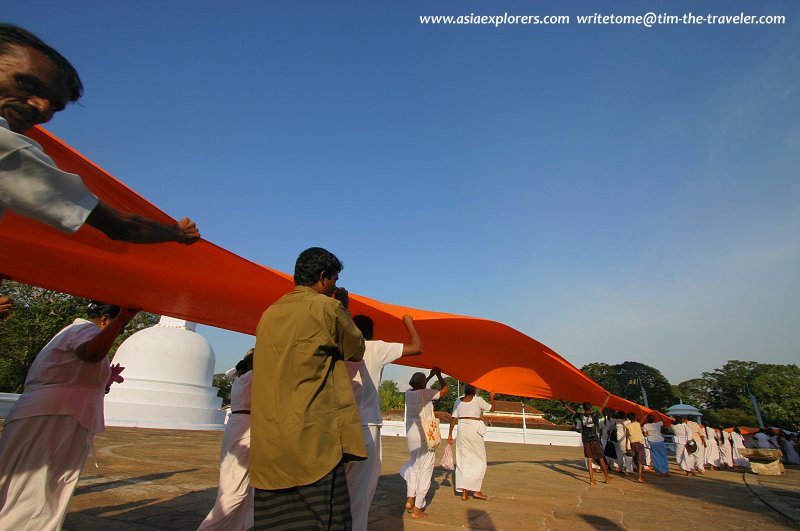
Wang Jiang Lou
Wang Jiang Lou
Wu Hou Memorial Temple

Tourist Attractions from Chengdu

Baoern Temple
Baoern Temple
Dujiangyan
Dujiangyan
Emei Shan
Emei Shan
Huanglong
Huanglong
Huanglongxi
Huanglongxi
Jiuzhaigou
Jiuzhaigou
Leshan Giant Buddha
Leshan Giant Buddha
Li Bai Memorial Hall


Gateway at Dufu Memorial Museum
Author: ©l Timothy Tye, (20 October 2005)

Shuzheng River, Jiuzhaigou
Author: ©l Timothy Tye, (17 October 2005)

Chengdu at night
Chengdu at night
Author: © Timothy Tye, (21 October 2005)

Street in Huanglongxi heritage town
Author: © Timothy Tye, (20 October 2005)

Chengdu, capital of Sichuan Province

Chengdu (also written Ch'eng-tu) is the capital of the Sichuan province in China. According to the 2004 estimate, there are 10 596 900 (5 381 730 males, and 5 215 200 females) people living in Chengdu, putting it in fourth position behind only Shanghai, Beijing and Chongqing, and only slightly ahead of fifth-placed Guangzhou. This huge city is the political, cultural and economic nerve centre of southwest China. Chengdu is known in China as the "Brocade City" as well as the "City of Hibiscus".

Introduction to Chengdu

It got the title of Brocade City because, during the Western Han Dynasty (206 BC-23 AD), brocade that was produced in Chengdu enjoyed great popularity among the royal and elite class. The emperor put Jin Guan, an official in charge of brocade production, to oversee brocade production in Chengdu. Since then, Chengdu was called "Jin Guan Cheng" or Brocade Official's City), or in its short form, "Jin Cheng" (Brocade city).

During the Five Dynasties and Ten Kingdoms Period (907-960), the king of the Later Shu Kingdom, Mengchang, ordered that hibiscus be planted on the fortress wall around Chengdu. From then on, Chengdu was referred to as the City of Hibiscus. Today the hibiscus is still the city flower of Chengdu. However the last city wall was torn down in the 1960s along with the Royal Palace in the middle of the city.

The people of Chengdu speaks a Southern Mandarin Chinese dialect. This dialect has soft tones, which makes Chinese people outside Chengdu comment that Chengdu people speak like baby girls. On the other hand, the dialect in nearbyt Chongqing sounds rough, and are regarded as the speech of baby boys.

In Chengdu blue skies are as uncommon as blue moons. One is more likely to encounter a sky that is almost always cloudy. The people of Chengdu are also on average shorter. The locals say that they are small because their sky is so low. There is an old saying in Chengdu that "the dogs of Shu bark at the sun" to mean someone who, due to unfamiliarity, reacts strongly to something that is very common.

Getting In

The easiest way to reach Chengdu is by flight. The Chengdu International Airport, located 20km to the southwest of the city, is one of the transportation hubs for China, and has flight connections to several international destinations. Taxi from airport to city will cost you about RMB45. The fare from Chengdu to airport, however, is an additional RMB10, on account of toll on the airport expressway. There's also a bus, No. 303, that goes from the airport to the China Airlines office on Renmin Nanlu Road.

Sichuan Cuisine

The Sichuan cuisine is renowned for being very spicy, due to the use of a particular type of chilli pepper. In fact, this chilli pepper was only introduced in the 17-18th century. Among the famous local specialities of Chengdu Grandma Chen's Bean Curd (Mapo doufu), Chengdu Hot Pot, and Carrying Pole Noodles (Dan Dan Noodles).

History of Chengdu

The name Chengdu means "become a capital". This refers to the founding of the city, in early 4th century BC, when the 9th Kaiming ruler of ancient Shu moved his capital from nearby Pixian to its present location.

In 316BC, the Shu kingdom was conquered by the Qin and a new city was founded by the Qin general Zhang Yi (who in fact argued against the invasion). This was the beginning of the Qin (which by extension, the Chinese) Chengdu. During the Han Dynasty, it was renamed Yìzhou.

Following the fall of the Western Han Dynasty, around the era of the Three Kingdoms, Liu Bei founded the Southwest kingdom of Shu-Han (220-263) with Chengdu as its capital.

During the Tang Dynasty, master poet Li Bai and Du Fu spent some part of their lives in Chengdu. Du Fu lived in the celebrated Caotang (grass-hut) during the second year of his four-years stay (759-762). Today's Caotang, a rather sumptuous house in the traditional style, is a reconstruction.

During the Northern Song Dynasty, around 960AD, Chengdu was the first place to use paper money for general circulation.

Around the end of the Song Dynasty, and again near the end of the Ming Dynasty, rebel leaders set up the capitals of their short-lived kingdoms here, called Dashu and Daxi respectively.

During the Second World War, the government under Chiang Kai-shek fled to Sichuan Province to escape the invading Japanese forces. They brought with them businesspeople, workers and academics, resulting in the founding of many industries and cultural institutions which contributed to making Chendu an important centre.


Copyright © 2003-2009 AsiaExplorers.  All rights reserved.

AsiaExplorers is researched and written by Timothy Tye. Reasonable care is taken to check and verify the accuracy of the content. AsiaExplorers disclaims responsibility for any inconvenience, mishap, injury or death resulting from following the tips and advice provided directly or indirectly by this website. All pages may be printed out for your own personal, non-commercial use. Photographs not credited to a third party belong to Timothy Tye and may not be reused in any form unless you are first given permission. Write in to inquire if interested. Third party photographs are governed by their respective licenses. The author is a Christian. Click here if you are interested to know more about his Christian beliefs. To contact AsiaExplorers, use the following email address: