Explore a different destination  UNESCO World Heritage Site  Giant Buddha of Leshan


  UNESCO World Heritage Sites China Asia Budget Travel Guide EarthDocumentary World Budget Travel Guide UNESCO World Heritage Sites  Compare Hotel Room Rates from different Booking Sites
Bookmark and Share  AsiaExplorers on Twitter


Your base for this destination is the city of Chengdu. For travel information about Chengdu, go to Chengdu Travel Guide


The Giant Buddha of Leshan, or Leshan Dafo, also called the Big Buddha of Leshan, is the largest stone sculpture of Buddha in the world. It is inscribed by UNESCO as one of China's World Heritage Sites.
World Heritage Site Inscription Details

Location: N29 32 41.64 E103 46 9.3
Inscription Year: 1996
Type of Site: Cultural
Inscription Criteria: IV, VI, X

The colossal 71-meter (233 ft) seated statue of Buddha (dafo) is located on a cliff at the confluence of two rivers, the Dadu He and the Min He, overlooking the town of Leshan, about 50 km east of Emeishan. The Buddha is so big that one hundred people can stand on any one of its feet.

Historical documents show that the carving of the Leshan Dafo was begun in AD 713. According to legend, there was a river monster that lived on the confluence of the rivers. The monster often caused floods that capsized passing boats. Believing that the statue would protect boats travelling up the river, Master Haitong, a Buddhist abbot of the Lingyun Monastery, initiated the project by raising the necessary funds.


Tourist boat passing in front of the Leshan Giant Buddha.


The project commenced in the first year of the reign of the Tang Emperor Tang Xuanzong. Master Haitong hoped that the presence of the Great Buddha would subdue the monster and so pacify the swift currents thereby protecting the boatmen who traversed the treacherous river.

On the first day of construction, an avaricious official had his eye on the money raised for the project and tried to blackmail Master Haitong. Master Haitong defied him and said: You could gouge out my eyes but not touch the money donated to build the Buddha. The official flew into a rage and challenged him to do it. Master Haitong gouged out his own eyes and presented them in a tray to the official. The man fled in awe and terror.

Master Haitong died when the work was only half done. Zang Chou and Wei Gao, two of his disciples, continued the work. After 90 years' effort, the Buddha was finally completed in 803, in the 19th year of Emperor Dezong's reign.

The Leshan Dafo takes the shape of a Maitreya Buddha, or future Buddha. He is depicted barefooted with drooping ears and has his hair arranged in a spiral topknot. His head is covered with 1021 buns of curly hair, each large enoughn to support a big round table. His chest is exposed and his hands rest on his knees. Carved from the side of the Lingyun Hill, with his head level with the cliff top, the gigantic stone sculpture faces Emeishan, with the rivers flowing below his feet. The rocks carved off the cliff to create the Buddha were deposited into the river. The volume of rocks was so much that it eventually subdued the river currents.

A sophisticated drainage system was incorporated into the Leshan Dafo when it was built. Until today the system is still in working order. It includes drainage pipes that were carved in various places on the body, to carry away the water after the rains so as to reduce weathering.

When the Giant Buddha was carved, a huge 13 storey wooden structure was built to shelter it from rain and sunshine. This structure was destroyed during the wars at the end of the Yuan Dynasty (1279-1368). From then on, the stone statue was exposed to the elements.

Erosion is the biggest threat to the Leshan Dafo. Strong winds, torrential rainfall, acid rain and visitors have all left their mark. The stone coils of hair on the Buddha's head have fallen down, the nose has turned black and the face has become speckled. Plants and fungi have begun to grow from the upper part of the body, while trash collected on his face, neck, shoulders, breast and feet. Furthermore, the water from the three rivers below have eroded the lotus foundation underneath the Buddha's giant feet. Over 30 holes have been discovered in the foundations.


Protecting this ancient monument is a concern down the agest. There are signs that small scale restoration work, conducted randomly by devoted individuals, were carried out. Since the formation of the People's Republic of China, a restoration schedule covering ten year cycles were implemented, but this has not completely resolve the problems caused by erosion.

Protecting the Leshan Dafo has received global attention, with experts from UNESCO overseeing the restoration work and the World Bank offering US$ 8 million in interest-free loans for the project. The municipal government of Leshan also promulgated a series of measures to protect the Buddha. These include improving the macro-environment of the scenic area by controlling pollution and setting a time scale for the removal of industrial enterprises. Reducing the pollution in the Minjiang River and the construction of a new highway passing through the area is part of the program. Through this combination of efforts, it is hoped that the environment around the Leshan Dafo will be greatly improved.

On March 24, 2001, a large scale repair job was launched by the Chinese government. It was the first maintenance project on the Leshan Dafo since its inscription into the World Heritage List. The first phase covered restoration to the Buddha's head, shoulders, chest, and stomach. The repair work took 36 days and cost over one million Yuan. The technicians mended the Buddha's coiled bun of hair, cleaned the face, cleared away trash and weeds from the body, removed any inappropriate cement coating, and repaired the damage with traditional materials. The second phase commenced on November 7, 2001, and is planned to be completed in August 2002. It focused on improving the drainage system of the Buddha's body, protecting it against water concussion on the feet, and weatherproofing the whole statue.

The mayor of Leshan declared, "The Buddha statue, which represents the high sculpturing skill and standard of ancient China, will stand forever in Leshan City through concerted protective efforts from all Chinese people". In addition to the Leshan Dafo, other attractions in the surrounding area include the Lingyun Monastery, the Great Buddha Temple, the Dongpo Tower, Green Water Tower, Linbao Pagoda, Cave of Master Haitong, and Jiuqu Plank Way.

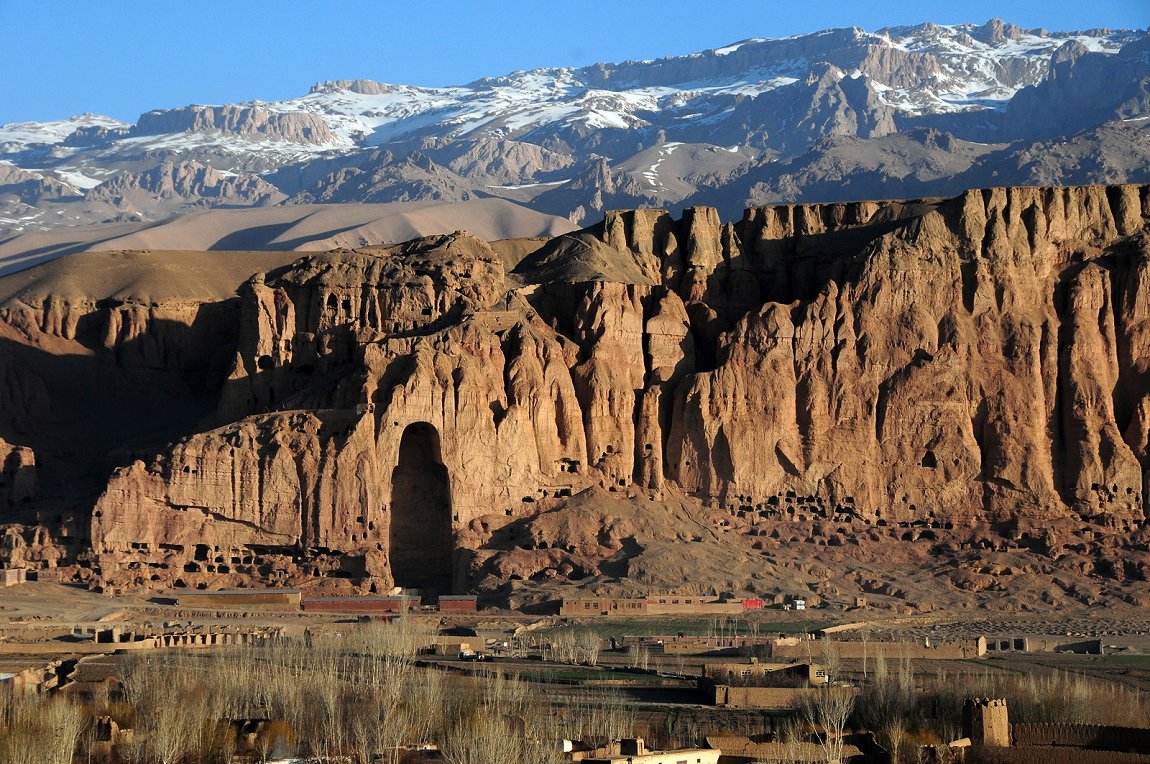
The Leshan Dafo measures 71 meters in height. His shoulders are 28 meters across. The head is 14.7 metes long and 10 meters broad. The Buddha's toe is large enough to accommodate a dinner table. Taller by 17 meters than the standing Buddha in Afghanistan, the Leshan Dafo is the tallest Buddha in the world and in 1996, it was added to Unesco's World Natural and Cultural Heritage List.


Leshan Giant Buddha Photo Gallery

Let us take you to explore the Giant Buddha of Leshan with pictures.


Hotel Room Price Checker

Before booking a hotel room, make sure you are getting the lowest price for it. Different hotel booking websites offers the same room at different prices. If you stick with one site all the time, you could be paying more for the same room. Now why pay more?

The form below is a Research Engine. It doesn't take bookings. Instead it lets you find the hotel booking website that offers the room you want at the lowest price. You can see and compare what different sites are offering, and then click to choose the one with the best price. Do this, and you're guaranteed to save a whole lot of money on your room reservations!


AsiaExplorers Flight Checker

If you're flying somewhere, use our Flight Checker to compare the rates from different airlines. To use it, enter where you will be flying from, where you will be flying to, your departure date and return date. Select the number of passengers, and then click search.

Our engine will return you a list of possible flights that you can take. You can compare the fare of different airlines for your trip. Click on your selected airline, and we transfer you to the airline website.


Return to AsiaExplorers homepage

My message introducing God to all the world: THE GOSPEL ACCORDING TO TIM


Bookmark and Share   Follow EarthDocumentary on Twitter


Copyright © 2003-2010 AsiaExplorers.  All rights reserved.


AsiaExplorers is researched and written by Timothy Tye. Reasonable care is taken to check and verify the accuracy of the content. AsiaExplorers disclaims responsibility for any inconvenience, mishap, injury or death resulting from following the tips and advice provided directly or indirectly by this website. All pages may be printed out for your own personal, non-commercial use. You may use the information on this website on your blog or website so long as you place a dofollow link back to the page in AsiaExplorers where it appears. Photographs not credited to a third party belong to Timothy Tye and may not be reused in any form unless you are first given permission. Write in to inquire if interested. Third party photographs are governed by their respective licenses. To contact Tim, write to the following email address: