World Travel GuidesLhasa, China


Exotic Tours of Asia
 Asia Travel Guide Compare Hotel Room Rates from different Booking Sites     Follow Me on Pinterest 
Lhasa, China
Lhasa, China
Author: Rainer Haessner (Creative Commons Attribution ShareAlike 3.0)


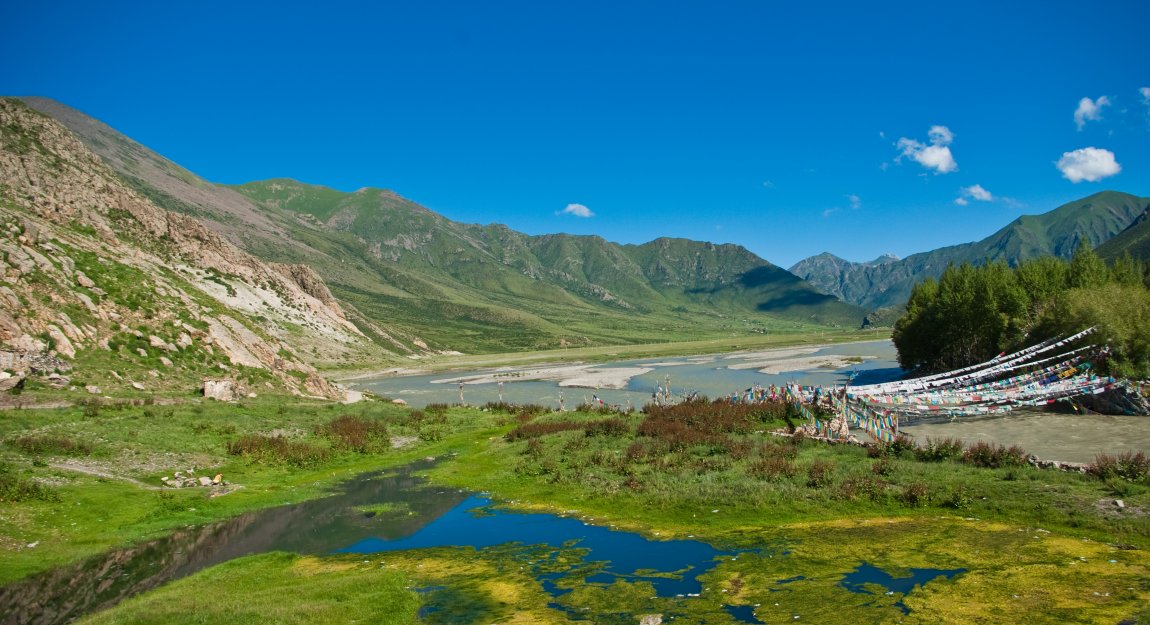
Lhasa is the biggest city as well as administrative capital of the Tibet Autonomous Region. It is located at the foot of Mount Gephel. Standing at an elevation of 3,490 meters (11,450 feet), Lhasa is one of the highest capitals in the world.

Guide to Lhasa Hotels

It's never easy finding the hotel that's just right for your stay. Still, by taking a little time to do your research, you increase your chance of getting a good hotel at the best price. Go through the list of hotels in Lhasa which we've put together, with full description, star rating, address, location map and evaluation. Pick the hotel of your choice and view the rates offered by different booking sites. Yes, we show you prices from different websites, so you don't have to visit them one by one.

More about Lhasa

Lhasa is the home of the Potala Palace and Norbulingka, both UNESCO World Heritage Sites.

Lhasa was founded in AD 637 when Songtsän Gampo, founder of the Tibetan Empire, moved his capital there. Construction of the first buildings of the Potala Palace began soon after, making Lhasa both the political as well as religious center of the Tibetan people. The empire survived until the 9th century, when it collapsed and its sacred sites destroyed.

It started to regain its glory with the construction of three large Gelugpa monasteries by the famous Tibetan Buddhist teacher Je Tsongkhapa. In 1642 the 5th Dalai Lama, Lobsang Gyatso conquered Tibet and made Lhasa his administrative capital. Construction of a new Potala Palace began in 1645.

At the beginning of the 20th century, Lhasa was a major center of Tibetan Buddhism, with nearly half its population comprising Buddhist monks. The invasion of Tibet by the People's Liberation Army in 1950 caused a mass exodus of Tibetans. It also compelled the 14th Dalai Lama to flee into exile on 1959.

The People's Liberation Army's entry into Tibet was regarded as a peaceful liberation in accordance to the Seventeen Point Agreement signed between delegates of the Dalai Lama and the government of People's Republic of China on 23 May 1951 in Beijing. The validity of the Seventeen Point Agreement has long been disputed by the Dalai Lama, claiming that the signing was done under duress. China regarded it as legally binding, pointing out that the Tibetan delegates signing the agreement were not subject to any physical harm.

The objection to Chinese presence in Tibet has resulted in several major demonstrations in Lhasa, making it one of the most volatile cities in China. Due to this, non-Chinese nationals wishing to visit Tibet has to obtain a special permit. Group permits for 5 persons or more are much easier to obtain than individual permits.

Visiting Lhasa

By Plane
You can fly into Lhasa from Beijing, Chengdu, Chongqing, Guangzhou, Kunming and Shanghai, among others. Remember to get your permit before arriving.

By Bus
There are buses to Lhasa from Golmud in Qinghai province, but it is really not worth trying to reach Lhasa by bus as the issue with the permit makes the journey as expensive as flying in.

Exploring Lhasa

It is quite possible to explore Lhasa on foot. For longer distances, there are cycle rickshaws. Bargain down to a reasonable price.

Photo from Lhasa

Inside Jokhang Temple, Lhasa
Author: Baldiri (Creative Commons Attribution ShareAlike 3.0)


Places of Interest in Lhasa

  1. Potala Palace
    This monumental palace is the biggest structure in Lhasa. Built on its highest mount, it looms over the town. UNESCO World Heritage Site since 1994.

  2. Jokhang Temple
    The most sacred temple in Tibetan Buddhism. UNESCO World Heritage Site since 2000.

  3. Norbulingka Summer Palace
    Constructed by the 7th Dalai Lama in 1755 and subsequently renovated by successive rulers. UNESCO World Heritage Site since 2001.

  4. Drepung Monastery
    Biggest and richest monastery in Tibet, this monastery was founded by Jamyang Choje, disciple of Tsongkhapa, founder of tye Yellow Hat order of Tibetan monks.

  5. Sera Monastery
    Monastery famous for its tantric teachings.

  6. Tibet Museum
    Museum showcasing the history and culture of Tibet, with a "very Chinese perspective" on the "peaceful liberation" of Tibet.

  7. Barkhor Street Market
    Old bazaar street around the Jokhang Temple.

  8. Lukhang Temple
    Temple on an island in a lake behind the Potala Palace.

  9. Ramoche Temple
    Sistem temple to Jokhang Temple, this 3-storey temple is located north of the Bakhor area.

  10. Ani Tsankhung Nunnery
    Located in one of the busy back alleys south of the Barkhor area is this nunnery in a yellow building.

  11. Nechung Monastery
    Located southeast of Drepung Monastery, this is the seat of the Tibetan Oracle. The last oracle fled to India in 1959, and today the monastery is only occupied by caretaker monks.
  12. Ganden Monastery
    The farthest monastery from Lhasa, this monastery is worth visiting for its scenic setting on the Gokpori Ridge.

Farther Away Sights

  1. Samye Monastery
    150 km southeast of Lhasa, this is a stunningly beautiful monastery in a scenic location.
  2. Tsurphu Monastery
    70 km west of Lhasa. Founded in the 12th century by the Black Hat order of Tibetan monks.

  3. Namtso Lake
    200 km northwest of Lhasa. Scenic Tibetan lake with azure water beneath snowcapped peaks.

  4. Gyantse
    Tibet's third largest settlement is a small, dusty, rustic town, 255 km southwest of Lhasa.

Return to Tibet Autonomous Region
Return to China Travel Guide


  • Tips to become a smart traveler: Useful tips to remember, to get the best out of your travels.
  • Preparing for a Trip: Systematic approach to help you prepare for your trip.
  • How to plan your travel itinerary: Step-by-step build to creating the itinerary for your trip.
  • How to compare hotel room rates: Learn to use a booking search engine to compare rates across all major booking sites.
  • How to pack your luggage: Useful steps to take when packing your luggage.
  • Packing List (PDF): Print out this free packing list to make sure you don't forget anything for your trip.
  • Voltage, Frequency, Plugs & Sockets of the World: Learn about the mains electricity supply in the world.
  • Travelers' List of Plugs and Sockets (PDF): Easy-to-use list of electricity and plugs for all countries.
  • Making International Direct Dail Calls: Learn to make IDD calls from anywhere in the world.
  • IDD Call Prefixes & Country Codes (PDF): Listing of Call Prefixes and Country Codes on one page for you to bring on your trip.
  • Safety Tips When Traveling Alone: Useful advice for when you travel on your own.
  • Guide to Health Matters related to Travel: Comprehensive coverage of different issues related to your health when traveling.
  • Getting Travel Insurance for your trip: Benefits of travel insurance, and advise on when you should signing up for one.
  • Improve your travel photography: Tips to improve your photography skills, especially when traveling.
  • Guide to Traveling Around the World: Useful tips for encircling the globe.


  • Find a hotel


    Follow Me on Pinterest

    Point - Click - Discover!

    Thanks for visiting this webpage. To continue exploring, choose another destination!


    My World Travel Guides - celebrating a beautiful world beautifully.

    Earning a living as a Happy Jobless Guy

    I am a Happy Jobless Guy! I am one of the few people who is fortunate enough to earn an income from my websites that I don't to go out to work. My sites get thousands of visitors every day. It has been a long process, but it is something everybody can achieve, and that means YOU. The following are some articles which you might want to read if you want to do what I do:
    1. Money Making Manual
    2. How to earn from writing websites
    3. Guide for earning a living without holding a job
    4. Complete Step-by-Step e-Business Building System