Delhi Budget Travel Guide helps you prepare for a trip to the capital of India on a limited budget. This sprawling city comprises Old Delhi, founded by Shah Jahan, and New Delhi, designed by the British. For the sake of familiarity, I will use the term "New Delhi" to denote Delhi as a whole. I explored it with a group of AsiaExplorers members when I organised a tour of Northern India. On my final day, I hired a motor ricksaw to take me around the city, visiting additional sights which were not in the itinerary.
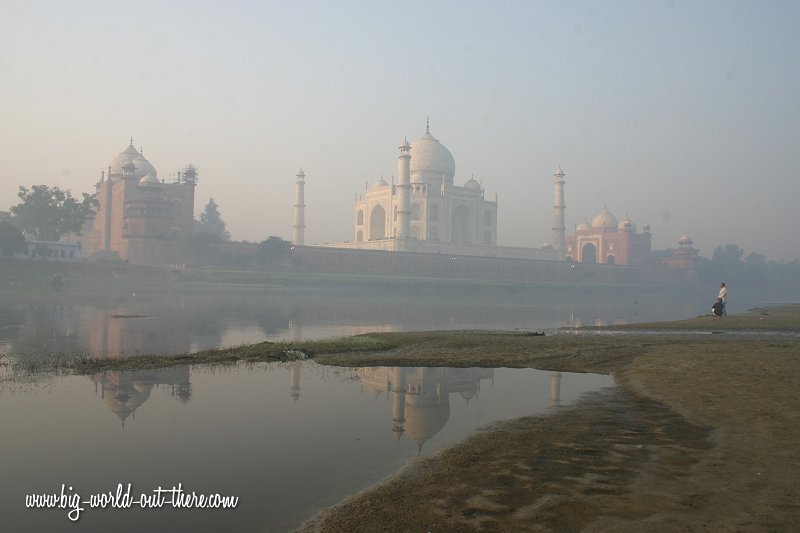
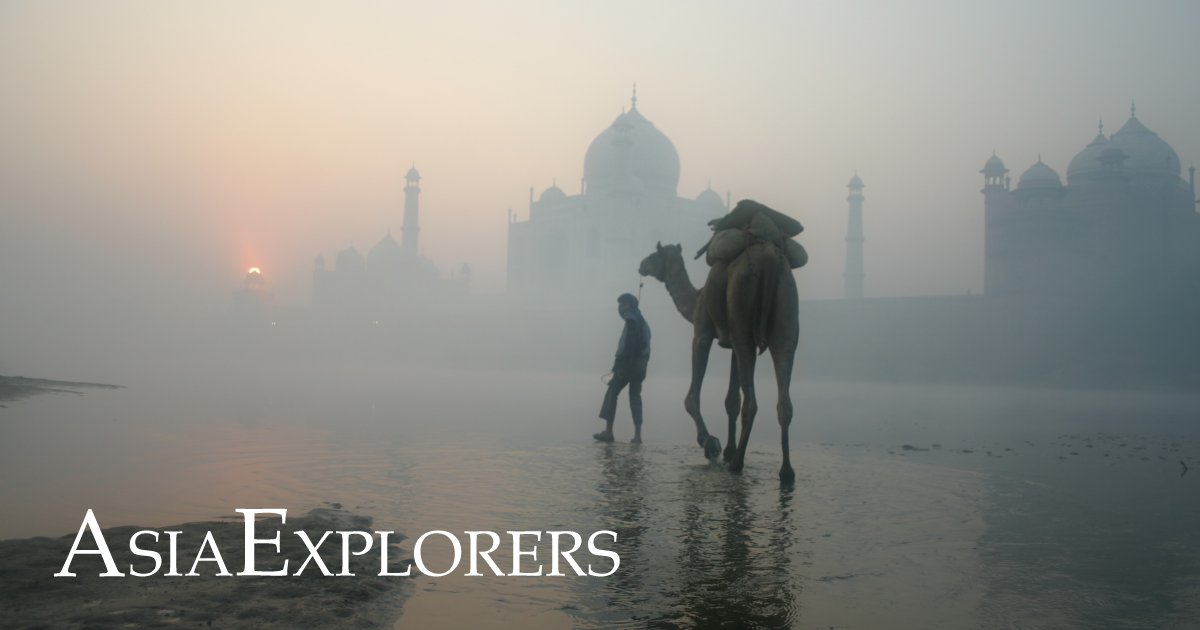
Delhi is located today in the state of Uttar Pradesh, 204km southeast of Delhi. I arrived there from Jaipur, a good 5-hour journey punctuated by a stopover at the Fatehpur Sikri. I find it to be a rather dusty place with little to show except that it is home to two world heritage sites, Delhi Fort and the incomparable Taj Mahal. Both are associated with the same person who built them, Shah Jahan, the Mughal Experor who presided over a chapter of India history characterized by a frenzied building activity.
Delhi is a very big city. There are more than 10 million people living in and around the metropolitan area, which covers 1500 sq km. However, at times, it doesn't feel big, as many of the roads, though congested, are much less impressive than in many more modern cities.
On this tour of Delhi, I shall take you to most of the heritage sites, and view the many influences of the past rulers, each leaving its mark on this capital city.
History of Delhi
Delhi is one of the oldest continuously inhabited city in the world. Lying along a major trade route between northwest India and the Gangetic Plains, Delhi had been the capital of several empires since ancient times. Evidence of human habitation has been found in and around Delhi that dates to as early as two thousand years BC. It was mentioned, under the name Indraprastha in the ancient Indian epic Mahabharata. Throughout its long history, several cities had been founded in the area that is today Delhi.
The city of Lal Kot was founded in AD 736. After the Chauhan Gurjars of Ajmer conquered Lal Kot, it was renamed Qila Rai Pithora. The Chauhan dynasty lasted until 1192, when King Prithviraj III was defeated by the Afghan Muhammad Ghori, who would later be killed by Prithviraj. An ex-slave by the name of Qutb-ud-din Aybak rose to command the armies of Muhammad Ghori, and took possession of Ghori's empire. He first established his capital in Lahore, but later moved it to Delhi, ushering in the era of Muslim rule over Delhi called the Mamluk Dynasty. It is also called the Slave Dynasty due to the many rulers being ex-slaves. In 1193 Qutb-ud-din Aybak started construction of the Qutub Minar.
Qutb-ud-din Aybak died unexpectedly in 1210, and following a power struggle, another ex-slave, Shams-ud-din Iltutmish, became the next sultan. All the later rulers of the Mamluk Dynasty were the descendents of Iltutmish, including his daughter Razia al-Din, who reigned for four years. The odd one out is Ghiyas-ud-din Balbin, incidentally yet another ex-slave and also the son-in-law of Iltutmish. The Mamluk Dynasty finally came to an end when it was overthrown by Jalal-ud-din Firuz Khilji of the Khilji Dynasty.
A succession of rulers with Turkic and Central Asian backgrounds established their dynasties in Delhi, including the Khilji Dynasty (1290-1320); Tughlaq Dynasty (1321-1398), during which the Tughlaqabad Fortress, one of India's largest fortresses, was built; the Sayyid Dynasty (1414-1451); and the Lodi Dynasty (1451-1526), from which came Sultan Sikandar Lodi who founded the modern city of Agra.
In 1526, the last Lodi sultan was defeated by Zahir ud-din Mohammad, commonly known as Babur, who founded the Mughal Dynasty. This illustrious dynasty produced some of the best known rulers of India, and lasted for three centuries until it was brought down by the British in 1857.
Under the British, Calcutta was made the capital of British India. However, in 1911, the capital returned to the Delhi area when a new capital was designed and called New Delhi. New Delhi was declared the seat of the Government of India after independence on 15 August, 1947.
Getting in and out of Delhi
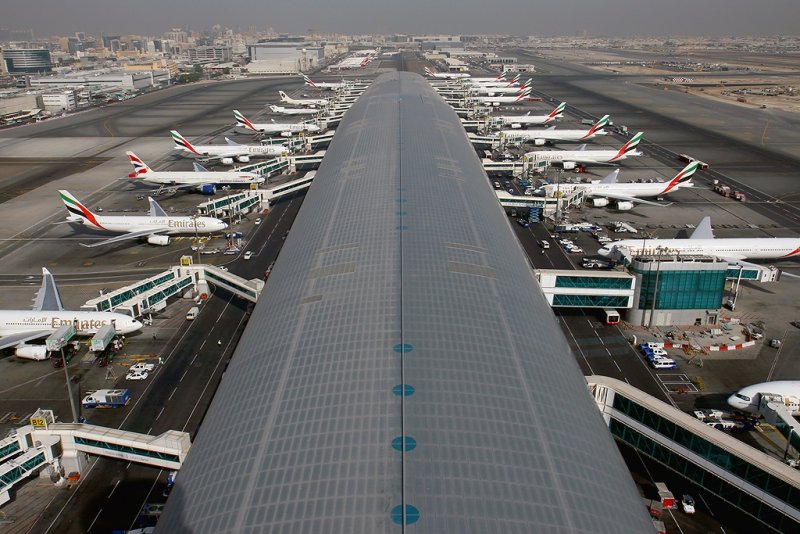
By Flight: Indira Gandhi International Airport is the main gateway for foreign travellers to India. The international flights are channeled to Terminal 2 while domestic flights go to Terminals 1A and 1B. The airport has a reputation for being overcrowded and slow; plan to arrive minimum two hours before your flight. Security is also exceedingly tight. You will be allowed only one hand-carry luggage, which must be X-rayed and sealed before check-in. Leaving the airport for Delhi, you can take a taxi. The fare for non air-conditioned taxis should be in the region of Rs.200-300, operated by the Delhi Police. Avoid using large bills where change is needed. Do not give the receipt to the taxi driver until you have arrived. Then grab your bag and leave, ignoring any excuse by the taxi driver why your ride require additional payment.
By Train: The New Delhi Railway Station is located just ouside Paharganj, the backpacker's hub of Delhi. However, the train station is huge, crowded, and confusing. Allow sufficient time to find your train, ask question from uniformed persons, ignore the often misleading display boards, and also, ignore anybody who approaches you unsolicited. As a tourist, you can also book your ticket at the International Tourist Bureau, upstairs of the station. Bring along your passport and cash, in the form of US Dollars, Pound Sterling or Euros.
Getting around in Delhi
Metro: The Delhi Metro (official website) is probably the most hassle-free way of going around in Delhi. There are three lines opened since 2006, namely Line 1 (Red), Line 2 (Yellow) and Line 3 (Blue). Line 2 is useful for getting to places in Old Delhi, such as Chandni Chowk, Jama Masjid and the New Delhi Railway Station. Fares range from Rs. 6 to 22.
Auto Rickshaws: As the coverage of the subway is limited, another alternative is the auto rickshaw. But be prepared to negotiate upfront before boarding. There are also booths manned by the Police where you can purchase pre-paid coupons to ride the rickshaws. Hand the payment coupon over to the driver (called wallah) after your journey is done, and ignore any attempt from them to seek additional payment.
Useful Numbers
Government of India Tourist Office: 88 Janpath, Connaught Place. Tel:2332 0005, 23320008, 23320109, 23320266.
Before booking a hotel room, make sure you are getting the lowest price for it. Different hotel booking websites offers the same room at different prices. If you stick with one site all the time, you could be paying more for the same room. Now why pay more?
The form below is a Research Engine. It doesn't take bookings. Instead it lets you find the hotel booking website that offers the room you want at the lowest price. You can see and compare what different sites are offering, and then click to choose the one with the best price. Do this, and you're guaranteed to save a whole lot of money on your room reservations!
If you're flying somewhere, use our Flight Checker to compare the rates from different airlines. To use it, enter where you will be flying from, where you will be flying to, your departure date and return date. Select the number of passengers, and then click search.
Our engine will return you a list of possible flights that you can take. You can compare the fare of different airlines for your trip. Click on your selected airline, and we transfer you to the airline website.
AsiaExplorers is researched and written by Timothy Tye. Reasonable care is taken to check and verify the accuracy of the content. AsiaExplorers disclaims responsibility for any inconvenience, mishap, injury or death resulting from following the tips and advice provided directly or indirectly by this website. All pages may be printed out for your own personal, non-commercial use. You may use the information on this website on your blog or website so long as you place a dofollow link back to the page in AsiaExplorers where it appears. Photographs not credited to a third party belong to Timothy Tye and may not be reused in any form unless you are first given permission. Write in to inquire if interested. Third party photographs are governed by their respective licenses. To contact Tim, write to the following email address: