Fatehpur Sikri
India's Unesco World Heritage Site


This sight is located in Agra, India. For travel information about Agra, read the Agra Travel Guide. To prepare for a trip to India, read also the India Travel Guide. Looking for budget accommodation? Use AsiaExplorers Budget Accommodation Guide, the no-frills website to cover your budget accommodation needs.

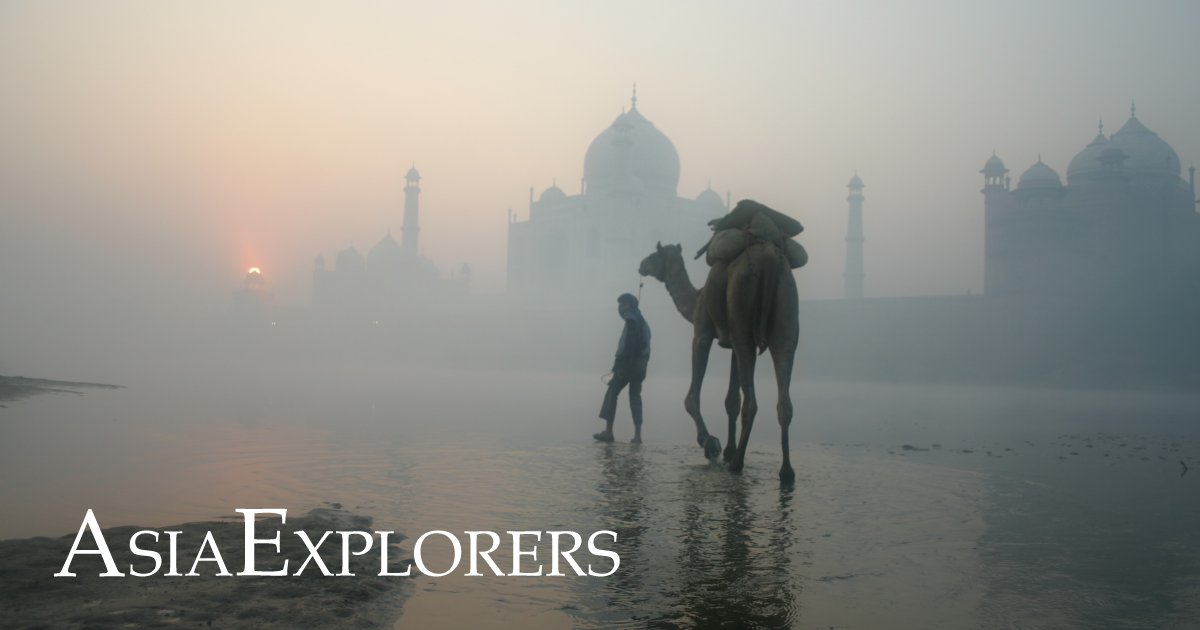
Fatehpur Sikri was built by the Mughal Emperor Akbar between 1571 and 1585 in honour of the famous Sufi saint, Sheikh Salim Chishti. Fatehpur Sikri is located 37km from Agra, and served as the capital for 14 years. Fatehpur Sikri was eventually abandoned, on the pretext that the shortage of water posed a problem. From Fatehpur Sikri, the Mughal capital shifted to Lahore.
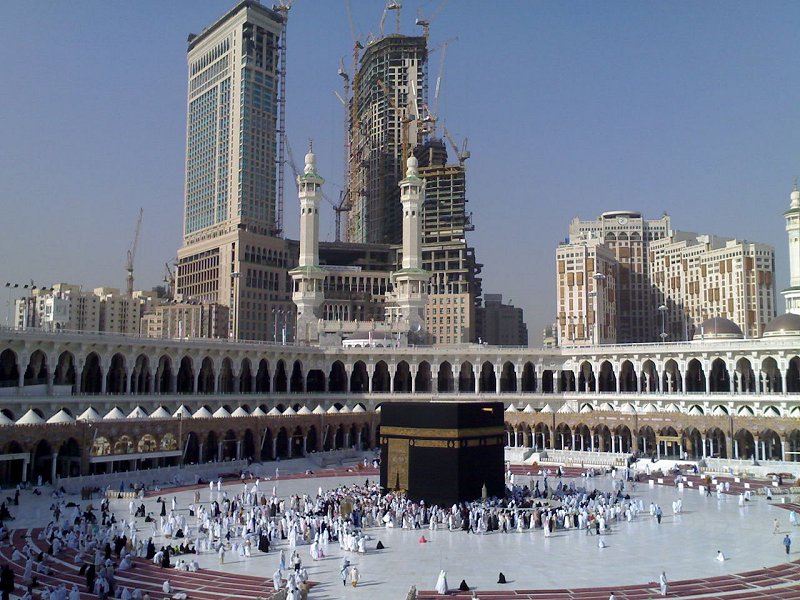
Fatehpur Sikri is recognised by Unesco as a World Heritage Site since 1986. It is a fine example of a Mughal walled citgy with clearly defined private and public areas. When Akbar constructed Fatehpur Sikri, he blended Hindu and Islamic (or Persian) styles. This is to reflect his secular vision as well as his style of governance. The Fatehpur Sikri Mosque is said to be a copy of the mosque in Mecca.


Tim's Fatehpur Sikri Travelogue. (8 November, 2004)

Fatehpur Sikri was just a brief stopover for me on the way from Jaipur to Agra. We arrived just before Friday Prayers, so we had to hurry before the massive Jama Masjid is emptied of non-Muslims for the prayers. During this quick visit, I managed to get all the vital shots of the mosque, the magnificent Buland Darwaza gate, and I visited the Dargah Of Sheikh Salim Chisti.


Sights at Fatehpur Sikri.

Buland Darwaza
This giant-size gate is approached from the outside by a 13-metre flight of steps which adds to its grandeur. The Buland Darwaza was erected in 1602 AD to commemorate Akbar's victory over Deccan. It is the highest and grandest gateway in India and ranks among the biggest in the world.

Jama Masjid
The Jama Masjid of Fatehpur Sikri, built in 1571 AD, is one of the largest mosques in India. It has a huge congregational courtyard inside. At one corner to the right is the Jammat Khana Hall and next to it is the tomb of the royal ladies. To the left of the Jama Masjid is the Stone Cutters' mosque, the oldest place of worship in Fatehpur Sikri. The Jama Masjid is entered through the massive Buland Darwaza archway.

Dargah Of Sheikh Salim Chisti
The Dargah, or shrine, of Shaikh Salim Chishti is located to the North of the Jama Masjid in Fatehpur Sikri. It was built in 1570. It was here that childless women come to get the saint's blessings. Even Akbar was blessed with three sons, when he came here. The lattice work in the Dargah is among the finest to be found any where in India. People tied strings on the lattice work believing that doing so will ensure that the saint grant their wishes.


Diwan-I-Am
The Diwan-I-Am, or the Hall Of Public Audience, of Fatehpur Sikri was used for celebrations and public prayers. Diwan-I-Am has cloisters on three sides of a rectangular courtyard. Akbar's throne is on a pavilion to the west. Beautiful jali screen on either sides of Diwan-I-Am separated the ladies attending the court.

Diwan-I-Khas
Diwan-I-Khas, or Private Audience Hall, of Fatehpur Sikri is a two storey building. Inside it, however, is only a single vaulted chamber. At the centre of the Diwan-I-Khas stands a profusely carved column supporting a collosal-bracketed capital. Four narrow causeways project from the centre and run to each corner of the chamber. Akbar's throne is said to occupy the circular space over the capital and the corners were assigned to the four ministers.

Turkish Sultana's House
The Turkish Sultana's House is an ornate sandstone pavilion in Fatehpur Sikri. It is topped with a stone roof with imitation clay tiles, an unusual feature. The geometrical pattern on the ceiling is similar to Central Asian wood carvings.

Ankh Michauli, or The Treasury
To the left of the Diwan-I-Khaas is the Treasury or Ankh Michauli, once believed to have been used for playing the game, comprising three rooms each protected by a narrow corridor which were manned by guards.

Daulat khana-I-khas
Daulat Khana-I-Khas is the Akbar's private chamber in Fatehpur Sikri. It has two main rooms on the ground floor. The smaller room housed Akbar's library while the other his resting area. On the first floor of the Daulat Khana-I-Khas is the Khwabgah or the bed-chamber. It is connected to the Turkish Sultana's house, the Panch Mahal, Maryam's House and Jodha Bai's Palace by corridors.

Jodha Bai's Palace
Jodha Bai's Palace is the largest and the most important building in the royal palace at Fatehpur Sikri. It was named after Akbar's Rajput wife, Jodha Bai. Within this spacious palace, the emperor has assured privacy and security provided by the high walls and a 9 metre guarded gate to the east. Like many buildings in Fatehpur Sikri, the Jodha Bai Palace is a blend of styles with Hindu columns and Muslim cupolas.

Hawa Mahal
The Hawa Mahal, or Palace of the Winds, is located to the right of Jodha Bai's palace. The Hawa Mahal is a small-screened wind tower that faces a garden and is attached to the palace. The garden is laid out in the Char Bagh style with straight walls intersecting at right angles and divided by shallow channels.

Birbal's Palace
Birbal's Palace is a 2-storey building to the north west of Jodha Bai's Palace. It is occupied by Akbar's two senior queens, Ruqnayya Begum and Salima Sultan Begum. Again, the building combines Hindu and Muslim styles of architecture.

Sunehra Makan
Sunehra Makan is the palace of Akbar's Rajput wife, Mariam-Uz-Zamani. This two-storeyed building is located opposite the Diwan-I-Khas. It is richly adorned by gold murals in Persian style. The beams have inscriptions of verses by Akbar's brother, Faizi.

Panch Mahal
Panch Mahal is an elegant 5-storey pavilion, located to the right of Sunehra Makan. Each level of the Panch Mahal is smaller than the one below, and they rise to a single domed kiosk supported by four columns. From here, the emperor gets a magnificent view of the city and its environs.


Thank you, thank you, thank you, for the opportunity to explore the world, to document, to photograph, and to share the information with you. My name is Tim, I'm the writer of this website, and I want to tell you how grateful I am for your visit. This is one of over a dozen websites that I write - you can click my thumbnail photo above to randomly visit any one of them. All my photos are available for commercial printing - find out the photo usage rights here. If you wish to share you photos on this website, upload them to www.panoramio.com and send the URL to me for consideration. And, if you'd like to correspond with me, send your mails to my address as shown below:


Here's the latest updates from my websites ...


Expedia.com


Copyright © 2003-2008 AsiaExplorers.  All rights reserved.

About the Author: AsiaExplorers is researched and written by Timothy Tye. We take reasonable care to check and verify the accuracy of the content. However, we disclaim any responsibility for any inconvenience, mishap, injury or death resulting from following the advice provided directly or indirectly by AsiaExplorers and the comments on its pages. All the photographs in AsiaExplorers are available for publication. Please contact AsiaExplorers at the following email address for your enquiries: