Ghats are steps descending to a river. These are used by people for bathing, laundry, and other activities. In Varanasi, there are hundred of ghats. Of these I was able to explore only a small fraction of them.
The most important ghat is Varanasi is Dashaswamedh Ghat. These is where the daily morning and evening pujas are conducted, to the ringing of bells, burning of incense and chanting. The guesthouse that I stayed in was a short walking distance from Dashaswamedh Ghat, and so this is often my starting point in walking either to the north or south of this ghat.
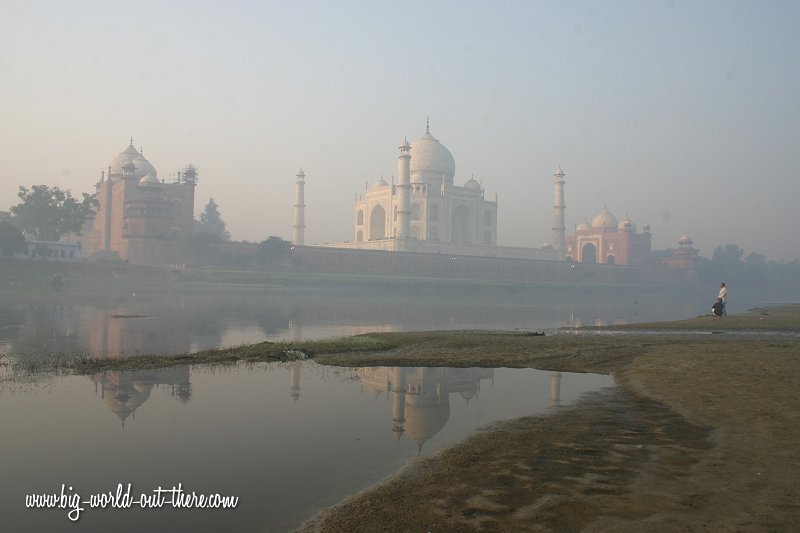
Much of the daily life of Varanasi revolves along the Ganges River, on any of these many ghats. The Ganges is such that Varanasi is located on its western bank. From here, we can look across the river to the east bank which is almost devoid of any form of development. The east bank is characterised by a sandy shore where boats are parked and there. In contrast, the western bank is crammed with buildings that reach almost to the river edge, with narrow alleys called galis snaking their way into the city.
On this page are thumbnail images of the many sights I explored in Varanasi. Click on the thumbnails to access the page with more details.
Thank you for reading this page and viewing the shots.
[an error occurred while processing this directive]
Ghats of Varanasi
Let me take you on an online journey to explore the ghats along the Ganges in Varanasi. Just click the thumbnails to view details of each ghat.
 | Ahilyabai Ghat
|
 | Babua Pandey Ghat

|
 | Bundi Parkota Ghat
|
 | Chousaiti Ghat
|
 | Darbhanga Ghat
|
 | Dashaswamedh Ghat
This is the main ghat in Varanasi, so I start and end my trips from here.
|
 | Digpatiya Ghat
|
 | Ganesh Ghat
|
 | Kshameshwar Ghat
|
 | Lali Ghat
|
 | Lalita Ghat
|
 | Manikarnika Ghat
This is where cremations are conducted
|
 | Man Mandir Ghat
|
 | Prayag Ghat
|
 | Raja Ghat
|
 | Ranamahal Ghat
|
 | Scindia Ghat
|
 | Vijaya Nagaram Ghat
|
|
|