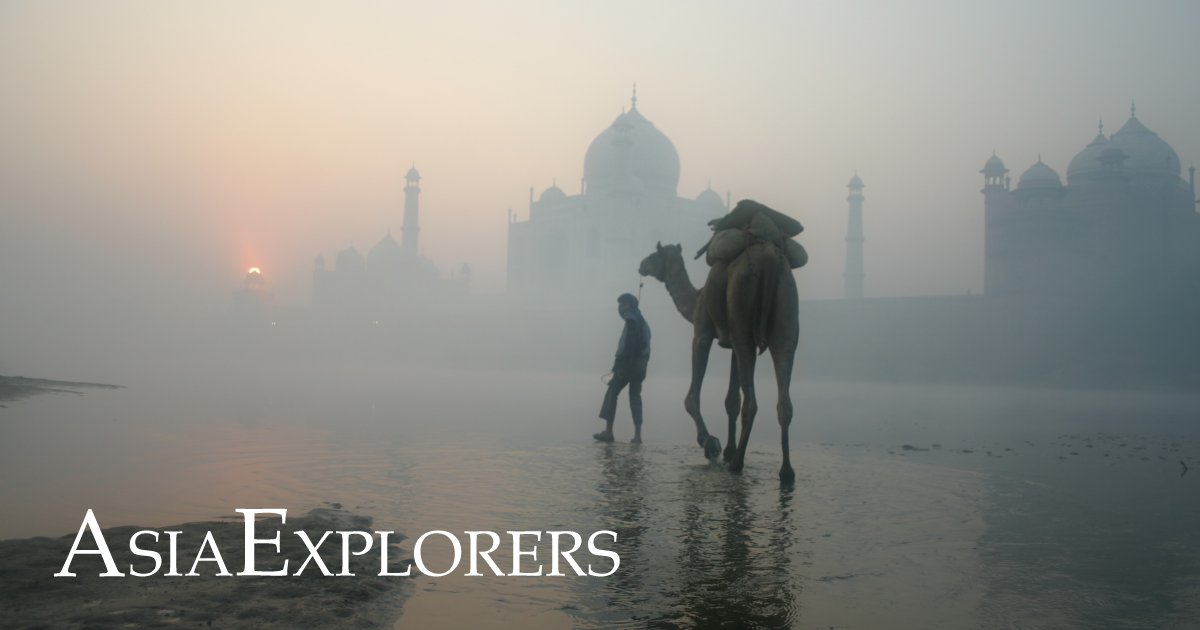
India Travel Guide provides you a glimpse of the vast country. A few lines of text will never be sufficient to adequately describe India, not without resorting to generalization. There are many ways to introduce India, and at AsiaExplorers, we endeavour to bring this vast subcontinent to you introduce to you in a way that is organised and systematic.
Over half of all first time tourists to India inevitably descend on a specific section of India called the Golden Triangle. This is the region made up of three significant (and nowadays highly touristic) cities: Delhi, Agra and Jaipur. While we may ignore this mainstream approach to India tourism and choose a more off-the-beaten-path approach, we believe this would not do justice to the history and culture of the nation.
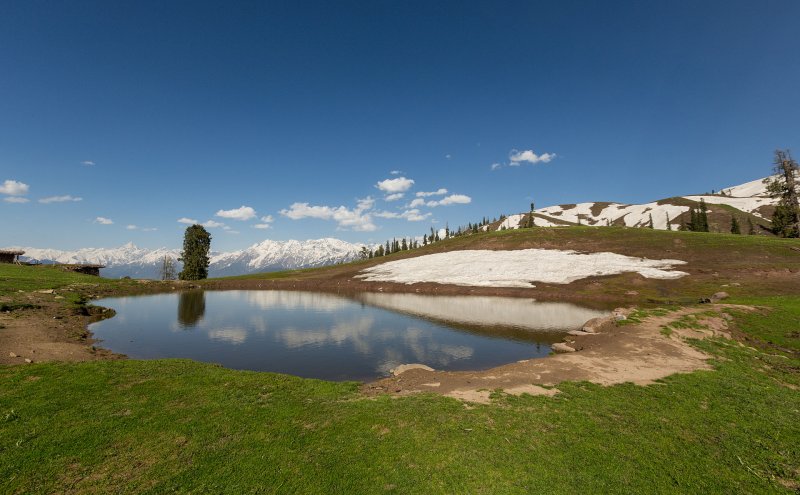
In our armchair exploration of India, we shall therefore begin by taking a look at the three cities of the Golden Triangle. After that, we branch northwards to the volatile region of Kashmir. Kashmir is volatile (as well as prone to natural disasters like avalanches and earthquake), but it is also exceedingly beautiful, as we shall see. Then, we venture eastwards, to the most sacred and oldest of Indian cities, Varanasi. Having covered these place, it is still very much an understatement to claim that we have seen India. But this is just the beginning. As AsiaExplorers continues its exploration, we will add new sights into our future installments.
To learn about the history of India, we should compare it with the other Asian giant, China. One significant difference between India and China is that while China was centrally administered by an imperial court for much of its known history, India was governed all along by regional rulers, without ever a centralized government, until the British Raj came into being. This resulted in traces of ancient principalities that continue to exist today. Their hereditary rulers, although no longer ruling, are often regarded pillars of their societies, and accorded due reverence by their people. The Maharajah of Jaipur, for example, still reside at Chandra Mahal, his city palace. Even though he is no longer the de facto ruler, he still has much influence over the administration of his city.
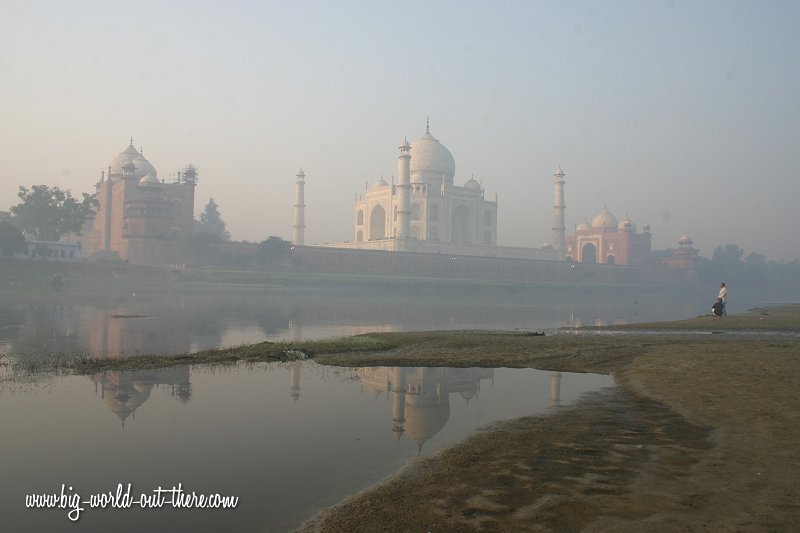
So thus is the picture of India. At an immediate glance, it may appear like a tangled confusion of cities and kings, but with a careful eye, we can bring forth strands of continuity. As for the ancient rulers of India, we can categorize them into two main groups: Firstly, there's the Maharajahs, who are Hindu rulers, who established their kingdoms in cities like Jaipur, Udaipur, Jaisalmer, and others in what is known as the present-day state of Rajastan. Appearing about the same time as the Maharajahs, are the Sultans of the Mughal Empire, who are Muslim rulers, and their kingdoms centred around Agra and Delhi. Indeed the most emblematic landmark of India, the Taj Mahal, was not of Hindu, but rather Muslim architectural style.
Geography
Seen on a map, the Indian subcontinent is shaped like a kite, against the sky-blue expanse of the Indian Ocean. Within it we find a full spectrum of climates, ranging for the arid Thar desert to the frigid Himalayas. Much of life in India is subject to the whims of the monsoon. As India faces the huge Indian Ocean to its south, much of its precipitation when it is summer in the northern hemisphere. That's when the warming of the great Asia landmass creates the southwest monsoon, which dominates from late June until end September, and bringing with it the highest humidity and rain. As the wind dies off towards October, so the land dries out into winter. The southeast coast of India, however, receives rainfall from the northeast monsoon until January.
The monsoon means life to India, a fact that is acknowledged right from the ancient times. Since the able to accurately forecast the coming of the monsoon rain is a matter of life and death for the farming community, it was not surprising that the maharajahs delve into astronomy. In particular, Maharajah Jai Singh of Jaipur was a keen astronomer, building observatories in Delhi, Mathura, Ujjain, Varanasi and the biggest, the Jantar Mantar, in Jaipur.
Maharajah Jai Singh's sundial at Jantar Mantar, Jaipur.
History
To go through the entire history of India would probably fill a few monumental tomes. I shall not attempt to be that ambitious. Instead I will provide a highly digested version here. When I have the time, I will revisit this and perhaps work on a more comprehensive write-up.
Ancient Times
The starting point of Indian history can be placed at around 2500 BC. Initially it was thought that the earliest settlements were confined to the Indus valley, hence they were called the Indus Valley Civilisation, centering around the towns of Mohenjodaro and Harappa, now both in Pakistan. In these places, archaeologists discovered well-planned towns, metalworks and kilns. Later, however, archaeologists discovered that in addition, the northwest and western parts of India were also inhabited, places such as Ropar in Punjab, Lothal in Gujarat and Kalibangan in Rajastan, and these places are all far from the Indus. So, a new name was provided for these ancient civilization: they were called the "Harappan culture." This culture lasted until around 1700BC, when ecological and climatic changes brought frequent periods of flooding to their lands, gradually taking their toll on the culture. By 1500BC, when the peoples of northeastern Iran and the Caspian Sea started to migrate into India, the Harappan culture has already gone.
Hinduism probably emerged during Vedic Age.
Vedic Age
These newcomers are the Aryans. Unlike the Harappan, they did not settle in well-planned towns, but preferred to live along the riverbanks and in small villages. From the Aryan there developed the Vedic Age (1500-1000BC). The name comes from the four Vedas, the earliest Hindu scriptures. It was during this period that Hinduism emerged from the fog of time. As the invaders over the local inhabitants, these newcomers organised themselves into tribes.
The Emergence of Castes
During the Vedic Age, society began to form a structure, with the tribal leader being hereditary, and internal divisions developing according to work specialization. Also, the fairer-skinned newcomers distinguished themselves from the darker skinned peoples over whom they . This distinction according to varna, or colour, was the early stage of caste, eventually creating the ruler class that included the Brahmana (priets), Kshatriya (warriors), Vaishya (merchants) and Shudra (farmers). This initial division by occupation was flexible, but later, the caste-status solidified and became fixed from birth, making mobility from one caste to another difficult, if not outright impossible. This led to much poverty and misery to the strikened, usually at the bottom of the caste.
New religious movements
By this time, the belief in Hindu deities was already entrenched. But the disparity in living conditions of the different castes persuaded two different individuals in the 6th century BC to seek for the meaning of life. To the question of why there should be so much suffering, both arrived at the same answer: to free oneself from greed and therefore from suffering, one must pursue a life of moderation, of non violence, abstinence, truthfulness and meditation. These teachings won popular acceptance, and resulted in two different religions that survived to this day: Mahavira introduced Jainism while Siddhartha Gautama introduced Buddhism.
Maury
By around 300 BC, full fledged state systems, culminating in empires, had emerged. The best example of this was the Magadha Empire, ruled by the Maurya Dynasty. Its most famous ruler was Emperor Ashoka, who ruled from 269 BC to 232 BC. When Emperor Ashoka died, the empire began to disintegrate.
South India civilization
Meanwhile, the society in South India, centred around the Chola kingdom of Tamil Nadu, was developing trade links with distant lands inclucing Java, Sumatra, Bali, and even the Roman Empire.
An Ashokan Pillar, in Sarnath. Between 243 BC and 242 BC, Emperor Ashoka had pillars inscribed with edicts placed all over his empire. A total of 30 were put up, but today only 10 remained.
What to see, where to go
There is much to see, from the metropolis of Mumbai to the deserts in Rajastan, from the administrative capital of Delhi to the ancient city of Varanasi, from frigid Srinagar to balmy Goa.
Food
It is not true to assume that Indian food is hot. Yes, they do use a lot of spices, but in many cases, only south Indian cuisine can truly be considered hot.
A typical meal of roti and vegetables.
Indian cuisine make ample use of milk and milk products, particularly ghi and curd. Dals or split lentils are common. With the majority of the Hindu population being vegetarian, a wide variety of vegetable dishes are available. Where meat is consumed, there is a distinct Muslim influence to the cooking. Pork is therefore almost non existence on Indian tables, and mutton is the most likely choice of meat, apart from chicken and fish.
Churtneys and pickles can be astonishingly sour, or sweet, or hot, or all of the above.
Breads come in a kaleidoscope of styles, shapes and sizes, and of course names, ncluding the paratha, battura, chapatti, pori, naan and other forms of roti. The use of the conical earthern oven called the tandur produce the ever-popular tanduri chicken.
Meals are customarily concluded with confectionery, and the Indians like theirs sweet. To non-Indians, exceedingly. These desserts are often milk based, and include the rasagulla, sandesh, rasamalai, and more.
Arts, Crafts and Shopping
Unesco World Heritage Sites in India
The above logo denotes that a site is designated a World Heritage by Unesco. The sites inscribed into the World Heritage list in Thailand are:
About the Author: AsiaExplorers is researched and written by Timothy Tye. We take reasonable care to check and verify the accuracy of the content. However, we disclaim any responsibility for any inconvenience, mishap, injury or death resulting from following the advice provided directly or indirectly by AsiaExplorers and the comments on its pages. All the photographs in AsiaExplorers are available for publication. Please contact AsiaExplorers at the following email address for your enquiries: