Explore a different destination UNESCO World Heritage Site Qutub Minar, Delhi, India


  UNESCO World Heritage Sites India Asia Budget Travel Guide Earth UNESCO World Heritage Sites   Compare Hotel Room Rates from different Booking Sites
Bookmark and Share  AsiaExplorers on Twitter


This sight is located in Delhi, India. For travel information about Delhi, read the Delhi Travel Guide. To prepare for a trip to India, read also the India Travel Guide. Looking for budget accommodation? Use AsiaExplorers Budget Accommodation Guide, the no-frills website to cover your budget accommodation needs.

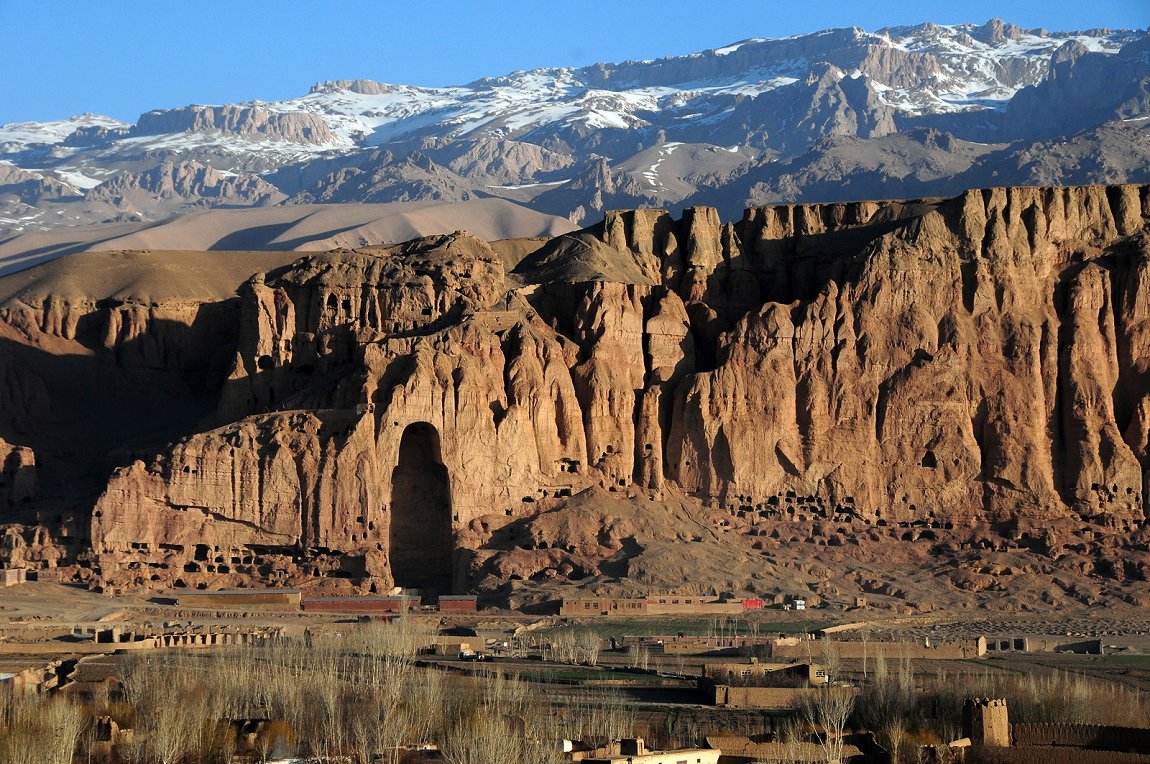
Qutub Minar is one of the major tourist attractions in Delhi. Also written Qutb Minar, it is the world's tallest stone tower. Qutub Minar is inscribed as one of the three UNESCO World Heritage Sites in Delhi under "Qutb Minar and its Monuments, Delhi". (Compare it with other ancient brick monuments in Asia, namely the Jetavana Dagoba in Sri Lanka, the Minaret of Jam in Afghanistan, and the unfinished Mingun Pagoda in Myanmar). I explored it on a free day when I hired a 3-wheeler taxi to take me around Delhi, at the end of a tour of India which I organised for AsiaExplorers.
Inscription Details

Location: N28 31 33.0 E77 11 07.0
Inscription Year: 1993
Type of Site: Cultural
Inscription Criteria: IV

Construction of the Qutub Minar complex was started in 1199 AD by Qutubuddin Aibak and completed by the sultan's successor and son-in-law, Iltutmish. Its construction heralded the start of Muslim reign in the Delhi region. Qutub Minar is 72.5 m high. It has 379 steps from the bottom to the top. It tapers towards the top - the diameter at the base is 14.3 m while at the top floor it is only 2.7 m.


Qutub Minar, one of the most recognisable icons of India.


Qutub Minar represents the finest Islamic structure ever raised in India. It is made of red and buff sandstone. Aibak constructed the first floor. Three more storeys were added by Iltutmish. Projected balconies supported by stone brackets surround each of the storeys. The stone brackets are decorated with honeycomb design, more conspicuously in the first storey. The tower is further decorated with floral motif and arabesque. The inscriptions on the surface of the Minar commemorated repairs undertaken by Firoz Shah Tughlaq (AD 1351-88) and Sikandar Lodi (AD 1489-1517). Firoz Shah renovated the top floor and added marble to the building.

Standing within the compound of Qutub Minar is the Quwwat-ul-Islam Mosque. It was built by Qutubuddin Aibak in AD 1198, and is the earliest mosque built by Delhi Sultans. The mosque has a rectangular courtyard enclosed by cloisters. Its columns were built using material taken from 27 Hindu and Jain temples, which were demolished to construct the mosque. Even today, Hindu motifs such as tasselled ropes and bells, are visible on these pillars. In all likelihood, the Qutub Minar was built for the call of azaan by the muezzin, and represents Islam's entry into a previously Hindu region.

Standing within the mosque complex is the Iron Pillar. It dates back to 4th century AD. On the pillar is an inscription saying that it was a flagstaff erected in honor of the Hindu god, Vishnu, and in the memory of the Gupta King Chandragupta II (BC375-413). The pillar represents India's achievements in metallurgy even at such ancient times. Made of 98 per cent wrought iron, it has stood for the past 1,600 years without rusting or decomposing.


Alai Darwaza, the southern gateway of the Quwwat-ul-Islam mosque, was constructed by Alauddin Khalji in AD 1311. The gateway is a horseshoe arch and the first time a true dome is seen in Indian Muslim architecture. Alauddin Khalji also built a madrasa (religious school) towards the southwest of Qutub Minar to impart religious education to the children.

To the north of the Qutub Minar tower is a massive, but incomplete tower. That is the Alai Minar. Alauddin Khalji started building it, with the intention of building a minar which is twice the height of Qutub Minar. However, he only managed to complete the first storey, which now has a height of 25m.

The Tomb of IItutmish is also within the Qutub Minar complex. It was built in AD 1235. The tomb is just a plain square chamber made of red sandstone. It is embellished with a profusion of inscriptions, geometrical and arabesque patterns in Saracenic tradition on the entrances and the whole of the interior. It used to have a dome which collapsed because the walls unable to bear its weight.

The Qutub Minar complex is today one of the two Unesco World Heritage Sites in Delhi (the other being Humayun's Tomb).

Similar Sites

Finding Accommodation in New Delhi

If you're planning a trip to Srinagar, the New Delhi Budget Accommodation Guide provides a regularly updated list of budget accommodation in the city, showing you an estimated price for each place. If you prefer to say at a hotel, click to view list of New Delhi Hotels. For accommodation in other destinations, visit Hotel Guide for Budget Travelers or Hostels & Guesthouses Accommodation Guide.

Qutub Minar Photo Gallery


The Qutub Minar, as seen from the direction of Alauddin Khalji's Tomb.


Here, the Qutub Minar is view with the Alai Darwaza to its right. The Alai Darwaza is one of the gates into the complex. It was erected in 1311 by Alauddin Khalji.


Ruins of the Quwwat-ul-Islam Mosque within the Qutub Minar complex. Note the Hindu motifs on the carved pillars (right and below). Qutubuddin Aibak, the Delhi sultan who built this complex, demolished 27 Hindu and Jain temples to built this mosque, using material taken from them.


Intricate Islamic motifs embellish the Qutub Minar.


Visitors admiring the carvings on the walls.


Alai Darwaza, an imposing gate into the complex, was erected in 1311 by Alauddin Khalji.


Inside the Alai Darwaza


This is the Alai Minar, an incomplete tower constructed by Alauddin Khalji. If completed, it would be twice the height of Qutub Minar. However, Alauddin Khalji died just when the tower reached its first storey.


Iltutmish's Tomb, also within the Qutub Minar complex, is just a plain square chamber from the outside. But within, it is profusely embellished with inscriptions and geometric patterns.


The tomb of Alauddin Khalji is of simple design within view of the Qutub Minar.


The Exit.


Hotel Room Price Checker

Before booking a hotel room, make sure you are getting the lowest price for it. Different hotel booking websites offers the same room at different prices. If you stick with one site all the time, you could be paying more for the same room. Now why pay more?

The form below is a Research Engine. It doesn't take bookings. Instead it lets you find the hotel booking website that offers the room you want at the lowest price. You can see and compare what different sites are offering, and then click to choose the one with the best price. Do this, and you're guaranteed to save a whole lot of money on your room reservations!


AsiaExplorers Flight Checker

If you're flying somewhere, use our Flight Checker to compare the rates from different airlines. To use it, enter where you will be flying from, where you will be flying to, your departure date and return date. Select the number of passengers, and then click search.

Our engine will return you a list of possible flights that you can take. You can compare the fare of different airlines for your trip. Click on your selected airline, and we transfer you to the airline website.


Return to AsiaExplorers homepage

My message introducing God to all the world: THE GOSPEL ACCORDING TO TIM


Bookmark and Share   Follow EarthDocumentary on Twitter


Copyright © 2003-2010 AsiaExplorers.  All rights reserved.


AsiaExplorers is researched and written by Timothy Tye. Reasonable care is taken to check and verify the accuracy of the content. AsiaExplorers disclaims responsibility for any inconvenience, mishap, injury or death resulting from following the tips and advice provided directly or indirectly by this website. All pages may be printed out for your own personal, non-commercial use. You may use the information on this website on your blog or website so long as you place a dofollow link back to the page in AsiaExplorers where it appears. Photographs not credited to a third party belong to Timothy Tye and may not be reused in any form unless you are first given permission. Write in to inquire if interested. Third party photographs are governed by their respective licenses. To contact Tim, write to the following email address: