Red Fort
@ Lal Qila, Delhi, India


This sight is located in Delhi, India. For travel information about Delhi, read the Delhi Travel Guide. To prepare for a trip to India, read also the India Travel Guide. Looking for budget accommodation? Use AsiaExplorers Budget Accommodation Guide, the no-frills website to cover your budget accommodation needs.

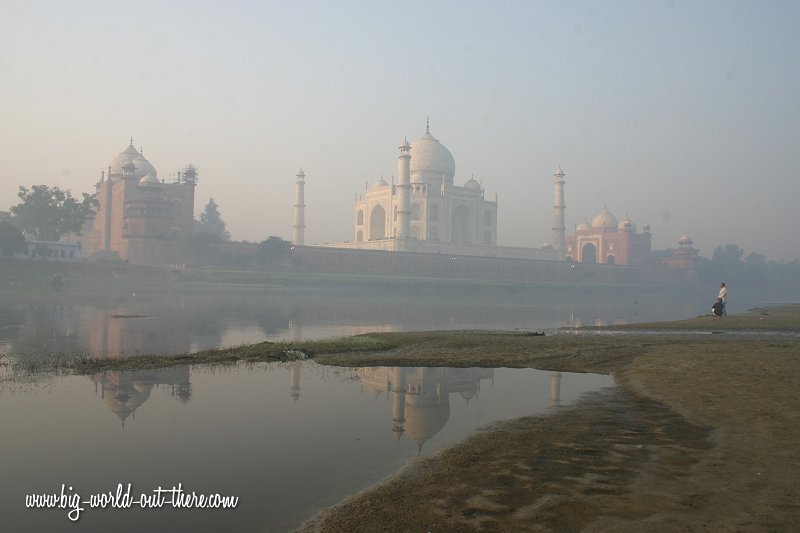
Lal Qila, or the Red Fort, was commissioned by Emperor Shah Jahan (the famous builder of the Taj Mahal) in 1639. The immense citadel took nine years to build, completed in 1648, and was used as the Mughal seat of power until 1857, when the last Mughal emperor, Bahadur Shah Zafar, was dethroned and exiled.

The fort has six gates of which the main one is Lahore Gate. It leads to the main thoroughfare of Chandri Chowk (also written as Chatta Chowk). The following are some of the buildings in the Red Fort:


Lahore Gate Entrance to the Red Fort.


Moti Masjid
This mosque is clad with white marble. Its name means "pearl mosque". It was added to the complex by Emperor Aurangzeb, son of Shah Jahan, in 1659.

Diwan-i-Khas
This is where the emperor meets his trusted nobles. The legendary Peacock Throne is housed here.

Khas Mahal
This is the imperial apartment housing the emperor's prayer room (Tasbih Khana), his sleeping chamber (Khwabgah) and sitting room (Baithak). The Khas Mahal overlooks the Yamuna River and is connected to a balcony where the emperor may appear before his subjects at sunrise.

Rang Mahal
Adjacent to the Khas Mahal, this chamber is exclusively for the palace womenfolk.

Diwan-i-Aam
This is the emperor's audience hall where he has daily audience with his subjects. It has 60 pillars and a low marble bench for the chief minister (wazir).

Hammams
These are the royal bath. It consists of three enclosures. The first provides hot vapour baths. The second sprayed rose-scented water through the sculpted fountains, and the third cold water.


Click thumbnails for photo gallery

Lahore Gate

The main entrance to the Red Fort.

Indian War Memorial Museum

The first building visitors encounter as they enter the Red Fort complex.

Diwan-i-Aam

Audience hall for the emperor to meet his subjects.

Mumtaz Mahal

This is the harem, and today converted into the Red Fort Museum of Archaeology.

Rang Mahal

This chamber is built exclusively for the palace women.

Khas Mahal

The emperor's royal apartments.

Diwan-i-Khas

The upper house of the king's administration, where he meets his ministers and noblemen.

Hammams

The royal baths.

Moti Masjid

This tiny mosque was added by Emperor Aurangzeb in 1659.


Expedia.com


Copyright © 2003-2008 AsiaExplorers.  All rights reserved.

About the Author: AsiaExplorers is researched and written by Timothy Tye. We take reasonable care to check and verify the accuracy of the content. However, we disclaim any responsibility for any inconvenience, mishap, injury or death resulting from following the advice provided directly or indirectly by AsiaExplorers and the comments on its pages. All the photographs in AsiaExplorers are available for publication. Please contact AsiaExplorers at the following email address for your enquiries: