 Taj Mahal, Agra
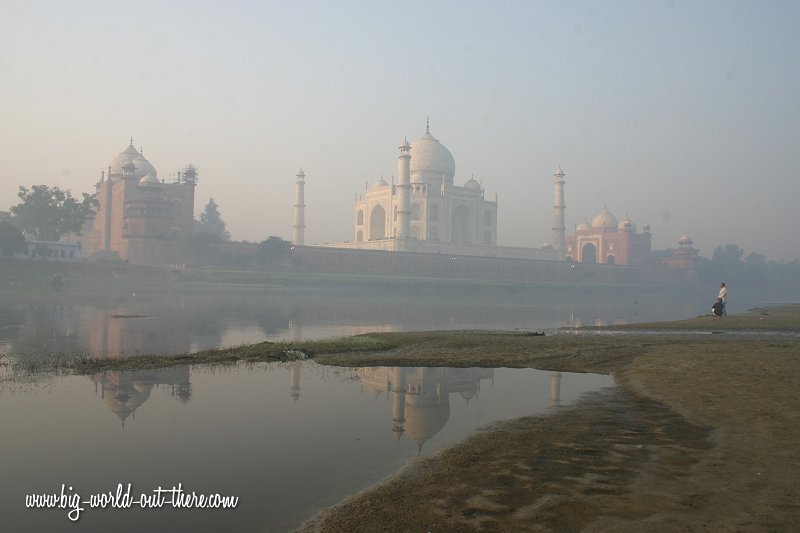
 The Taj Mahal, India Author: Aiwok (Creative Commons Attribution 3.0 Unported)
The Taj Mahal is one of the most famous buildings in the world. It is a mausoleum built by Shah Jahan, the fifth emperor of the Mughal Dynasty, in memory of his beloved wife Arjuman Banu Begun, who was also known by the royal title of Mumtaj Mahal. The building, which is today a UNESCO World Heritage Site, is located within a spacious landscaped garden, by the banks of the Yamuna River.
 Taj Mahal, Agra, India Author: Aiwok (Creative Commons Attribution 3.0 Unported)
Mumtaj Mahal was the third and favorite wife of Emperor Shah Jahan. She died while giving birth to their 14th child, Gauhara Begum. According to legend, before she died, she asked her husband to keep three promises: never to remarry, to be kind to their children, and to build for her a tomb. It is said that he kept all three.
The Taj derived elements from existing tomb designs, owing much to that of Humayun's Tomb in Delhi. It stands in a formal garden measuring 1900ft by 1000ft with its back to the Yamuna River. Agra was the site for it because it was the capital of the Mughal Empire, which took in much of northern India, in the 16th and 17th centuries. One enters through a pavilion at the main axis. The mausoleum sits on a raised terrace and as we approach it, we can see it reflected on the reflecting pools. On its left and right are identical red sandstone buildings. One is the mosque, the other serves no particular purpose but erected simply to preserve the symmetry with the mosque.
 The gateway towards the Taj Mahal Author: Jyusin (Creative Commons Attribution 2.0 Generic)
Shah Jahan intended to build a second, similar tomb for himself, out of black marble. In fact, the project to build the Black Taj Mahal was afoot, but political circumstances intervened - his son Aurangzeb disposed him. He spent the remainder of his life at Agra Fort, Members of AsiaExplorers explored the opposite bank of the Yamuna river where ruins of the incomplete Black Taj was located.
Photographing the Taj
Photographing the Taj Mahal was a highlight of my trip to India. My friends and I pulled outselves out of bed early in the morning, when it was still dark outside. The taxi we called for was already waiting for us at the hotel drive way. As with many of the taxis I had taken in India, it was yet another rickety contraption. As it made its made through the empty streets of Agra, I half wondered whether it would simply fall apart before it got there.
We arrived at the gates of the Taj Mahal while it was still dark. The gates would not be open for a few more hours. However, we hadn't come to visit the Taj from the inside. Rather we had planned to see the Taj from the Yamuna River. I learned that the river offers the best views of Taj Mahal at sunrise.
 Inside the Taj Mahal Author: Poco a poco (Creative Commons Attribution 3.0 Unported)
The banks of the Yamuna was foggy and cold. Indian dhobies were already out thrashing laundry against rocks. A flickering of light - a lit floral offering released by a worshipper - glided down the river. The Taj Mahal loomed before me, a massive structure bathed in darkness.
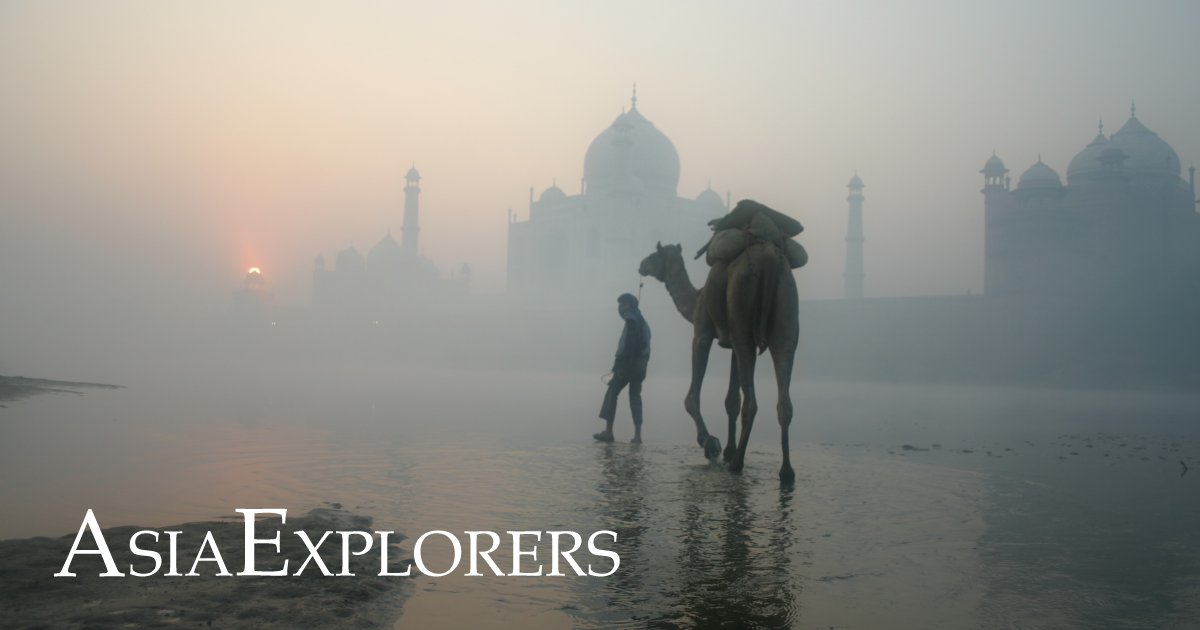
To get the best view, we hired a boatman to ferry us across the Yamuna. There we waited as the sky slowed caught the first light of dawn. From ink blue, it turned to shades of dirty grey, then to vermillion, pink and crimson. A man appeared with his camel. I paid him some money to walk the best along the river, capturing shots of the camel with the morning sun creeping up behind it.
Inscription Details
Location: N27 10 27 E78 02 32
Inscription Year: 1983
Type of Site: Cultural
Inscription Criteria: I
A replica of the mausoleum can be found at Taman Tamadun Islam, an Islamic-themed monument park in Kuala Terengganu, Malaysia.
 | Taj Mahal in the morningExperience Taj Mahal in the morning, when the sun is just coming out.

|
 | Taj Mahal in the eveningReturn to the Taj Mahal in the evening, and mingle with the throngs of visitors admiring the mausoleum.

|
The Taj derived elements from existing tomb designs, owing much to that of Humayun's Tomb in Delhi. It stands in a formal garden measuring 1900ft by 1000ft with its back to the Yamuna River. Agra was the site for it because it was the capital of the Mughal Empire, which took in much of northern India, in the 16th and 17th centuries. One enters through a pavilion at the main axis. The mausoleum sits on a raised terrace and as we approach it, we can see it reflected on the reflecting pools. On its left and right are identical red sandstone buildings. One is the mosque, the other serves no particular purpose but erected simply to preserve the symmetry with the mosque.
Shah Jahan intended to build a second, similar tomb for himself, out of black marble. In fact, the project to build the Black Taj Mahal was afoot, but political circumstances intervened - his son Aurangzeb disposed him. He spent the remainder of his life at Agra Fort, Members of AsiaExplorers explored the opposite bank of the Yamuna river where ruins of the incomplete Black Taj was located.
|