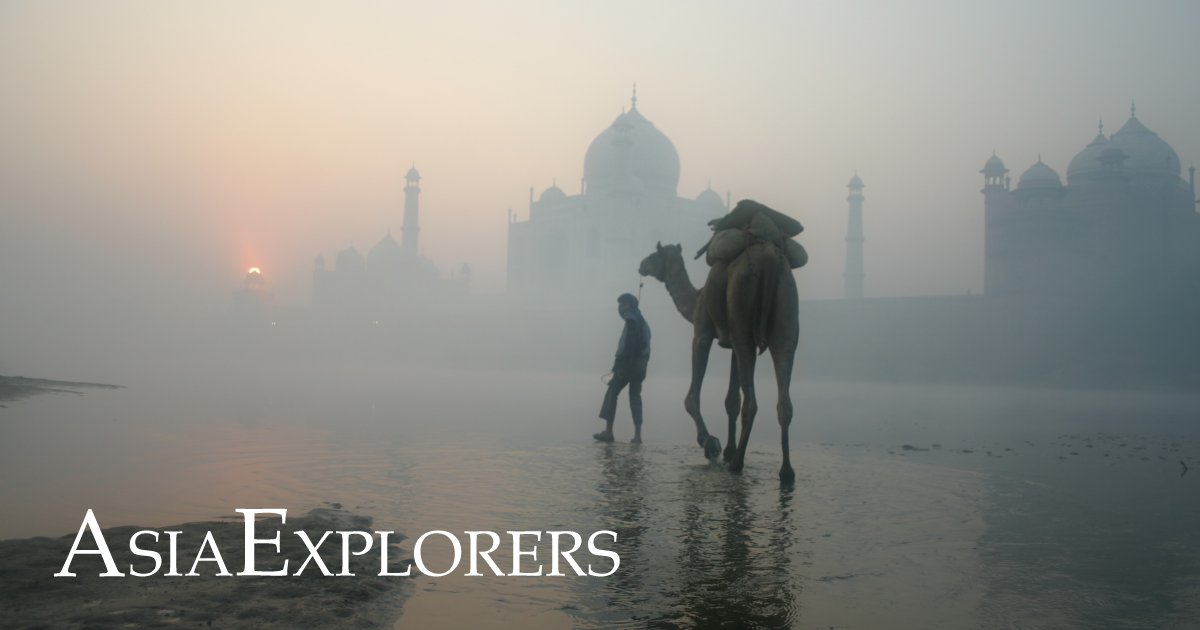
India, a kaleidoscope of peoples, tongues and cultures
India Budget Travel Guide prepares travelers who wish to embark on a budget trip to visit the second biggest country in Asia. As a budget traveler myself, I am well prepared to rough it out a bit in India, and I hope the tips I share with you on this and subsequent pages will have you on your way to experiencing India, and accepting it on its terms.
India a vast country with great diversity of peoples, cultures, religions and languages. Every traveler - more so if you are on a budget - can only expect to cover a small portion of the country at any one time. Having said this, India is not an expensive destination. You are more likely to be limited by time and distance than money.
Over half of all first time tourists to India inevitably descend on a specific section of India called the Golden Triangle. This is the region made up of three significant (and nowadays highly touristic) cities: Delhi, Agra and Jaipur. While we may ignore this mainstream approach to India tourism and choose a more off-the-beaten-path approach, we believe this would not do justice to the history and culture of the nation.
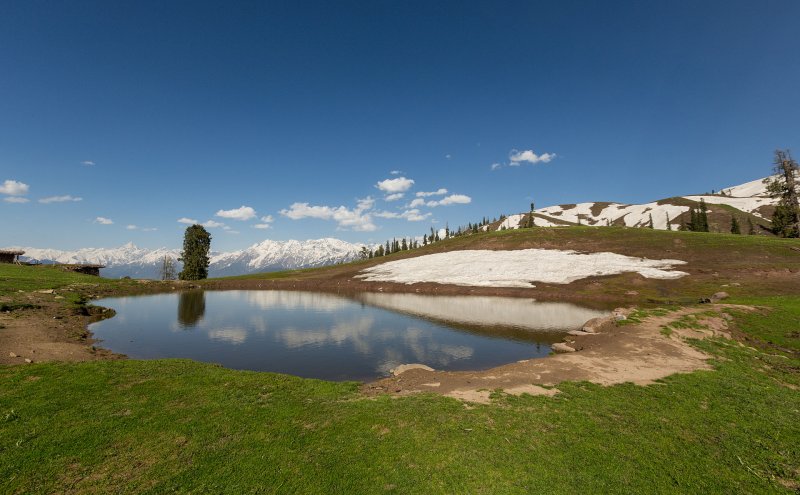
In our armchair exploration of India, we shall therefore begin by taking a look at the three cities of the Golden Triangle. After that, we branch northwards to the volatile region of Kashmir. Kashmir is volatile (as well as prone to natural disasters like avalanches and earthquake), but it is also exceedingly beautiful, as we shall see. Then, we venture eastwards, to the most sacred and oldest of Indian cities, Varanasi. Having covered these place, it is still very much an understatement to claim that we have seen India. But this is just the beginning. As AsiaExplorers continues its exploration, we will add new sights into our future installments.
To learn about the history of India, we should compare it with the other Asian giant, China. One significant difference between India and China is that while China was centrally administered by an imperial court for much of its known history, India was governed all along by regional rulers, without ever a centralized government, until the British Raj came into being. This resulted in traces of ancient principalities that continue to exist today. Their hereditary rulers, although no longer ruling, are often regarded pillars of their societies, and accorded due reverence by their people. The Maharajah of Jaipur, for example, still reside at Chandra Mahal, his city palace. Even though he is no longer the de facto ruler, he still has much influence over the administration of his city.
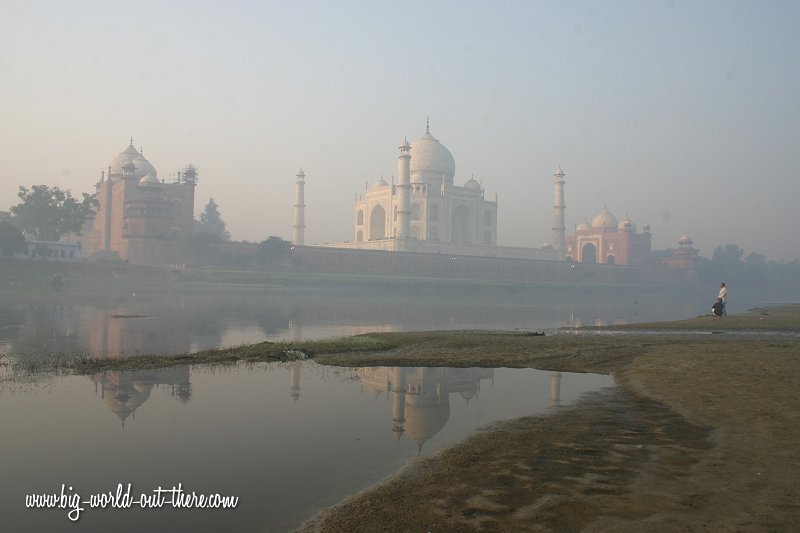
So thus is the picture of India. At an immediate glance, it may appear like a tangled confusion of cities and kings, but with a careful eye, we can bring forth strands of continuity. As for the ancient rulers of India, we can categorize them into two main groups: Firstly, there's the Maharajahs, who are Hindu rulers, who established their kingdoms in cities like Jaipur, Udaipur, Jaisalmer, and others in what is known as the present-day state of Rajastan. Appearing about the same time as the Maharajahs, are the Sultans of the Mughal Empire, who are Muslim rulers, and their kingdoms centred around Agra and Delhi. Indeed the most emblematic landmark of India, the Taj Mahal, was not of Hindu, but rather Muslim architectural style.
India Travel Information
74 +5½ hours ahead of Greenwich Mean Time.
Currency: rupee (Rs)
Language: Hindi is spoken by 360 million speakers, more people than any other languages in India. Other major Indian languages include Telugu, Bengali, Marathi and Tamil. India recognises 22 national languages namely Assamese, Bengali, Bodo, Dogri, Gujarati, Hindi, Kannada, Kashmiri, Konkani, Maithili, Malayalam, Manipuri, Marathi, Nepali, Oriya, Punjabi, Sanskrit, Santhali, Sindhi, Tamil, Telugu and Urdu. English is the choice for educated Indians.
International Dialing Code: 91
Population: 1 billion
Religion: Hindu (80 percent), Muslim (11 percent), Christian (2 percent), Sikh (2 percent), Jain, Buddhist.
Electricity: 220V AC, 50Hz
Electrical Outlet: Two round pin. (See details here: http://www.kropla.com/electric.htm)
Driving: On the left side of the road.
Accommodation: see online list of hotels in India
India Geography
Seen on a map, the Indian subcontinent is shaped like a kite, against the sky-blue expanse of the Indian Ocean. Within it we find a full spectrum of climates, ranging for the arid Thar desert to the frigid Himalayas. Much of life in India is subject to the whims of the monsoon. As India faces the huge Indian Ocean to its south, much of its precipitation when it is summer in the northern hemisphere. That's when the warming of the great Asia landmass creates the southwest monsoon, which dominates from late June until end September, and bringing with it the highest humidity and rain. As the wind dies off towards October, so the land dries out into winter. The southeast coast of India, however, receives rainfall from the northeast monsoon until January.
The monsoon means life to India, a fact that is acknowledged right from the ancient times. Since the able to accurately forecast the coming of the monsoon rain is a matter of life and death for the farming community, it was not surprising that the maharajahs delve into astronomy. In particular, Maharajah Jai Singh of Jaipur was a keen astronomer, building observatories in Delhi, Mathura, Ujjain, Varanasi and the biggest, the Jantar Mantar, in Jaipur.
How to fly to India
Major airports are located in Mumbai (Bombay), New Delhi, Chennai (Madras) and Kolkata (Calcutta). In addition, there are now international flights to Amritsar, Ahmedabad, Bangalore, Cochin, Dobolin (Goa), Guwahati, Hyderabad, Jaipur, Kanpur, Pune, Thiruvananthapuram and Varanasi. Left luggage facilities are available at Delhi, Mumbai, Kolkata and Chennai airport. The airport banks operate 24 hours, so changing money should not be a big problem.
If you are traveling to India, you can click here for India Hotels and Cheap Flights to India.
How much is India Airport Tax
Airport departure tax is Rs 700 consisting of Rs 500 Foreign Travel Tax and Rs 200 Passenger Service Fee. If departing to a neighbouring country, the Foreign Travel Tax is only Rs 150 while the Passenger Service Fee remains at Rs 200. Often these are included in the cost of your ticket, so check with your travel agent.
India Entry Requirements
Do you need an India Visa
Apart from the citizens of Bhutan and Nepal, everybody else needs a visa to enter India. Tourist visas cost US$60 for a six-month stay and US$75 for a year. The visa cannot be extended; you have to leave the country and re-enter on a new one. However, it may not be easy to obtain the visa from a neighbouring country. It is therefore advisable to get your visa from the India embassy in your own country before starting your journey. See below for list of India embassies.
What are duty-free imports at India Customs
Duty-free imports include 200 cigarettes (or 50 cigars), 1 litre of alcohol, a camera with five rolls of film, and personal items including binoculars, portable typewriter, among others. For more details of what you can bring in, visit this webpage: http://www.cbec.gov.in/cae/customs/info-trvllrs/bagge-rules.htm
How to find accommodation: India Hotels
You can now book hotel rooms of all the major cities in India online. But before you do that, use my free search engine to compare the prices from the best Online Hotel Booking websites, and get the most from your money. This search engine stack ranks the hotel rooms according to how much each website is charging. This way, you get to select the cheapest price for the same room from different providers. To use the hotel room search engine, click on Hotels in India.
Budget Hostels in India
If mainstream hotel rooms overblow your budget, you can consider the many budget hostels in India. They can be dirt cheap, but I would advise you to thoroughly scrunitize them before booking anything. Find out whether towel and toiletries are provided, for example, or whether you need ensuite bathrooms. Click here for list of budget hostels in India, as provided by Hostelbookers.
Local Tours of India
Before you embark on your trip to India, go through some of the India local tours that you might want to consider booking.
History of India
To go through the entire history of India would probably fill a few monumental tomes. I shall not attempt to be that ambitious. Instead I will provide a highly digested version here. When I have the time, I will revisit this and perhaps work on a more comprehensive write-up.
Local Tours of India
Before starting your trip, you should consider what are the local tours that you can want to consider joining.
Ancient Times
The starting point of Indian history can be placed at around 2500 BC. Initially it was thought that the earliest settlements were confined to the Indus valley, hence they were called the Indus Valley Civilisation, centering around the towns of Mohenjodaro and Harappa, now both in Pakistan. In these places, archaeologists discovered well-planned towns, metalworks and kilns. Later, however, archaeologists discovered that in addition, the northwest and western parts of India were also inhabited, places such as Ropar in Punjab, Lothal in Gujarat and Kalibangan in Rajastan, and these places are all far from the Indus. So, a new name was provided for these ancient civilization: they were called the "Harappan culture." This culture lasted until around 1700BC, when ecological and climatic changes brought frequent periods of flooding to their lands, gradually taking their toll on the culture. By 1500BC, when the peoples of northeastern Iran and the Caspian Sea started to migrate into India, the Harappan culture has already gone.
Vedic Age
These newcomers are the Aryans. Unlike the Harappan, they did not settle in well-planned towns, but preferred to live along the riverbanks and in small villages. From the Aryan there developed the Vedic Age (1500-1000BC). The name comes from the four Vedas, the earliest Hindu scriptures. It was during this period that Hinduism emerged from the fog of time. As the invaders over the local inhabitants, these newcomers organised themselves into tribes.
Emergence of Castes
During the Vedic Age, society began to form a structure, with the tribal leader being hereditary, and internal divisions developing according to work specialization. Also, the fairer-skinned newcomers distinguished themselves from the darker skinned peoples over whom they . This distinction according to varna, or colour, was the early stage of caste, eventually creating the ruler class that included the Brahmana (priets), Kshatriya (warriors), Vaishya (merchants) and Shudra (farmers). This initial division by occupation was flexible, but later, the caste-status solidified and became fixed from birth, making mobility from one caste to another difficult, if not outright impossible. This led to much poverty and misery to the strikened, usually at the bottom of the caste.
New religious movements
By this time, the belief in Hindu deities was already entrenched. But the disparity in living conditions of the different castes persuaded two different individuals in the 6th century BC to seek for the meaning of life. To the question of why there should be so much suffering, both arrived at the same answer: to free oneself from greed and therefore from suffering, one must pursue a life of moderation, of non violence, abstinence, truthfulness and meditation. These teachings won popular acceptance, and resulted in two different religions that survived to this day: Mahavira introduced Jainism while Siddhartha Gautama introduced Buddhism.
Maury
By around 300 BC, full fledged state systems, culminating in empires, had emerged. The best example of this was the Magadha Empire, ruled by the Maurya Dynasty. Its most famous ruler was Emperor Ashoka, who ruled from 269 BC to 232 BC. When Emperor Ashoka died, the empire began to disintegrate.
South India civilization
Meanwhile, the society in South India, centred around the Chola kingdom of Tamil Nadu, was developing trade links with distant lands inclucing Java, Sumatra, Bali, and even the Roman Empire.
Food in India
It is not true to assume that Indian food is hot. Yes, they do use a lot of spices, but in many cases, only south Indian cuisine can truly be considered hot.
Indian cuisine make ample use of milk and milk products, particularly ghi and curd. Dals or split lentils are common. With the majority of the Hindu population being vegetarian, a wide variety of vegetable dishes are available. Where meat is consumed, there is a distinct Muslim influence to the cooking. Pork is therefore almost non existence on Indian tables, and mutton is the most likely choice of meat, apart from chicken and fish.
Churtneys and pickles can be astonishingly sour, or sweet, or hot, or all of the above.
Breads come in a kaleidoscope of styles, shapes and sizes, and of course names, ncluding the paratha, battura, chapatti, pori, naan and other forms of roti. The use of the conical earthern oven called the tandur produce the ever-popular tanduri chicken.
Meals are customarily concluded with confectionery, and the Indians like theirs sweet. To non-Indians, exceedingly. These desserts are often milk based, and include the rasagulla, sandesh, rasamalai, and more.
Unesco World Heritage Sites in India
The above logo denotes that a site is designated a World Heritage by Unesco. The sites inscribed into the World Heritage list in Thailand are:
Agra Fort (1983)
Ajanta Caves (1983)
Ellora Caves (1983)
Taj Mahal (1983)
Group of Monuments at Mahabalipuram (1984)
Sun Temple, Konârak (1984)
Kaziranga National Park (1985)
Keoladeo National Park (1985)
Manas Wildlife Sanctuary (1985)
Churches and Convents of Goa (1986)
Fatehpur Sikri (1986)
Group of Monuments at Hampi (1986)
Khajuraho Group of Monuments (1986)
Elephanta Caves (1987)
Great Living Chola Temples (1987, 2004) 9
Group of Monuments at Pattadakal (1987)
Sundarbans National Park (1987)
Nanda Devi and Valley of Flowers National Parks (1988, 2005)
Buddhist Monuments at Sanchi (1989)
Humayun's Tomb, Delhi (1993)
Qutb Minar and its Monuments, Delhi (1993)
Mountain Railways of India (1999, 2005)
Mahabodhi Temple Complex at Bodh Gaya (2002)
Rock Shelters of Bhimbetka (2003)
Champaner-Pavagadh Archaeological Park (2004)
Chhatrapati Shivaji Terminus (formerly Victoria Terminus) (2004)
India Money Matters
India Currency
The India currency is called the rupee (Rs). Banknotes are available in denominations of 1, 2, 5, 10, 20, 50, 100 and 500 rupees. At the time of writing, US$1.00 = Rs44.22. For the latest exchange rate, use the Oanda Currency Converter at http://www.oanda.com/convert/classic. Always use authorised money changers. It is illegal to change money on the black money, and the premium is not worth the effort anyway.
Travellers' Cheques
Not all banks accept traveller's cheques, but they are more likely to offer better rates than retail establishments. Well-known brands such as Thomas Cook, American Express and Visa are more likely to be accepted.
Credit Cards
Well-known brands such as American Express, MasterCard and Visa are gaining acceptance, especially in hotels, restaurants and large shops.
India Banking Hours
Most banks are open from 10:00am to 2:00pm on weekdays and 10:00am to noon on Saturdays.
India Telecommunications
India Telephone
How to dial from India to another country? You use the access code 00, followed by the the Country Code, Area Code and Phone Number. For example, if you're calling the number 04-555 6666 in Penang, Malaysia from India, you would dial 00-60-4-555-6666.
India Yellow Pages
India Yellow Pages: http://www.indiayellowpages.com/
India Emergency Numbers
The following numbers may prove useful during emergencies:
88: Police Stations with telephone numbers (Mumbai)
34: Fire Stations (Mumbai)
54: Ambulance Services (Mumbai)
Low cost international calls to India and other countries from landlines and mobiles together with pay as you go and sim free mobile phones as well as broadband internet access.
India Newspapers
The Times of India: http://timesofindia.indiatimes.com/
The Indian Express: http://www.indianexpress.com/
The Hindu: http://www.hindu.com/
India Health Requirements
Even though there is no necessary innoculations required for entering India, you shoud get jabs for typhoid, hepatitis A, polio and tetanus. If you are going to be in India for an extended period, consider also innoculations against meningitis, rabies and Japanese B encephalitis.
You may consider taking anti-malarial protection, such as malaria prophylaxis, unless going to places over 2500m. Sleep under mosquito netting or use mosquito coils, and do not leave exposed skin when about during dusk.
Many travellers to India suffer from diarrhoea caused by low-level food poisoning. Stomach upsets are usually caused by the consumption of food cooked with vast amounts of oil and spices. To acquaint your stomach to Indian food, eat only well-cooked vegetarian dishes for the first few days upon arriving. Never drink unboiled or unfiltered water. It is advisable to stick to mineral water and aerated drinks from familiar brands.
India Public Holidays
The following are public holidays observed in India. Only those marked with * are observed across India:
Republic Day *
Mahashivratri
Milad-Un-Nabi (Birth of the Prophet)
Mahavir Jayanthi
Good Friday
Easter Monday
Buddha Purnima
Janmashtami
Independence Day *
Id ul Fitr (End of Ramadan)
Dussehra (Vijaya Dashami)
Mahatma Gandhi's Birthday *
Deepavali or Diwali (Festival of Lights)
Guru Nanak's Birthday
Idu'l Zuha/Bakrid (Feast of the Sacrifice)
Muharram (Islamic New Year)
Christmas Day
Boxing Day
India Location Map
Photos of India
 Young Kashmiri boy, Srinagar (13 November 2004) © Timothy Tye
 Old man on Dal Lake, Srinagar (13 November 2004) © Timothy Tye
 Woman walking past a shrine in Varanasi (16 November 2004) © Timothy Tye
 Evening in a busy street in Agra (8 November 2004) © Timothy Tye
 Mahouts on their elephants at Amber Fort (7 November 2004) © Timothy Tye
 Tim at the Taj Mahal (9 November 2004) © Timothy Tye
| |
Places of Interest in India
What to see in Northern India
- Akshardham
- Bahai Lotus Temple
- Barber Tomb
- Connaught Place
- Bu Halima Enclosure
- Chandni Chowk
- Coronation Memorial
- Crafts Museum
- Feroze Shah Kotla
- Haus Khas
- Humayun's Tomb
- INA Market
- India Gate
- Indian War Museum
- Isa Khan's Tomb
- Jahanpanah
- Jama Masjid
- Jantar Mantar, Delhi
- Kashmiri Gate vicinity
- Khan-I-Khanan's Tomb
- Khirkee
- Lodi Gardens
- Mandi House
- Mehrauli Archaeological Park
- National Gallery of Modern Art
- National Museum of India
- National Rail Museum
- Nehru Memorial Museum and Library
- New Delhi Railway Station
- Nizamuddin Complex
- Parliament Building
- Purana Qila
- Qutb Minar
- Raisina Hill
- Rajghat
- Rajpath
- Rashtrapati Bhavan
- Red Fort
- Safdarjung's Tomb
- Sanskriti Museum
- Shri Lakshmi Narain Temple
- The Ridge
- Tughlaqabad Fortress
- Vijay Chowk
Cities and Sights in Haryana & Punjab States
- Amritsar
- Amritsar's Golden Temple
- Anandpur Sahib
- Chandigarh
- Kapurthala
- Panipat
- Patiala
- Sirhind
- Surajkund
Sights in Shimla
- Christ Church
- Jakhu Hill Temple
- Lower Bazaar
- State Museum
- The Mall
- The Ridge
- Viceregal Lodge
Cities and Sights in Himachal Pradesh
- Bharmour
- Bhimakali Temple
- Chail
- Chamba
- Dalhousie
- Dharamsala
- Great Himalayan National Park
- Kangra Valley
- Kasauli
- Kinnaur
- Lahaul and Spiti
- Kullu Valley
- Manali
- Mandi
- Nahan
- Narkanda
- Parvati Valley
- Rampur
- Sangla Valley
- Sarahan
- Tabo Monastery
Cities and Sights in Ladakh, Jammu and Kashmir
- Alchi Monastery
- Gulmarg
- Hemis Monastery
- Jammu
- Kargil
- Leh
- Matho Monastery
- Mulbekh
- Nubra Valley
- Pahalgam
- Rangdum
- Shey
- Stok
- Southeast Ladakh
- Srinagar
- Suru Valley
- Zanskar
What to see in Central India
Cities and Sights of Uttar Pradesh and Uttaranchal
- Agra
- Agra Fort
- Aligarh
- Allahabad
- Almora
- Ayodhya
- Brindavan
- Chitrakoot
- Corbett National Park
- Dehra Dun
- Dudhwa National Park
- Fatehpur Sikri
- Ganges River
- Haridwar
- Itimad-ud-Daulah's Tomb
- Jaunpur
- Jhansi
- Kalinjar Fort
- Kanpur
- Kausani
- Lansdowne
- Lucknow
- Mathura
- Mussoorie
- Nainital
- Rampur
- Ranikhet
- Rishikesh
- Sarnath
- Sikandra
- Taj Mahal
- The Gardhwal Hills
- Varanasi
Cities and Sights in Bihar and Jharkhand
- Bodh Gaya
- Bodh Gaya's Mahabodhi Temple
- Deoghar
- Gaya
- Hazaribagh Wildlife Sanctuary
- Jamshedpur
- Munger
- Nalanda
- Netarhat
- Palamau National Park
- Parasnath
- Patna
- Rajgar
- Ranchi
- Sasaram
- Sonepur
- Vaishali
Cities and Sights of Madhya Pradesh and Chhattisgarh
- Ajaigarh
- Bandhavgarh National Park
- Bhojpur
- Bhopal
- Chanderi
- Gwalior
- Gwalior Fort
- Gyaraspur
- Indore
- Jabalpur
- Kanha National Park
- Khajuraho
- Maheshwar
- Mandla
- Mandu
- Mandu's Jahaz Mahal
- Narmada River
- Omkareshwar
- Orchha
- Orchha's Jahangiri Mahal
- Pachmarhi
- Sanchi
- Shivpuri
- Ujjain
What to see in Eastern India
Sights in Kolkata
- Alipore
- Armenian Church of St Nazareth
- Botanical Gardens
- Chowringhee
- College Street
- Indian Museum
- Jorasanko
- Kalighat
- Kumartuli
- Maidan
- Marble Palace
- Mother House
- Nakhoda Mosque
- Nilhat House
- Nirmal Hridaya
- Park Street Cemetery
- St John's Church
- Tangra
- Victoria Memorial
Cities and Sights of West Bengal and Sikkim
- Barddhaman
- Belur Math
- Dakshineshwar
- Darjeeling
- Gangtok
- Gaur
- Hooghly River
- Jaldapara Wildlife Sanctuary
- Kalimpong
- Kurseong
- Murshidabad
- Pandua
- Pelling
- Shantiniketan
- Shyama Raya Temple, Bishnupur
- Siliguri
- The Sundarbans
- Tashiding Monastery
- Yuksam
Cities and Sights of Orissa
- Baleshwar
- Baripada
- Berhampur
- Bhitarkanika Sanctuary
- Chilika Lake
- Cuttack
- Gopalpur-on-Sea
- Konark: The Sun Temple
- Puri
- Ratnagiri
- Simlipal National Park
- Taptapani
Sights in Bhubaneswar
- Bindusagar Tank
- Chausath Yogini Temple
- Dhauli
- Lingaraj Temple
- Mukteshwar Temple
- Nandankanan Zoo
- Orissa State Museum
- Parasurameshwar Temple
- Rajarani Temple
- Udaigiri and Khandagiri Caves
- Vaital Deul Temple
Cities and Sights of Assam and the Northeast
- Agartala
- Aizawl
- Bomdila
- Dimapur
- Imphal
- Itanagar
- Kaziranga National Park
- Kohima
- Loktak Lake
- Majuli River Island
- Namdapha National Park
- Sibsagar
- Shillong
- Tawang Monastery
- Tezpur
- Ziro
Sights in Guwahati
- Hajo
- Kamakhya Temple
- Madan Kamdev
- Navagraha Temple
- State Museum
- Sualkuchi
- Umananda Temple
- Vashishtha Temple
- Zoo & Botanical Gardens
What to see in Western India
Cities and Sights of Rajasthan
- Ajmer
- Alwar
- Barmer
- Bharatpur
- Bikaner
- Bundi
- Chittorgarh
- Deeg
- Dungarpur
- Jhalawar
- Keoladeo Ghana National Park
- Kota
- Kumbhalgarh
- Mount Abu
- Nagaur
- Pholodi
- Pushkar
- Ranakpur
- Ranthambhore National Park
- Sariska National Park
- Shekhawati
Sights in Jodhpur
- Balsamand
- Jaswant Thada
- Mandore
- Mehrangarh Fort
- Sardar Bazaar
- Sardar Samand Lake
- Umaid Bhavan Palace
- Albert Hall
- Amber Fort
- Badi Chaupar
- Birla Mandhir
- Chandra Mahal
- City Palace Museum
- Gaitor
- Galta
- Government Central Museum
- Govind Dev Temple
- Hawa Mahal
- Ishwar Lat
Jaigarh
- Jal Mahal
- Jami Masjid
- Jantar Mantar
- Jawahar Kala Kendra
- Johari Bazaar
- Kesar Kyari Bagh
- Moti Doongri
- Nahargarh
- Raj Mahal Palace
- Rambagh Palace
- Ramgarh
- Sanganer
- Sisodia Rani ka Bagh
Sights in Jaisalmer
- Akal Fossil Park
- Bada Bagh
- Badal Vilas
- Bhattiani Rani Temple
- Desert National Park
- Gadisagar Lake
- Jaisalmer Fort
- Khuri
- Lodurva
- Manik Chowk
- Nathmalji's Haveli
- Patwon ki Haveli
- Salim Singh's Haveli
Sights in Udaipur
- Ahar
- City Palace
- Eklingji
- Fateh Sagar Lake
- Jag Mandir
- Jag Niwas
- Jagdish Mandir
- Nagda
- Nathdwara
- Saheliyon Ki Bari
- Shilpgram
Cities and Sights of Gujarat
- Adalaj Vav
- Bhavnagar
- Bhuj
- Champaner
- Daman
- Dholavira
- Diu
- Dwarka
- Jamnagar
- Junagadh
- Lothal
- Mandvi
- Modhera Sun Temple
- Nal Sarovar Sanctuary
- Palitana
- Patan
- Porbandar
- Rajkot
- Sasan Gir National Park
- Siddhpur
- Somnath
- Surat
- The Little Rann of Kutch Sanctuary
- Vadodara
Sights in Ahmedabad
- Ahmed Shah's Mosque
- Bhadra Fort
- Calico Museum
- Gandhinagar
- Hatheesing Temple
- Jami Masjid
- LD Institute of Technology
- Rani Rupmati's Mosque
- Rani Sipri's Mosque
- Sabarmati Ashram
- Sanskar Kendra
- Sarkhej Roja
- Siddi Saiyad's Mosque
- Teen Darwaza
- Tomb of Ahmed Shah
- Vishala Complex
What to see in Southwestern India
Sights of Mumbai
- Ballard Estate
- Bandra
- Banganga
- Colaba Causeway
- Crawford Market
- Elephanta Island
- Film City
- Flora Fountain
- Gateway of India
- General Post Office
- Haji Ali Mosque
- Horniman Circle
- Juhu Beach
- Kala Ghoda
- Khotachiwadi
- Mahalaxmi Temple
- Malabar Hill
- Marine Drive
- Mumbai Stock Exchange
- Prince of Wales Museum
- Sanjay Gandhi National Park
- Shahid Bhagat Singh Marg
- Town Hall
- Victoria Terminus
- Wellington Fountain
Cities and Sights of Maharashtra
- Ahmadnagar
- Ajanta
- Alibag
- Aurangabad
- Daulatabad
- Ellora: Kailasanatha Temple
- Ganapatipule
- Kolhapur
- Lonar
- Lonavla
- Mahabaleshwar
- Matheran
- Melghat Tiger Reserve
- Murud-Janjira
- Nagpur
- Nasik
- Pandharpur
- Pune
- Wardha
Sights in Goa
- Anjuna
- Arambol
- Braganza House
- Calangute
- Cavelossim
- Colva
- Mapusa
- Margao
- Palolem
- Pernem
- Pilar
- Ponda
- Rachol
- Reis Magos
- Tambdi Surla
- Terekhol Fort
- Vagator
Sights in Old Goa
- Archaeological Museum
- Basilica de Bom Jesus
- Chapel of St Catherine
- Church and Convent of St John of God
- Church and Monastery of St Augustine
- Church of St Cajetan
- Church of St Francis of Assisi
- Convent of St Monica
- Gateway of Adil Shah's Palace
- Our Lady of the Rosary
- Royal Chapel of St Anthony
- Sé Cathedral
- Viceroy's Arch
Sights in Panaji
- Church of Our Lady of the Immaculate Conception
- Menezes Braganza Institute
- Panaji Old Town
- Secretariat
- State Museum
Cities and Sights of Karnataka
- Aihole
- Amba Vilas Palace, Mysore
- Badami
- Barkur
- Bhatkal
- Bidar
- Bijapur
- Belgaum
- Belur
- Chitradurga
- Gadag
- Gokarna
- Gulbarga
- Halebid
- Kodagu
- Mangalore
- Melkote
- Mysore
- Pattadakal
- Somnathpur
- Sravana Belgola
- Sringeri
- Srirangapattana
- Talakad
- Udipi
Sights in Bangalore
- Attara Kacheri
- Bangalore Palace
- Cubbon Park
- Gavi Gandadhareshvara Temple
- Government House
- Lalbagh
- St Mark's Cathedral
- Tipu Sultan's Palace
- Venkataramanaswamy Temple
- Vidhana Soudha
Sights in Hampi
- Elephant Stables
- Hazara Rama Temple
- King's Balance
- Kodandarama Temple
- Krishna Temple
- Lotus Mahal
- Matanga Hill
- Narasimha Monolith
- Queen's Bath
- Temple of Achyuta Raya
- Virupaksha Temple
- Vitthala Temple
What to see in South India
Sights in Chennai
- Adyar
- Anna Salai
- Egmore
- Fort St George
- George Town
- Guindy National Park
- Kalakshetra
- Little Mount & Mount of St Thomas
- Marina
- MGR Film City
- Mylapore & San Thomé
- St Andrew's Kirk
- The Pantheon Complex
- Triplicane
Sights in Tamil Nadu
- Chettinad
- Chidambaram
- Coimbatore
- Dakshina Chitra
- Gangaikondacholapuram
- Gingee Fort
- Kanchipuram
- Kanniyakumari
- Kodaikanal
- Kumbakonam
- Mamallapuram
- Mudumalai Wildlife Sanctuary
- Palani
- Ramanarthapuram
- Rameshvaram
- Suchindram
- Tiruchendur
- Tiruchirapalli
- Tirunelvelli
- Tiruvaiyaru
- Tiruvannamalai
- Tuticorin
- Vellore
- Yercaud
Sights in Pondicherry
- Aurobindo Ashram
- Botanical Gardens
- Church of the Sacred Heart of Jesus
- École Française d'Extrême-Orient
- Environs Auroville
- French Instititue of Indology
- House of Ananda Rangapillai
- Pondicherry Museum
- Romain Rolland Library
Sights in Thanjavur
- Brihadishvara Temple
- Royal Palace
- Schwartz Church
- Shivaganga Fort
Sights in Srirangam
- Jambukeshvara Temple
- Ranganatha Temple
- Seshagirirayar Mandapa
Sights in Madurai
- Alagarkoil Temple
- Anglican Cathedral
- Kadal Alagar Temple
- Minakshi Sundareshvara Temple
- Theppakulam
- Thirumalai Nayaka Palace
- Thiruparankunram
- Tombs of the Madurai Sultans
Cities and Sights in Kerala
- Eravikulam National Park
- Kaladi
- Kannur
- Kasaragod District
- Kodungallur
- Kozhikode
- Lakshadweep island
- Mahe
- Malappuram
- Munnar
- Palakkad
- Silent Valley National Park
- Thalaserry
- Thrissur
- Wynad District
Sights in Thiruvananthapuram
- Agasthyarkoodam
- Anantha Padmanabhaswamy Temple
- Aranmula
- CVN Kalari Sangham
- Government Arts and Crafts (Napier) Museum
- Kottayam
- Kovalam
- Kuthiramalika Palace Museum
- Mannarsala
- Padmanabhapuram Palace
- Palai
- Periyar Tiger Reserve
- Ponmudi
- Sabarimalai
- Varkala
Sights in Kochi
- Bolghatty Island
- Fort Kochi
- Kochi International Pepper Exchange
- Mattancherry Palace
- Paradesi Synagogue
- St Francis Church
- Willingdon Island
Cities and Sights of the Andaman Islands
- Chiriya Tapu
- Cinque Island
- Middle Andaman
- Mount Harriet National Park
- North Andaman
- Port Blair
- Ritchie's Archipelago
- Ross Island
- Wandoor Marine National Park
Cities and Sights of Andhra Pradesh
- Alampur
- Amravati
- Borra Caves
- Chandragiri
- East Godavari District
- Golconda
- Kondapalli
- Lepakshi
- Machilipatnam
- Nagarjunakonda
- Palampet
- Penukonda
- Pochampalli
- Puttaparthi
- Ramatirtham
- Sri Kalahasti
- Srikakulam District
- Srisailam & Krishna Gorge
- Tirupati
- Vijayawada
- Visakhapatnam
- Warangal
Sights in Hyderabad
- Badshahi Ashurkhana
- Birla Archaeological Museum
- Charminar
- Falaknuma Palace
- Hussain Sagar
- Osmania General Hospital
- Purani Haveli
- Salarjung Museum
- Secunderabad
- State Archaeological Museum
- The Residency
|