Ambarita Stone Chair Village
Ancient Toba Batak Village, Lake Toba


This sight is located in Lake Toba, Indonesia. For travel information about Lake Toba, read the Lake Toba Travel Guide. To prepare for a trip to Indonesia, read also the Indonesia Travel Guide. Looking for budget accommodation there? Use AsiaExplorers Budget Accommodation Guide, the no-frills website to cover your budget accommodation needs.



The stone chairs of Ambarita where tribal elders held council.
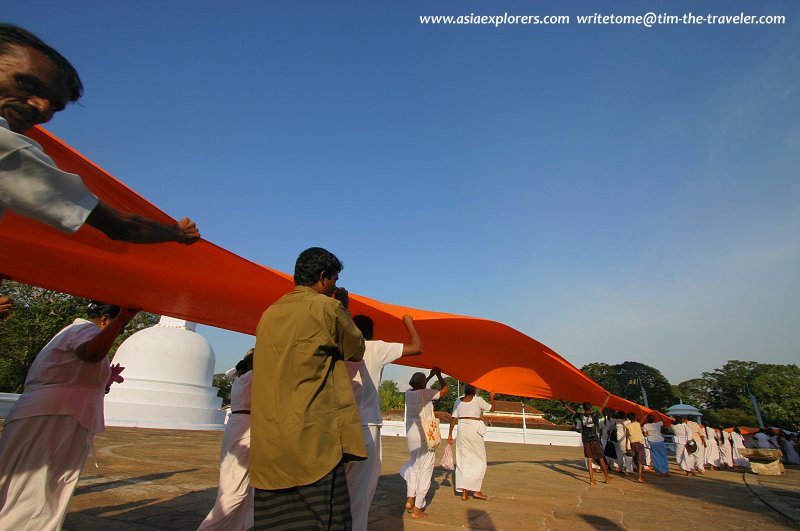


Ambarita is an ancient Batak tribal village on Samosir Island, in Lake Toba. It is located an hour's walk northwest from Tuk Tuk or about 20 minutes by boat. I visited it together with a small group of AsiaExplorers members.

What makes Ambarita interesting, from an anthropological standpoint, is that during ancient times the Toba Batak people of Ambarita practised a form of carnibalism. What remains today is the cluster of stone chairs where the village elders held council. Whenever an enemy was captured, the elders would invite the rulers of neighbouring villages to a conference, to determine the fate of the victim. The victim is held in behind bars under one of the houses.

If it is determined that the victim deserved death, he is taken to a dining table where he is clobbered to death. There is a boulder where the victim is beheaded. After that, he is chopped up, his flesh is cooked with buffalo meat, and served to the tribal council, who completed the meal with a beverage of the victim's blood!

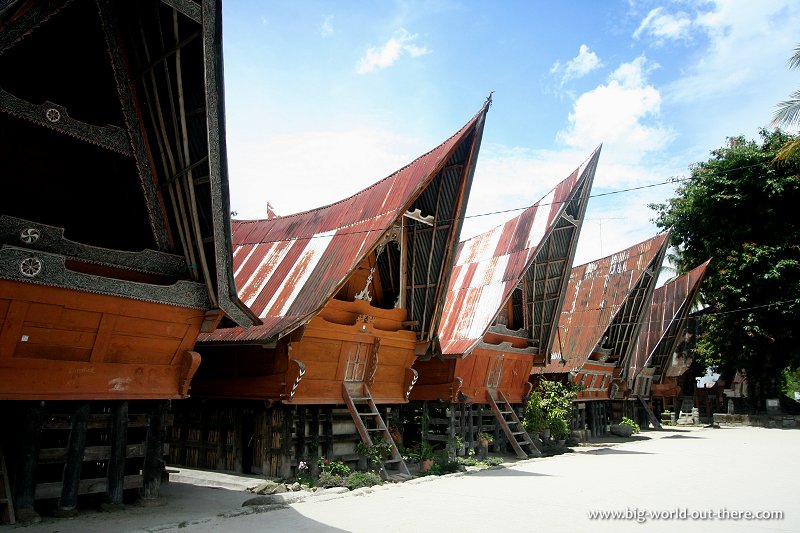
We arrived at Ambarita by boat. From the jetty, we were first shown the tomb of Laga Siallagan, the first raja of Ambarita. From there, we were led to the ancient Batak village where there is a row of traditional Toba Batak houses. As I examined the houses, which are still used today, I find that many of them have zinc roofing, somewhat removing the romanticism I would associate with visiting this place. I suppose zinc roofing would be more long lasting, although I would have preferred that the villagers retained the original roofing which I assume should be ijuk thatch made from coconut fibre.

From the row of traditional houses, we moved on to view the stone chairs and the cage where victims are incarcerated. I am surprise to see that there is also a stone figure sitting on one of the chairs, and we had our photos taken with "him".

A short distance from the stone chairs is the place where victims meet their death. Our guide demonstrated how the Bataks go about with the procedure. He also showed us the Batak calendar and other tribal implements. On the hill above are the graves of the tribal elders as well as a monument to Raja Laga Siallagan. From the appearance of the monuments and graves, it appears that the tribal elders have embraced Christianity, but I could not determine whether these Christian elders are the ones who were still practising carnibalism.

Beyond the stone "human kitchen" are souvenir stalls selling T-shirts and other trinkets. My observation about all the souvenir stalls in Samosir island is that all of them seem to carry the same items. And I can name them: t-shirts and wood carvings. I could hardly find anybody selling good guidebooks on Samosir or Lake Toba anywhere in sight! Thus, I had to depend on information drawn from my guide as well as my own research down outside Lake Toba to furnish the information on this page.


Ambarita Photo Album


Restored Toba Batak houses in Ambarita. Unfortunately the roofing does not match the architecture.


A closer view of the tribal houses reveal intricate carvings.


Victims awaiting their fate is imprisoned behind the wooden bars below this house.


This is either the tomb or monument to the Siallagan kings. It is at the entrance to the tribal village. Unfortunately I cannot determine it for sure.


This is another monument, or perhaps tomb, to Laga Siallagan, the first ruler of Ambarita.


With the help of a volunteer, our guide demonstrated how a victim is disemboweled.


And here, he showed where a victim is beheaded.


Tim standing at the stone passageway into the tribal village. Entrances are kept narrow to thwart intrusions.


Tim and members of AsiaExplorers at the Ambarita stone chairs.


Thank you, thank you, thank you, for the opportunity to explore the world, to document, to photograph, and to share the information with you. My name is Tim, I'm the writer of this website, and I want to tell you how grateful I am for your visit. This is one of over a dozen websites that I write - you can click my thumbnail photo above to randomly visit any one of them. All my photos are available for commercial printing - find out the photo usage rights here. If you wish to share you photos on this website, upload them to www.panoramio.com and send the URL to me for consideration. And, if you'd like to correspond with me, send your mails to my address as shown below:


Here's the latest updates from my websites ...


Expedia.com


Copyright © 2003-2008 AsiaExplorers.  All rights reserved.

About the Author: AsiaExplorers is researched and written by Timothy Tye. We take reasonable care to check and verify the accuracy of the content. However, we disclaim any responsibility for any inconvenience, mishap, injury or death resulting from following the advice provided directly or indirectly by AsiaExplorers and the comments on its pages. All the photographs in AsiaExplorers are available for publication. Please contact AsiaExplorers at the following email address for your enquiries: