Bali
Bali is unique. Out of the thousands of islands that form the Indonesian archipelago, Bali is unique in religion, unique in culture, and in almost everything Bali sets itself apart from the rest of Indonesia. And yet it is this inexplicable charm that captivates the imagination, sending droves of tourists to its shores, to bask in the sand, to quench their thirst for exotic cultures, to relish the magic that can only be derived from visiting Bali.
Bali is the westernmost of the Lesser Sunda Islands. Sandwiched between the densely populated Java to the west, and the island of Lombok to the est, Bali is one of the 33 provinces of Indonesia, and the only one where the main religion is Hinduism. Bali's population, as of 2005, stood at 3.1 million, of which over 93% are Balinese Hindus whose highly developed culture has made the island Indonesia's biggest travel destination.
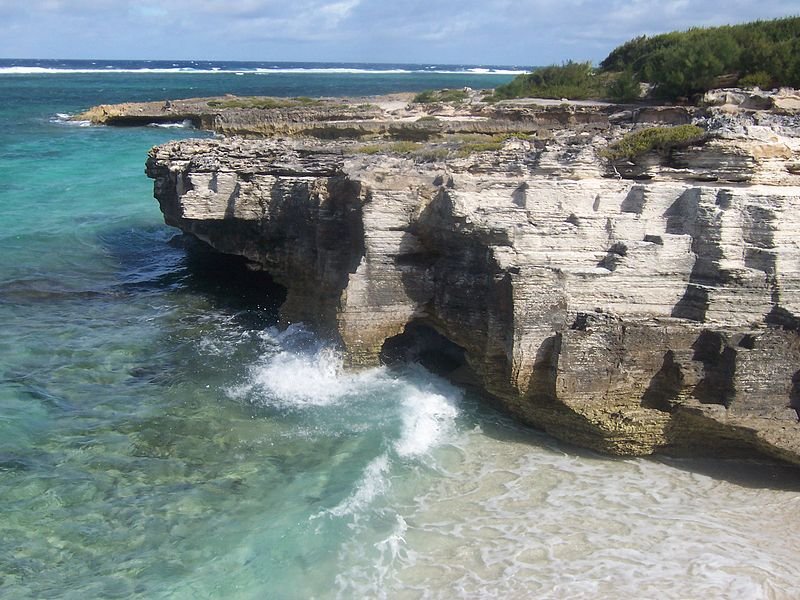
The landscape of Bali includes wave-battered coastline, rice terraces, serene highland lakes, soaring mountains and active volcanoes. The tallest mountain in Bali is Gunung Agung, a 3142 meters tall active volcano which last erupted in 1963. It is the easternmost of the major mountains in Bali. Another active volcano, Gunung Batur, created a massive crater that is now a lake, in what was the largest eruption on earth 30,000 years ago. Much of the central and eastern sides of Bali is mountainous. The land slopes gradually towards the south, so that most of the rivers in Bali tend to flow in the north - south direction. These rivers, flowing through the alluvial plain, tend to be very dry during the dry season, and overflowing their banks in the rainy season.
Denpasar
The biggest town in Bali is Denpasar. It has a population of around 300,000 or a tenth of Bali's total population. The second biggest town is old colonial capital ofn Singaraja. Among tourists, however, the most important towns are Kuta, on the southern part of the island, and Ubud, to the north of Denpasar.
The Bali Barat National Park, on the west side of the island, is the only national park on Bali. It covers an area of 19,000 hectares and is quite inaccessible to the general tourist. It is home to the endangered Bali Starling, one of the rarest birds in the world, and one of 280 species of birds found in Bali. The national park is also a wildlife refuge for the Sunda pangolin, Indian muntjac, the mousedeer, the leopard cat, black giant squirrel, among others.
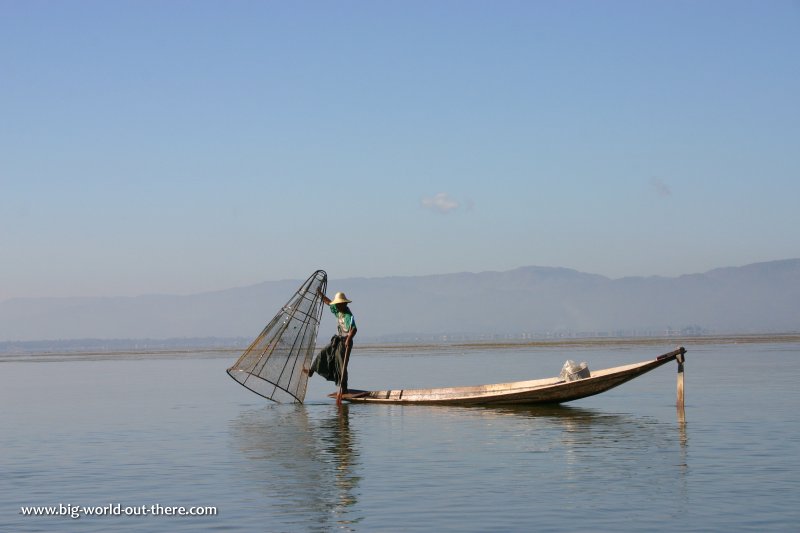
Tourism is the single most important factor influencing Balinese society today. Until just about 30 years ago, Bali was still a very much agriculture-based society. While most of its population are still farmers and fishermen, almost every family has somebody involved in the travel industry, whether working directly within a hotel or a travel company, or through secondary activities from being an artisan producing Balinese handicrafts or performing in the many Balinese dances. Despite repeated terrorist assaults on the travel industry, Bali has quickly rebounded, registering record numbers of tourist in 2008, when close to 2 million visitors came.
Most Balinese follow a unique form of Hinduism which can be described as a fusion of Hinduism and Buddhism. Along the way, it generously adopted animistic traditions that were already inherent in Bali before Hinduism arrived. Balinese believe that every element of nature, be it a rock, a tree, a mountain, or flowing water, is potentially an abode of spirits emanating goodness or evil. Such spirits have to be appeased through elaborate offerings, whether done daily or on specific occasions.
Apart from Bahasa Indonesia, the official language, many Balinese also speak their local Balinese language. A good number is learning up English, especially those who are, or aspiring to be, involved in the tourism industry. As with many Hindu society, there is a caste system in Bali, and nuances in the Balinese language helps the hearer determine the speaker's position within Balinese society.
Bali has a highly developed artform. Balinese crafts range from painting to woodcarving, sculpturing and floral arts. Performing arts in Bali includes the kecak, barong, topeng, pendet, and other dances. Many of these had their origin in the palace and temple courts, but now are often performed to satisfy the tourism industry. Even sacred rituals such as the barong dance, which was previously performed for religious purposes, are now more often than not, staged for the tourist dollar. Nevertheless, most performances have retained their authenticity. However, in the case of barong, many villages have resorted to using barong masks made specifically for tourist performances, while retaining the older mask for their own sacred performances.
Arriving in Bali
Most visitors to Bali arrive at the Ngurah Rai International Airport. Please note that airport tax must be paid at the airport during departure, and is Rp 100,000 at time of writing. Ngurah Rai International Airport is located between Kuta and Jimbaran, and about half an hour from Denpasar. Apart from Garuda Indonesian Airlines, other airlines flying to Bali includes Singapore Airlines, Malaysia Airlines, AirAsia, Jetstar Asia, Lion Air and Mandala Airlines.
Bali is connected by air to the following destinations:
Balikpapan (Garuda)
Bandar Seri Begawan (Royal Brunei)
Bangkok-Suvarnabhumi (Thai Airways)
Darwin (Garuda, Qantas)
Doha (Qatar Airways)
Guam (Continental Airlines)
Hong Kong (Cathay Pacific, Mandala Airlines)
Kuala Lumpur (AirAsia, Malaysia Airlines, Qatar Airways)
Jakarta (Adam Air, AirAsia, Batavia Air, Garuda, Lion Air, Merpati Nusantara, Sriwijaya Air)
Jayapura (Garuda)
Makassar (Garuda)
Melbourne (Garuda)
Osaka-Kansai (Garuda, Japan Airlines)
Perth (Garuda, Qantas)
Seoul-Incheon (Garuda, Korean Air)
Singapore (Garuda, Jetstar Asia, Singapore Airlines, Valuair)
Surabaya (Batavia Air, Garuda, Mandala Airlines)
Sydney (Garuda)
Taipei (China Airlines, EVA Air, Mandala Airlines)
Tokyo-Narita (Garuda, Japan Airlines)
Yogyakarta (Batavia Air, Garuda)
Best time to visit Bali
The best time to visit Bali is between the months of July and August, when the sky is blue almost every day. It is however a peak season with hordes of Australian tourists descending on Bali. The low season is between January and March, when the weather can get quite wet.
Getting around Bali
Taxi: Metered taxis are easily available in southern Bali. The flag off rate is Rp 5000 for the first two kilometres followed by Rp 5000 per kilometre thereafter. You may also rent a taxi for Rp. 375,000 per day. Negotiate and agree to the price before the journey, and pay at the end of the trip.
Self-Drive: Cars may be rented for Rp. 80,000 - 120,000 per day. Motorcycles rent for Rp. 30,000-35,000 per day. Driving is on the left side of the road, similar to UK, Australia, Malaysia, and Japan. If you need a car with driver, the price would be in the region of Rp. 400,000 - 500,000 per day of 10 hours, including petrol.
Accommodation in Bali
Accommodation in Bali ranges from simple family-run guesthouses near the beach to luxurious five-star resorts. Use the Budget Accommodation Guide to look for suitable budget accommodation.
Useful Tourist Information
Time
Bali is in the UTC+8:00 time zone, similar to Malaysia, Singapore, and Hong Kong, but one hour ahead of Jakarta.
Electricity
220V 50Hz. The outlets are European standard CEE-7/7 "Schukostecker" or "Schuko".
Further Reading on Bali
Photos of Bali
 Balinese dancers Author: Symm (GFDL)
 Balinese structure, Uluwatu
© Timothy Tye (20 June, 2004)
 Balinese farmer Author: Yves Picq (GFDL)
 Balinese architecture © Timothy Tye (17 June 2004)
 Beach parasols, Kuta Beach © Timothy Tye (17 June 2004)
 Beach soccer in Bali Author: Riza Nugraha (cc-by-2.0)
| |
Places of interest in Bali
Biggest Attractions of Bali
- Besakih
- Goa Gajah
- Kintamani
- Kuta Beach
- Nusa Dua
- Pura Ulun Danu Bratan
- Taman Ayun
- Tanah Lot
- Tirta Empul
- Ubud
- Uluwatu
Cities and Sights in South Bali
- Benoa Harbour
- Bukit Badung
- Canggu
- Denpasar
- Jimbaran
- Kuta
- Legian
- Ngurah Rai International Airport
- Nusa Dua
- Nusa Lembongan
- Nusa Penida
- Pulau Serangan
- Sanur
- Tanjung Benoa
- Uluwatu
Cities and Sights of Central Bali
- Ayung River Gorge
- Bali Bird Park
- Bali Reptile Park
- Batuan
- Batubulan
- Bedulu
- Blahbatuh
- Celuk
- Gianyar
- Goa Gajah
- Gunung Kawi Royal Monuments
- Mas
- Pejeng
- Peliatan
- Petulu
- Pura Mengening
- Ubud
- Sanggingan
- Sebatu
- Singapadu
- Sukawati
- Taro
- Tegallalang
- Tirta Empul
Cities and Sights in East Bali
- Amed
- Amlapura
- Bangli
- Besakih Temple
- Candi Dasa
- Gelgel
- Goa Lawah (Bat Cave)
- Gunung Agung
- Gunung Batur
- Gunung Lempuyang
- Iseh
- Kintamani
- Klungkung
- Padang Bai
- Pura Tegeh Koripan
- Pura Ulun Danu Batur
- Sidemen
- Tenganan
- Tirtagangga
- Tulamben
- Ujung
Cities and Sights of North and West Bali
- Banjar
- Bedugul
- Blayu
- Gilimanuk
- Gitgit
- Gunung Batukau
- Jagaraga
- Kapal
- Krambitan
- Lake Bratan
- Lake Buyan
- Lovina
- Makam Jayaprana
- Marga
- Medewi Beach
- Mengwi
- Menjangan Island
- Munduk
- Pantai Gondol
- Pejaten
- Pemuteran
- Pengambangan
- Pupuan
- Pura Gangga
- Pura Meduwe Karang
- Pura Ulun Danu Bratan
- Sangeh
- Singaraja
- Tabanan
- Taman Ayun
- Taman Nasional Bali Barat
- Tanah Lot
- Tejakula
- Yeh Panas
|