Seoul (서울), South Korea Travel Guide
 Seoul, South Korea Author: Patriotmissile (Creative Commons Attribution ShareAlike 3.0)
Seoul Travel Guide is created for the benefit of people planning to make a trip there. All the places of interest in Seoul is listed here along with a brief description. Each of the sight listed will eventually have its own dedicated page linked to this page.
About Seoul
Seoul (서울) is the capital and largest city in South Korea. It is a city of over 10 million people. The metropolitan area of Seoul, called the Seoul National Capital Area, includes the city of Incheon, itself the third largest city in South Korea, as well as much of Gyeonggi Province, together holding a population of about 25 million people - almost half of the total population of South Korea. It is the second largest metropolitan area in the world behind Tokyo and in front of Mexico City.
Guide to Seoul Hotels
Here's a list of hotels in Seoul that you can book online, with full description, star rating, address, location map, evaluation, and prices as offered by different booking sites.
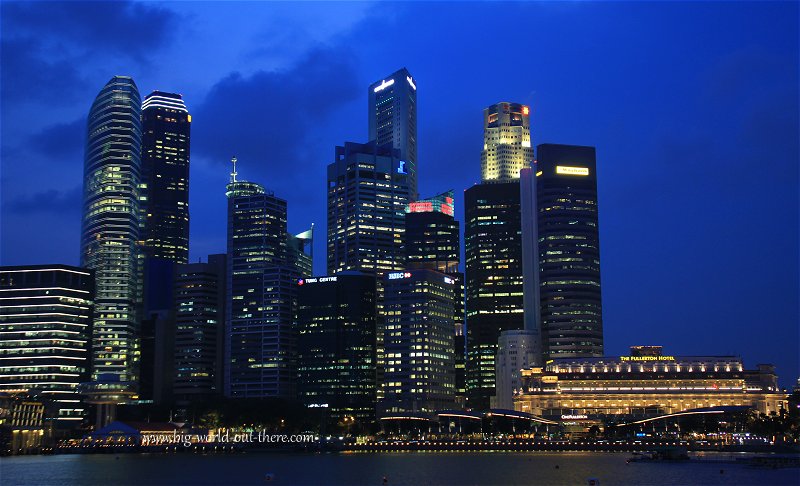
 Skyscrapers of Tower Palace, Seoul Author: Patriotmissile (public domain)
More on Seoul
Seoul is located on the banks of the Han River. The area has been settled as early as 18 BC, when the Kingdom of Baekje - one of thge Three Kingdoms of Korea - established its capital to the southeast of present-day Seoul.
Seould was the capital of Korea during the Joseon Dynasty (1392-1897) as well as the Korean Empire (1897-1910). As such it is home to many royal palaces that are today national monuments.
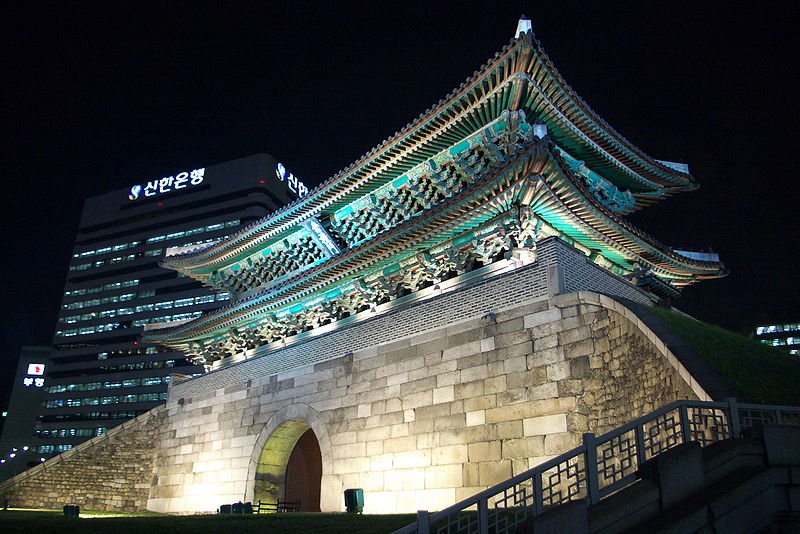
Seoul was known as Hanyang and then Hanseong throughout the Joseon Dynasty. The medieval city was enclosed by high walls punctuated by nine gates, of which five are still standing, and two of the biggest are Namdaemun and Dongdaemun.
When Japan invaded Korea in 1910, Seoul was made the colonial capital until the defeat of Japan in World War II. During the Korean War in 1950, there was a tussle for control over Seoul between the China-backed North Korean forces and the UN-back South Korean forces. When the Soviet Union and China came forward to assist North Korea, there was heightened threat of a world wide nuclear war, averted by the signing of an armistice on 27 July 1953. (North Korea unilaterally withdrew from the armistice on 27 May, 2009, in principle going back to a state of war).
 Injeongjeon, the main hall of Changdeokgung Palace, Seoul Author: eimoberg (Creative Commons Attribution 2.0)
The effect of the Korean War was utter devastation for Seoul, which also had to live with a flood of North Korean refugees, swelling its population of 2.5 million people. The South Korean government swiftly embarked on a reconstruction and modernization program. Standard of living started to rise through the 1960's and 70's. The city experience a construction boom of infrastructure and housing in the 1980's, entirely transforming the cityscape, but at the same time making traffic jams common place.
Seoul is today a densely populated metropolis, and one of the most expensive cities in the world. To relieve the pressure of congestion, the South Korean Government has since late 2004 begun relocating many of its government bodies to the city of Gongju, 120 kilometers south of Seoul, and at a more comfortable distance from the border with North Korea. Seoul remains a capital by name - it is not constitutional to move it without a national referendum or revision of the constitution.
 Seoul Tower Author: Danleo (Creative Commons Attribution ShareAlike 2.5 Generic)
Budget Travel to Seoul
The Incheon International Airport (ICN) is the main gateway to Seoul and to South Korea. It is located on an island in neighboring Incheon.
Leaving the airport by bus
The most practical was to leave Incheon Airport is to take an airport limousine bus. The fare to downtown Seoul is ₩14,000, stopping at major hotels in Seoul. If you are transferring to Gimpo Airport for a domestic flight, the fare is ₩6,500.
A more economical option is to take the public bus. It goes from Incheon Airport to the bus hub in downtown Seoul, and costs around ₩8,000 to ₩9,000. If you are in doubt which bus to take, ask one of the ticket sellers.
Leaving the airport by train
The Korea Airport Railroad Express, AREX is an express train out of Incheon Airport. Unfortunately at the moment it runs all the way till Gimpo Airport only, so if you take it, you still have the transfer to a subway, taking Line 5 or Line 9 to reach downtown Seoul. The AREX is presently being extended to Seoul, but the phase is not completed yet. If you are lugging a lot of baggage, then I would suggest you take the limousine bus.
 Insadong neighborhood, Seoul Author: Nagyman (Creative Commons Attribution 2.0 Generic)
Budget Travel within Seoul
Seoul has an extensive subway network covering most of the places within the city. There are presently 9 Metropolitan Subway Lines, excluding the Bundang Line and the Incheon Line. They are all color coordinated to help you differentiate one from the other. All signages include English. For the latest subway map, visit the Seoul Metropolitan Rapid Transit website.
The Seoul subway fare is charged according to distance traveled. It starts at ₩1000. Tickets are sold by vending machines, all of which accept coins and a few banknotes too. However, the machines will not take a note of high denomination, say ₩10,000. Nonetheless there is usually a bill exchanger nearby.
If you plan to use the subway often, you should get the stored value T-Money smart card. The card itself costs ₩2,500, but you save ₩100 each time you make a transfer. The T-Money card can also be used to pay taxi fares, bus fares and other conveniences.
|
Sights in downtown Seoul
- Seoul Tower
240-meter tower standing on 274-meter Namsan Mountain.
- Korea House
One of the best Korean restaurants in Seoul, on the slopes of Namsan.
- Namsangol Hanok Village
Living museum showcasing the traditional life in Korea.
- Namdaemun (Great South Gate)
Medieval gate of the walled city of Seoul.
- Dongdaemun (Great East Gate)
Another medieval gate of the old walled city.
- City Hall Plaza
City square with City Hall to the north, considered the very heart of Seoul.
- Gwanghwamun (Gate of Transformation by Light)
Reconstructed medieval gate in front of Gyeongbok Palace
- Gwanghwamun Intersection
Major traffic intersection with the statue of 16th century hero Yi Sun-sin.
- Boskingak
Bell tower at Jongno intersection.
- Gyeongbokgung Palace (Palace of the Heavenly Blessings)
The largest of the Five Grand Palaces of the Joseon Dynasty
- National Folk Museum of Korea
Museum located within the grounds of the Gyeongbokgung Palace.
- Gyeonghoeru Pavilion
State banquet hall built in 1412, with the grounds of the Gyeongbokgung Palace.
- Hyangwonjeong Pavilion
Two storey hexagonal pavilion within the grounds of Gyeongbokgung Palace.
- National Museum of Korea
The main museum of Korean history and art, in Yongsan Family Park.
- Myeongdong
One of the main shopping districts of Seoul, 10 minutes from City Hall Plaza
- Myeongdong Cathedral
Oldest Catholic cathedral in Korea.
- Deoksugung Palace (Palace of Virtuous Longevity)
Residence of Korean royalty 1919.
- Royal Museum
Museum within the grounds of the Deoksugung Palace displaying items once used by the royal court.
- Changdeokgung Palace (Palace of Illustrious Virtue)
Another palace from the Joseon Dynasty, also called East Palace.
- Biwon
Former private park of the royal family.
- Changgyeonggung Palace
Summer Palace of the Goryeo Emperor, within the largest public park in Seoul.
- Jongmyo
Royal Ancestral Shrine, across from Changgyeonggung Palace.
- Sungkyunkwan University
National institute with history going back to the Joseon Dynasty.
- Munmyo Shrine
Shrine honoring Confucius within grounds of Sungkyunkwan University.
- Jogyesa Temple
Headquarters of the official sect of Buddhism in Korea.
- Namdaemun Sijang (Great South Gate Market)
A major Seoul market.
- Dongdaemun Sijang (Great East Gate Market)
An even bigger market, three times Namdaemun Sijang.
- Insadong
Locality in Seoul with lots of antique shops.
- Tapgol Park
Park with a Joseon Dynasty pagoda in its center.
Sights around Seoul
- Hwanghakdong Flea Market
A big market place for second-hand goods.
- Gyeongdong Oriental Medicine Market
A place to browse at ginseng and all the roots and herbs.
- Janghanpyeong Antique Market
A cluster of shops and mall specializing in antiques.
- Daeheungno
Nightlife precinct favored by students from neighboring universities.
- Wedding Street
Street with shops specializing in wedding downs.
- Itaewon
A locality on the southern flank of Namsan, famous for shopping and nightclubs.
- War Memorial
Memorial with museum of Korea's military history.
- Yongsan Electronics Market
Shopping precinct specializing in electronic goods, to the southwest of the War Memorial.
- Hangang Citizen's Park
Public recreational area in Seoul.
- Seoul World Cup Stadium
Stadium built for the 2002 World Cup.
- Hyperion Tower
Tallest building in Seoul, and second tallest in South Korea.
- 63 Building
Second tallest building in Seoul, and third tallest in South Korea.
- Noryangjin Fish Market
A good place to gawk at all the fish and marine life destined for Korean tables.
- Apgujeong
An upscale neighborhood with high-class branded stores and boutiques.
- Seoul Nori Madang
Outdoor amphitheater for Korean folk performances.
- Amsadong Prehistoric Settlement Site
Largest archaeological site for Neolithic remains in South Korea.
- Korea World Trade Center
A major center of business in Seoul.
- Korea Exhibition Center (KOEX)
Exhibition center for auto shows, travel fairs and the like, located next to the Korea World Trade Center.
- Bongeunsa
One of the oldest temples in Seoul, on hill behind KOEX.
- Seoul Arts Center
Modern theater complex on the south side of the Han River.
- National Center for Korean Traditional Performing Arts
Center for viewing traditional Korean court music and dance.
|
|