Click here to return to the AsiaExplorers Homepage

Home | Mailing List | Laos Budget Accommodation | Contact   Bookmark and Share

Explore these Asian countries: Cambodia, China, India, Indonesia, Japan, Laos, Malaysia, Myanmar, Nepal, Singapore, Sri Lanka, Thailand, Vietnam and more coming up ... !


Click here to return to AsiaExplorers Laos Travel Guide
Hostels in Laos | Hotels in Laos | Books on Laos

This destination is recognised by Unesco as a World Heritage Site.  Click to view list of World Heritage Sites documented by AsiaExplorers.
Luang Prabang Travel Guide
@ Louangphrabang, Former capital of Laos

The AsiaExplorers Luang Prabang Travel Guide is created to provide you a comprehensive listing of all the heritage sites located in the Unesco World Heritage Town of Luang Prabang, Laos. Luang Prabang, also written Louangphrabang, is the former capital of Laos, or rather, of the Kingdom of Luang Prabang. The above photograph shows just one of the many, many temples I explored when I organised the trip to Luang Prabang for AsiaExplorers. Luang Prabang is located on the banks of the Mekong River, 425 km north of Vientiane. Until the communist takeover in 1975, Luang Prabang was the royal capital of the Kingdom of Laos. It is a city with a long history, and several different names. Today, in recognition of its impressive history and level of restoration, Unesco accorded Luang Prabang World Heritage Site status in December of 1995.


Explore Luang Prabang from the comfort of your desktop! The above photo loads at random. Point your cursor at it to see the name of the sight in Luang Prabang. Click to visit it. Refresh this page to view a different sight. Enjoy your visit!


The Unesco report listed 33 temples and 111 historic Lao-French buildings for specific restoration. It cited Luang Prabang as the best-preserved traditional town in Southeast Asia. Luang Prabang has its isolation to thank for enabling it to be so well-preserved. Although it was once a trading outpost among the peoples of upper Laos, Thailand, Vietnam, southern China and Burma, there was little contact with non-Asian countries until the French arrived in the mid-19th century.

Up

Luang Prabang History

For centuries before Luang Prabang was founded, several Thai-Lao principalities flourished in the area around Luang Prabang, in the valleys of the Mekong. In 698AD, there was a city called Muang Sua in the area where Luang Prabang is located. From the 11th to the 14th Centuries, there was a city called Xieng Dong Xieng Thong in this area. From 1185 to 1191, Xieng Dong Xieng Thong came under a brief period of suzerainty under Khmer ruler Jayavarman VII of Angkor Thom.

In 1353, King Fa Ngum created the first Lao Kingdom, called Lan Xang, or Kingdom of One Million Elephants. At this time, the city was known as Xaxa. Later, it was renamed Meuang Xieng Thong, or Gold City District, in 1357. After that, King Fa Ngum received from the Khmer sovereign a gift of a Sinhalese Buddha image called Pha Bang, and from this image is derived the present name, Luang Prabang.

Luang Prabang is located along the banks of the Mekong where it meets the Nam Khan river. A distinctive feature of the town is the 100 meter (330 ft) Mount Phu Si (also spelled Phousy), a rocky outcrop that offers all round splended views. The old quarters can be easily covered on foot or by tuk tuk.


Sights in and around Luang Prabang

Ban Muang Keo

Ban Muang Keo

This is the village of Lao-whisky.

Ban Muang Keo

Ban Pak Ou

Ban Pak Ou

This village, on the opposite bank of the Mekong from Pak Ou Caves, is turning itself into a stopover point for tourists.

Ban Pak Ou

Lao Cottage Industries

Cottage Industries of Laos

View the cottage industries that is developing in Luang Prabang.

Cottage Industries

Haw Pha Bang Chapel

Haw Pha Bang Chapel

This chapel, located within the grounds of the Royal Palace Museum, is specially constructed to house the Pha Bang, the most sacred Buddha in Luang Prabang.

Haw Pha Bang Chapel

Kuangsi Waterfall

Kuangsi Waterfall

Kuangsi Waterfall is a multi-tier cascade and a favourite spot for local picnickers.

Kuangsi Waterfall

Unesco Office in Luang Prabang

Unesco Office in Luang Prabang

La Maison du Patrimoine, the office of Unesco in Luang Prabang.

Unesco Office in Luang Prabang

Mekong River

Mekong River

One of the most important rivers in Southeast Asia flows through Luang Prabang.
Mekong River

Mount Phousi

Mount Phousi

The hill at the centre of Luang Prabang provides scenic views all around.

Mount Phousi

Nam Phou Square

Nam Phou Square

A fountain in Luang Prabang.

Nam Phou Square

Pau Ou Caves

Pak Ou Caves

Cave temple by the banks of the Mekong River.

Pak Ou Caves

Haw Kham, the Royal Palace Museum

Royal Palace Museum

Former residence of the king of Laos is today open to the public as the Royal Palace Museum of Luang Prabang.

Royal Palace Museum of Luang Prabang

Buddhist temples in Luang Prabang

That Pathum (Watermelon Stupa)

That Pathum (Watermelon Stupa)

That Pathum, the Stupa of the Great Lotus, is also often called That Makmo, meaning Watermelon Stupa, on account of its endearing shape.
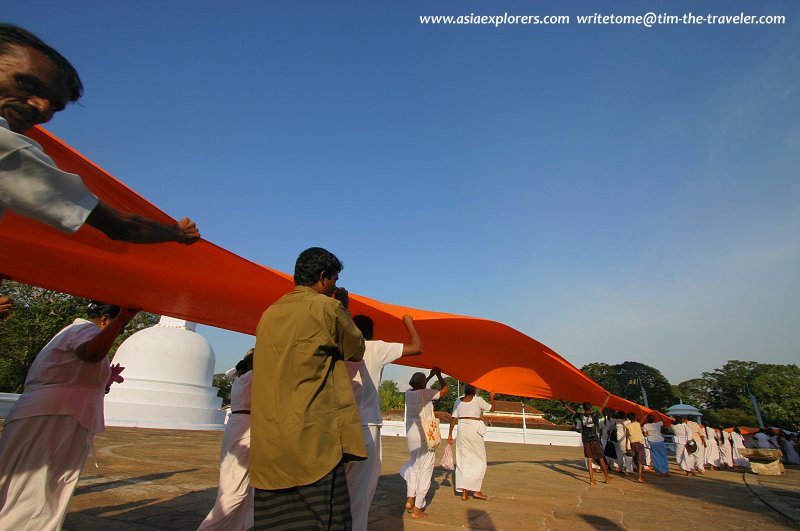
That Pathum

Wat Aham

Wat Aham


Wat Aham

Wat Aphai

Wat Aphai


Wat Aphai

Wat Ban Pak Ou

Wat Ban Pak Ou

This is a village temple for Pak Ou Village, on the opposite side of the Mekong from Pak Ou Caves.

Wat Ban Pak Ou

Wat Chom Phet

Wat Chom Phet

This small wat is located on the opposite bank of the Mekong River from Luang Prabang.

Wat Chom Phet

Wat Chom Si

Wat Chom Si

This is the small shrine at the peak of Mount Phousi.


Wat Choum Khong

Wat Choum Khong


Wat Choum Khong

Wat Hosian

Wat Hosian


Wat Hosian

Wat Pak Khan

Wat Mai Suwannaphumaham

One of the major wats in Luang Prabang, Wat Mai Suwannaphumaham once housed the Pha Bang Buddha before it was moved to the Royal Palace.

Wat Mai Suwannaphumaham

Wat Meunna

Wat Meunna

Roughly translated, this wat means the Monastery of Ten Thousand Rice Fields.

Wat Meunna

Wat Monorom

Wat Monorom


Wat Monorom

Wat Nong Sikhounmuang

Wat Nong Sikhounmuang


Wat Nong Sikhounmuang

Wat On

Wat On


Wat On

Wat Paa Khaa

Wat Paa Khaa

This monastery is at the moment in total ruins.

Wat Paa Khaa

Wat Pa Khe

Wat Pa Khe

Monastery of the Forest of Khe Trees

Wat Pa Khe

Wat Pa Phai

Wat Pa Phai


Wat Pa Phai

Wat Pak Huak

Wat Pak Huak

This is a small, rather neglected wat at the foot of Mount Phousi, on the opposite side of the road from the Royal Palace Museum.

Wat Pak Huak

Wat Pak Khan

Wat Pak Khan

This monastery is located close to the tip of the peninsula where Luang Prabang is located.

Wat Pak Khan

Wat Phan Luang

Wat Phan Luang


Wat Phan Luang

Wat Phonesaat

Wat Phonesaat


Wat Phonesaat

Wat Phone Xai

Wat Phone Xai


Wat Phone Xai

Wat Phra Bat Tai

Wat Phra Bat Tai


Wat Phra Bat Tai

Wat Phra Phome Phao

Wat Phra Phome Phao


Wat Phra Phome Phao

Wat Sensoukharam

Wat Sensoukharam

This is one of the bigger, and more ornate, monastery in Luang Prabang.

Wat Sensoukharam

Wat Siri Moung Khoung

Wat Siri Moung Khoung


Wat Siri Moung Khoung

Wat Sop

Wat Sop


Wat Sop

Wat Souvanna Khiri

Wat Souvanna Khiri


Wat Souvanna Khiri

Wat Tham Phu Si

Wat Tham Phu Si

This is a small shrine on the way up Mount Phousi

Wat Tham Phusi

Wat That

Wat That


Wat That

Wat Tao Hai

Wat Tao Hai


Wat Tao Hai

Wat That Luang

Wat That Luang


Wat That Luang

Wat Wisunalat

Wat Wisunalat (Wat Vixoun)

This is the monastery that includes the Watermelon Stupa.

Wat Wisunalat

Wat Xiengmouane

Wat Xiengmouane


Wat Xiengmouane

Wat Xieng Thong

Wat Xieng Thong

This is the biggest and most famous monastery in Luang Prabang.

Wat Xieng Thong


Tim and Chooi Yoke at the signboard proclaiming Luang Prabang as a Unesco World Heritage Site.
Tim, at right, with Chooi Yoke at the signboard proclaiming Luang Prabang as a Unesco World Heritage Site.

Up

Click here to return to the AsiaExplorers Homepage

How much have you explored Laos? Through AsiaExplorers, you can now explore these places in Laos from the comfort of your desk: Laos, Luang Prabang (Ban Muang Keo, Ban Pak Ou, Haw Kham, Luang Prabang Royal Palace Museum, Haw Pha Bang Chapel, Kiu Kacham @ Kiou Kacham, Kuang Si Waterfall, Laotian Cottage Industries, Mount Phousi, Namphou Square, Pak Ou Caves, Wat Aphai, Wat Ban Pak Ou, Wat Chom Phet, Wat Chom Si, Wat Choum Khong, Wat Hosian, Wat Mai Suwannaphumaham, Wat Meunna, Wat Monorom, Wat Nong Sikhounmuang, Wat On, Wat Paa Khaa, Wat Pa Khe, Wat Pa Phai, Wat Pak Huak, Wat Pak Khan, Wat Phan Luang, Wat Phonesaat, Wat Phone Xai, Wat Phra Bat Tai, Wat Phra Phome Phao Santi Chedi, Wat Sensoukharam, Wat Siri Moung Khoung, Wat Sop, Wat Souvanna Khiri, Wat Tao Hai, Wat Tham Phu Si, Wat That, Wat That Luang, Wat Wisunalat (Wat Vixoun), Wat Xieng Mouane, Wat Xieng Thong (Monastery of the Golden City), Mekong River, Phou Khoun). Vientiane (Buddha Park (Xieng Khuan), Ho Phra Keo, Patuxai, Thai-Lao Friendship Bridge (Mittaphap Bridge), That Luang, Wat Si Saket), Xieng Khouang (Phonsavan, Plain of Jars, Plain of Jars Site 1: Thong Hai Hin, Plain of Jars Site 2: Hai Hin Phu Salato, Plain of Jars Site 3: Hai Hin Laat Khai)

All photographs appearing in AsiaExplorers are copyrighted and available for licensing. If you are interested to use any of them, please click here for details.

Grab this swicki from eurekster.com


Copyright © 2003-2008 AsiaExplorers.  All rights reserved.

AsiaExplorers takes every reasonable care to check and verify the content on this website. However we disclaim any responsibility for any inconvenience, mishap, injury or death resulting from following the advice provided directly or indirectly by AsiaExplorers and the comments on its pages. All the photographs in AsiaExplorers are available for publication. Please contact AsiaExplorers at this email address for your enquiries.