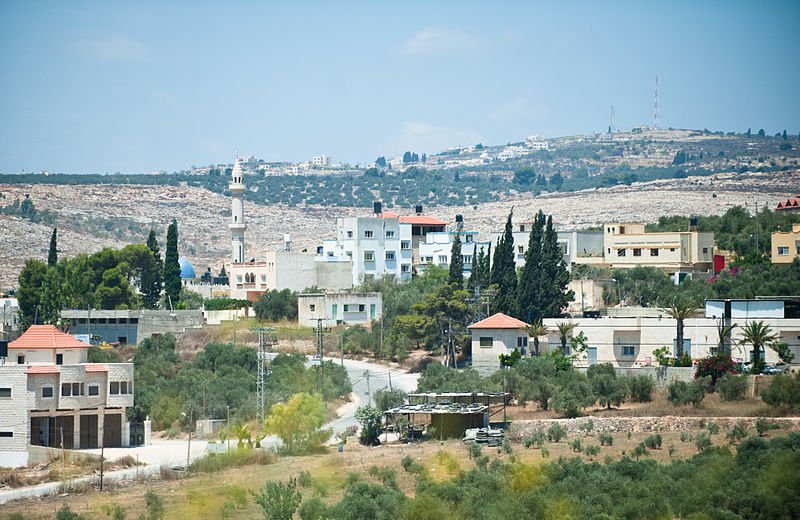
Lebanon is a small country in the Middle East, in Western Asia. Covering only 10,452 sq km (4,036 sq mi), Lebanon is bordered by Syria to the north and east, and by Israel to the south. It has a coastline facing the Mediterranean Sea to the west. The country has a population of 4.3 million people. Its capital and largest city is Beirut. 95% of Lebanon's population consider themselves ethnically Arabs, and 4% ethnic Armenian. The official language of Lebanon is Arabis and French allowed in specific cases.
Guide to Lebanon Hotels
It's never easy finding the hotel that's just right for your stay. Still, by taking a little time to do your research, you increase your chance of getting a good hotel at the best price. Go through the list of hotels in Lebanon which we've put together, arranged city by city, with full description, star rating, address, location map and evaluation. Pick the hotel of your choice and view the rates offered by different booking sites. Yes, we show you prices from different websites, so you don't have to visit them one by one.
More about Lebanon
Lebanon is in the Eastern European Time Zone, meaning it is two hours ahead of Coordinated Universal Time (UTC+2) and three hours in summer. Traffic is driven on the right here. The electricity is 110-220V/50Hz using European and UK plugs. The phone IDD code is +961.
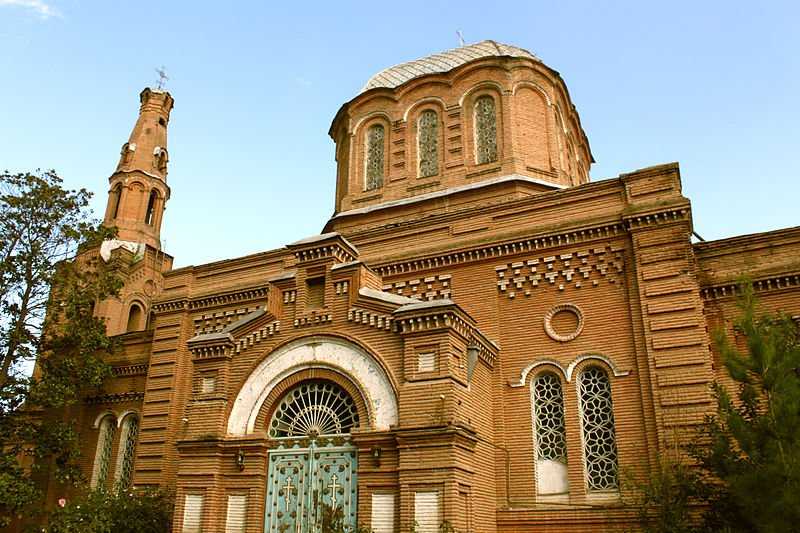
 Church and mosque in Beirut, Lebanon Author: Lebnen18 (Creative Commons Attribution 3.0 Unported)
Lebanon had a nominal GDP of $37 billion in 2010, equivalent to a per capita nominal GDP of $9,479. Its per capita GDP at purchasing power parity stood at $14,988.
Lebanon experiences a Mediterranean climate. Its winters are cool and rainy while its summers hot and humid. Lebanon receives a higher amount of rain than its more arid neighbors.
Human habitation in Lebanon goes back 7,000 years. The Phoenician civilization appeared here around 2,500 BC. Lebanon was part of the Ottoman Empire for over 400 years, until the empire collapsed following the First World War. It was under the French until 1943, when it got its independence while France was occupied by Germany. However France reacted by imprisoning the new government officials, releasing them only in the face of international pressure.
 National Museum of Beirut, Lebanon Author: Peripitus (Creative Commons Attribution 3.0 Unported)
A civil war broke out in Lebanon in 1975. It lasted fifteen years, wrecking the country's economy, with much lost of lives and properties. Since then, the country has been rocked with political volatility and tension, with occasional periods of peace when its economy could be recharged. In 2005 its former prime minister Rafik Hariri was assassinated. In 2006 it was involved in yet another of the many conflicts with Israel. Internal strife continues into 2011, when the national unity covernment collapsed after ten opposition ministers and a presidential appointee resigned.
Planning your trip to Lebanon
Intending visitors with evidence of having visited Israel are refused entry. Visitors are expected to get a visa before arriving. One-month tourism visa is available for visitors from Andorra, Antigua and Barbuda, Argentina, Armenia, Australia, Austria, Azerbaijan, Bahamas, Barbados, Belarus, Belgium, Belize, Bhutan, Brazil, Bulgaria, Canada, Chile, Costa Rica, Croatia, Cyprus, Czech Republic, Denmark, Estonia, Finland, France, Georgia, Germany, Greece, Hong Kong, Hungary, Iceland, Ireland, Italy, Japan, Kazakhstan, Kenya, Kiribati, Kyrgyzstan, Latvia, Lesotho, Liechtenstein, Lithuania, Luxembourg, Macau, Macedonia, Malaysia, Malta, Mexico, Moldova, Monaco, Mongolia, Netherlands, New Zealand, Norway, Palau, Panama, Peru, Poland, Portugal, Russia, Saint Kitts and Nevis, Samoa, San Marino, Saudi Arabia, Seychelles, Singapore, Slovakia, Slovenia, Solomon Islands, South Africa, South Korea, Spain, Suriname, Swaziland, Sweden, Switzerland, Syria, Taiwan, Tajikistan, Tanzania, Thailand, Tonga, Trinidad and Tobago, Tuvalu, Turkey, Turkmenistan, Uganda, Ukraine, United Arab Emirates, United Kingdom, United States, Uruguay, Uzbekistan Vanuatu, Vatican City, Venezuela, Vietnam, ZimbabweAustralia, Austria, Azerbaijan, Bahamas, Bahrain, Barbados, Belarus, Belgium, Belize, Bolivia, Bosnia and Herzegovina, Botswana, Brazil, Brunei, Bulgaria, Canada, Chile, China, Colombia, Costa Rica, Croatia, Cuba, Cyprus, Czech Republic, Denmark, Dominica, Dominican Republic, Ecuador, Egypt, El Salvador, Estonia, Fiji, Finland, France, Gambia, Georgia, Germany, Greece, Grenada, Guatemala, Guyana, Honduras, Hong Kong, Hungary, Iceland, India, Indonesia, Ireland, Israel, Italy, Jamaica, Japan, Kazakhstan, Kenya, Kiribati, Kyrgyzstan , Latvia, Lesotho, Liechtenstein, Lithuania, Luxembourg, Macau, Macedonia, Malaysia, Malawi, Maldives, Malta, Mauritius, Mexico, Moldova, Monaco, Mongolia, Montenegro, Myanmar, Namibia, Netherlands, New Zealand, Nauru, Nepal, Nicaragua, Norway, Oman, Pakistan, Panama, Papua New Guinea, Paraguay, Peru, Philippines, Poland, Portugal, Qatar, Romania, Russia, Saint Kitts and Nevis, Saint Lucia, Saint Vincent and the Grenadines, Samoa, San Marino, Singapore, Slovakia, Slovenia, South Korea, Spain, Sweden, Switzerland, Tajikistan, Turkey, Turkmenistan, Ukraine, United States, Uzbekistan and Venezuela.
The Beirut International Airpot (BEY) is the main gateway to Lebanon. It has direct connections to cities mainly in the Middle East and Western Europe.
Preparing Money for your trip to Lebanon
The currency used in Lebanon is the Lebanon Pound (LBP). The following are the latest rates for Lebanon Pound in the last 24-hours.
|