Explore a different destination History of Perak


Exotic Tours of Asia

 Compare Hotel Room Rates from different Booking Sites  Asia Travel Guide     
  Taiping Perak Malaysia Budget Travel Guide  Compare Hotel Room Rates from different Booking Sites
Taiping History

Taiping is located in the Larut district, which is an early tin mining settlement in Perak. The history of tin mining in Taiping began in 1848, when a young Malay adventurer by the name of Long Jaafar stumbled upon tin deposits while bathing in a stream.

Long Jaafar engaged the services of the Penang-based Chinese leader, Chung Keng Kwee (aka Ah Quee, and who was later made Kapitan China by the British), who dispatched a band of Chinese coolies to mine the tin ore. The first batch descented on the mines at Klian Pauh (klian, also written kelian, is a Malay word for mine, while pauh is a type of manggo). Klian Pauh was the name of the place before the town of Taiping was founded. The coolies were Hakka Chinese who fled China following the Taiping Revolution. They belonged to the Hai San secret society headed by Ah Quee.

Later, a runaway elephant led to the discovery of another mining area at Klian Baru (New Mine), when its hooves were covered with mud encrusted with tin ore.

After Long Jaafar died, his son Ngah Ibrahim became the Mentri (menteri, or minister) of Larut. Ngah Ibrahim built his fort and residence, Kota Ngah Ibrahim, in Matang. Ngah Ibrahim's house is today known as Kota Ngah Ibrahim, or Ngah Ibrahim Fort, because he had to fortify it with a wall to protect against attacks during the Larut Wars.

By 1861, rivalry between the tin miners of Klian Pauh and Klian Baru degenerate into open warfare between the secret societies of Hai San, who are Hakkas, and Ghee Hin, who are Cantonese. While it is true that the Chinese communities were at war within themselves, the Malay society has also split into two camps following a power struggle for the throne of Perak. These protracted feuding, called Larut Wars or Perang Larut, took place in 1861, 1865, 1872 and then last one in 1873.

First Larut War, 1861

The first war between the Hai San and Ghee Hin erupted over control of the watercourse to the tin mines. It led the more numerous Hai Sans driving the Ghee Hins out of Klian Bharu. The Ghee Hin brought the matter to the Straits Settlement government. As a result, the Ghee Hins received a compensation of $17,447 from Ngah Ibrahim, the Mentri of Larut, on behalf of the Sultan of Perak.

Although both sides returned to their mines, neither party was happy. The Ghee Hins felt that Ngah Ibrahim favoured the Hai Sans. The Hai Sans, on the other hand, were annoyed that the Ghee Hins were not driven out, but instead given a cash compensation.

Second Larut War, 1865

A gambling quarrel sparked of the second series of warfare between the two camps. The Hai Sans attacked the Ghee Hins, capturing 14 members as prisoners. They killed 13 of them. One managed to escape, and reported to his clan. The Ghee Hins retaliated by attacking the Hai San village, killing 40 men.

With the help of Ngah Ibrahim, the Hai Sans fought back. They burned Klian Bharu and took possession of the Ghee Hin's tin stock. The Ghee Hins, numbering two thousand, fled to Province Wellesley. The fight spreaded there, and then to Penang, where other secret societies aligned to the Hai Sans and the Ghee Hins also joined in. In 1867, the fight took to the streets of George Town, as was known as the Penang Riot. Casualties were heavy on both sides. Exchausted from all the fighting, eventually both sides had to call for a truce. They were fined $5,000 each for causing disturbance in Penang, and their leaders were banished.

Third Larut War, 1872

An illicit love affair brought the Hai Sans and the Ghee Hins to the battlefield once more. The leader of the Ghee Hins was said to be engaged in an affair with the wife of the nephew of the Hai San leader, Chung Keng Kwee. The couple was caught, tortured, put into a pig basket and drowned in a disused mining pond. To avenge the death of their leader, the Ghee Hins engaged 4,000 professional mercenaries from China, and this time, they succeeded in driving the Hai Sans out of Larut. Ten thousand Hai San members had to seek refuge in Penang.

Meanwhile, it was a shaky time for the Perak sultanate as well. When Sultan Ali passed away in 1871, a succession dispute ensued. Raja Abdullah was supposed to be appointed the next Sultan of Perak, but instead Raja Ismail was elected instead. Raja Abdullah, still considering himself the ruler of Perak, got his friend in Singapore, Tan Kim Ching, to write a letter to Sir Andrew Clarke, expressing his desire to place Perak under British protection, and to have "a man of sufficient abilities show him a good system of government."

As the conflict has threatened their tin production, Chung Keng Kwee on 26 Sept 1872 sent a petition signed by himself and 44 other Chinese leaders of Penang, seeking British interference. In the subsequent months, the Hai Sans launched counterattacks. With the help of Ngah Ibrahim, they recovered their mines in Matang and Larut. This was the beginning of British intervention in Perak.

Fourth Larut War, 1873

Just weeks after the Hai Sans regained Larut, the Ghee Hins fought back. This time they too have a Malay ally, in the form of Raja Abdullah. They counterattacked with men and weapons brought in from Singapore and China. This time the Malays also suffered loses. Ngah Ibrahim's house and fort in Matang was badly damaged. He escaped to Penang, where he recruited help from Tristram Charles Sawyer Speedy, alias Captain Speedy, who was at that time the superintendent of police in Penang. Captain Speedy resigned from his post to work for Ngah Ibrahim. He brought troops from India to restore order in Larut.
The result of the British intervention was a treaty signed on board the steamship The Pluto, at the mouth of the Perak River, near the island of Pangkor. It was aptly called the Pangkor Treaty of 1874.
Pangkor Treaty

The terms of Pangkor Treaty included:
  • Raja Abdullah became the Sultan of Perak. Sultan Ismail was given a pension of 1000 Mexican pesos a month.
  • The Sultan received a British Resident whose advise is to be sought on all matters except those pertaining to religion and Malay customs.
  • All collection and control of taxes must be done under the name of the Sultan, according to the Resident's advice.
  • The Mentri of Larut will continue to be in charged, but not as a liberated leader. A British officer would have the authority in administering the district of Larut.
  • The Sultan, not the British government, is to pay the Resident's salary.
  • Dinding and Pangkor Island are ceded to the British.

    In addition to the terms already spelled out above, the effect of the Pangkor Treaty was wide ranging. Firstly, it segregated the tin mining areas in Larut among the Hai Sans and the Ghee Hins. Secondly, it created two towns, the town of Taiping, which means Everlasting Peace, in the area around Klian Pauh, given to the Hai Sans, and the town of Kamunting, around Klian Baru, given to the Ghee Hin - who were very disappointed because they wanted the superior mining area of Klian Pauh. The Resident turned out to be the de facto ruler, to the great dismay of the Malay rulers.

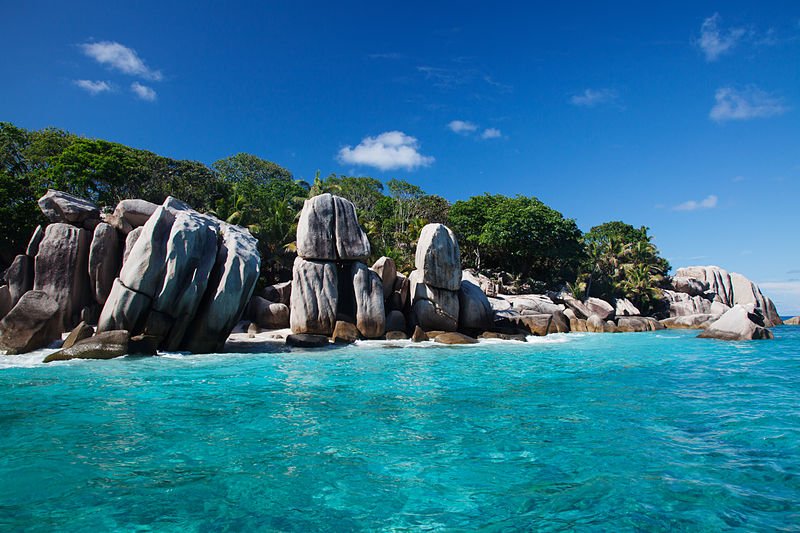
    The first British Resident of Perak was James Wheeler Woodford Birch. He only lasted one year - from November 1874 to November 1875, to be precise. The Malay rulers were so irked by his arrogance and his interference with Malay customs that they plotted for his liquidation. The person who masterminded the assassination was Dato Maharajalela, who was aggrieved that Birch had outlawed slavery in Perak, and yet kept women slaves in his home for personal reasons. The outlaw of slavery affected Dato Maharajalela's income, for he depended on the capturing and selling of orang asli as slaves. The assassination took place by the bank of the Perak River at Pasir Salak. Malay chiefs implicated in the murder were parcelled off into exile in the Seychelles. This include Ngah Ibrahim and Sultan Abdullah. Dato' Maharajalela was sentenced to death by hanging. All this took place in 1877, and while it was bad news for the Malay chieftain on the wrong side of the fence, it was good for Taiping, which became the new administrative capital.

    As an administrative capital, Taiping enjoyed the privilege of being the first town to receive many of the state-of-the-art amenities. It was in Taiping that the first railroad in Malaya was built. It connected Taiping to Port Weld, which is today known as Kuala Sepetang.

    The importance of Taiping was slowly eclipsed as the Kinta Valley further south grew in importance as an even more significant tin mining area. Although Taiping continued to be the administrative capital, its role was challenged by the new town of Ipoh which eventually took over the role of state capital in 1945. Even as the limelight shifted away, Taiping continued to be a very livable town.

    Today the residents of Taiping enjoy a high standard of living coupled with a relatively low living cost. The town is surrounded by much greenery in the form of Taiping Lake Gardens and Maxwell Hill (Bukit Larut).


  • Return to Exploring Malaysia
    Return to Malaysia Budget Travel Guide


    Get my latest updates on Google+


    Find a hotel


    Point - Click - Discover!

    Thanks for visiting this webpage. To continue exploring, choose another destination!


    My World Travel Guides - celebrating a beautiful world beautifully.

    Accessories for your trip