Kellie's Castle
Batu Gajah, Perak


This sight is located in Perak, Malaysia. Your base to visit it is Ipoh, the capital of Perak. Read the Ipoh Travel Guide for useful information about Ipoh. For more background about Perak, read the Perak Travel Guide. To prepare for a trip to Malaysia, read also the Malaysia Travel Guide. Looking for accommodation? Find good, clean rooms at Budget Accommodation Guide

Kellie's Castle is probably the most extraordinary incomplete building in Malaysia. There are probably hundreds of abandoned projects throughout Malaysia, but Kellie's Castle stands out so strikingly that it has become one of the biggest attractions in Perak. Now, that's what I call the triumph of successful tourism marketing! I took the above photograph of Kellie's Castle on a clear morning - before the sky became hazy - on a trip there which I organised for members of AsiaExplorers.

The man behind the castle was a Scotsman, William Kellie Smith, founder of the publicly listed company Kinta Kellas. Kellas was derived from Easter Kellas, the name of the land belonging to his parents in Scotland. Kellie was his mother's maiden name, which he adopted as his middle name. He arrived in Malaya at the turn of the nineteenth century. Using the funds he obtained from a partnership with another friend to build roads in South Perak, Kellie bought forest lands and converted them into rubber plantation. A sharp business acumen coupled with good farming expertise soon make his plantation very profitable, and Kellie a very rich man.


Front view of Kellie's Castle.


Around 1909/10, Kellie began building his country home. The design incorporates Islamic architectural elements, much like those being constructed in Kuala Lumpur by the British at that time. The compound was beautifully landscaped with ornamental plants as well as a fruit orchard. There is also a well-stocked fish pond. As many as 40 people were employed to look after it.

Still not satisfied, Kellie proceeded to build a second house. It was to be linked to the first by a covered passageway. The second house also featured Islamic architectural elements, such as dome-shaped windows. It was to have 14 rooms, and was state-of-the-art at his time, for it included a tower, which was to hold the first elevator in Malaya, and even a moat around it. Truly, it was more a castle than a country house.

Skilled artisans and contruction workers were brought from India to work on the house. However, an epidemic hit his workers, interrupting the construction. To appease them, he had a Hindu shrine built nearby, with a statue of himself placed within it. The underground passageways were also constructed, one of them tunnelling to the Hindu temple.
Construction came to an abrupt halt when Kellie died suddenly in Lisbon. He was said to have succumbed to pneumonia while on his way to take delivery of the elevator he ordered for his house. Another story claimed that his wife Agnes, tired of life in the plantation, had returned to her home country, and he was on his way to meet her. Yet a different story claimed that he was in Lisbon to negotiate a concession over Portuguese East Timor. However, there was no possibility now to verify these stories.

Agnes Smith later relinquished all interests in the Kinta Kellas Estates, and the plantations were managed by several local companies. Kellie's imcomplete castle was left to the elements to deteriorate until the Department of Museum and Antiquities took action to restore it. It was restored to the condition it was in when work stopped, so that it look abandoned and incomplete, as it awaiting its mater to return and finish the job.


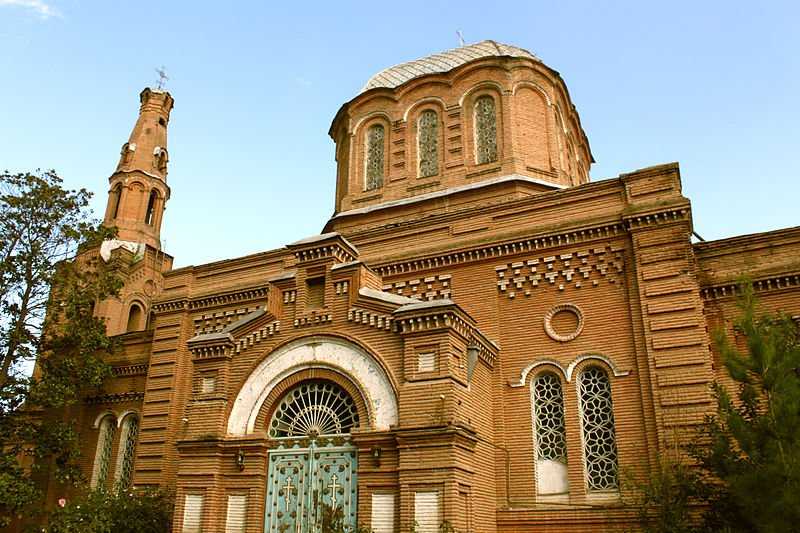
Annex, older building in the Kellie's Castle compound, probably used as chapel.


Back portion of the castle with its columns.


Colonnaded corridor.


Front view of Kellie's Castle.


Expedia.com


Copyright © 2003-2008 AsiaExplorers.  All rights reserved.

About the Author: AsiaExplorers is researched and written by Timothy Tye. We take reasonable care to check and verify the accuracy of the content. However, we disclaim any responsibility for any inconvenience, mishap, injury or death resulting from following the advice provided directly or indirectly by AsiaExplorers and the comments on its pages. All the photographs in AsiaExplorers are available for publication. Please contact AsiaExplorers at the following email address for your enquiries: