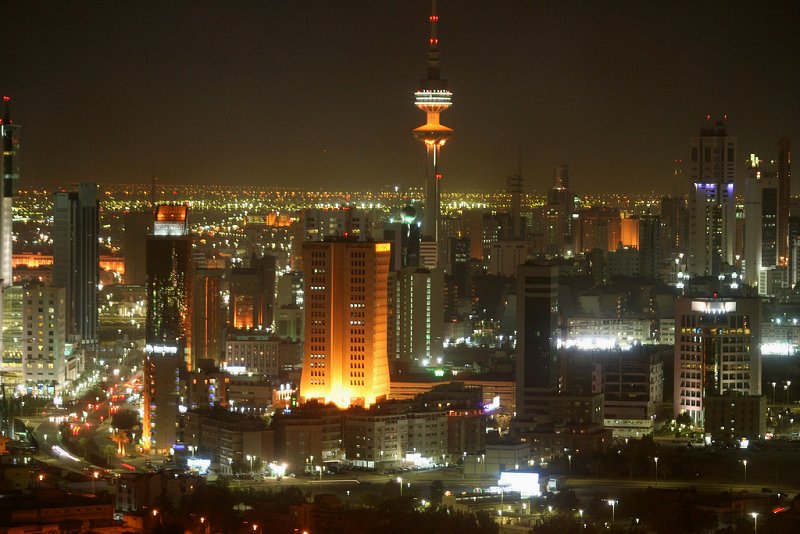
Kuala Lumpur is the vibrant capital of Malaysia. It is also the largest city in the country. Kuala Lumpur is one of the three Malaysian Federal Territories, the others being Putrajaya, http://www.asiaexplorers.com/malaysia/putrajaya.shtml, and Labuan. The area where Kuala Lumpur is located is carved out of the state of Selangor in 1974. Within Malaysia, Kuala Lumpur is commonly known as KL.
Kuala Lumpur hosted the Malaysian judiciary and executive arms until the completion of Putrajaya in the late 1990s, when both arms were migrated there while the judicial branch remains in Kuala Lumpur.
History of Kuala Lumpur
Kuala Lumpur was founded in 1857 when Raja Abdullah, a member of the Selangor royal family, brought in tin prospectors to the muddy confluence of Sungai Gombak and Sungai Lumpur (today Sungai Klang). The first group of 87 Chinese prospectors arrived and began prospecting in the Ampang area. Within a short while, they were struck down by malaria and other pestilential conditions - as many as 69 died. Still, more tin miner came to take their place. Traders set up shop at the confluence of the two rivers, and as a frontier town was established.
The British administrators of Malaya appointed a headman to oversee the Chinese community. The headman is known as a Kapitan Cina, or Captain of the Chinese Community. The Kapitan Cina's role is to administer the settlement and ensure law and order. Although the first Kapitan Cina was Hiu Siew, it was through the third Kapitan Cina, Yap Ah Loy, that Kuala Lumpur rose from a sleepy little mining town to become the foremost city of Selangor.
Kuala Lumpur during those early years was a unstable place where conflicts and civil wars often erupt. Among these was the tussle between the Selangor princes over the mine revenue, and another was that between Yap Ah Loy and Chong Chong over the Kapitanship. Thanks to Kapitan Yap's able leadership, Kuala Lumpur became Selangor's biggest city. Kuala Lumpur was devastated by civil war and by fire, and it was through Yap Ah Loy's full commitment that Kuala Lumpur was rebuilt each time.
Due largely to Yap Ah Loy, the capital of Selangor was moved from Klang to Kuala Lumpur in 1880. He built Kuala Lumpur's first school as well as a home for the homeless. When a fire built Kuala Lumpur to the ground in 1881, Yap had it rebuilt in bricks. The British Resident of Selangor at that time was Frank Swettenham, the person responsible in making Kuala Lumpur the seat of administration of Selangor, and later, the capital of the Federated Malay States.
During World War II, Japanese forces captured Kuala Lumpur on January 11, 1942 and occupied it for 44 months.
Kuala Lumpur became the capital of the Federation of Malaya when it achieved independence in 1957, and later on, the capital of the renamed Malaysia in 1963. Stadium Merdeka, or Independence Stadium, was purposely built on the occasion of independence. There, Malaya's first prime Minister, Tunku Abdul Rahman, declared Malaya's independence in front of a massive crowd. Kuala Lumpur seceded from Selangor and made a city when the Federal Territory (Wilayah Persekutuan) was created in 1974.
A formerly languid colonial outpost, Kuala Lumpur is today a vibrant city of skyscrapers. Despite numerous 6-lane highways and two elevated highways, motor vehicle growth outpaced intrastructure growth resulting in daily traffic jams.
There are Kuala Lumpur 7 toll highways around Kuala Lumpur offering a convenient way to commute by car. Cars can be rented from the airport or in the city. Motorists can pay the toll using cash or stored value cards in the form of Touch 'n Go or SmartTag.
Getting into Kuala Lumpur
The majority of international travellers arrive at KLIA, the Kuala Lumpur International Airport (KUL, official website). KLIA is 50 km to the southwest of Kuala Lumpur, in the district of Sepang in Selangor. KLIA consists of a main terminal (main building and satellite building), and a low-cost carrier terminal (LCCT).
Getting to/from the Main Terminal of KLIA
By Train:
The high-speed KLIA Express links KLIA to Kuala Lumpur's the transportation hub, KL Sentral. The journey takes 28 mins flat, and the trains run from 5:00am to 12:00 midnight. There are trains every 15 mins from 5:00am to 9:00am, and from 4:00pm to 10:00pm. Outside these timeframes, the trains run every 20mins. The journey costs RM35 each way. Passengers using KLIA Express may check in their baggage at the Kuala Lumpur City Air Terminal in KL Sentral, for those flying on Malaysia Airlines, Cathay Pacific and Royal Brunei Airlines.
KLIA Transit, similar to KLIA Express, except that it makes stops at Salak Tinggi, Putrajaya and Bandar Tasik Selatan. Thus the journey takes 36 mins. The fare is also RM35 per journey, from end to end. The trains from KL Sentral run every 30 mins from 5:33am to 0:03am, while the trains from KLIA runs every 30 mins from 5:52am to 1:00am. Passengers may also use the KLIA Express' check-in services when holding a KLIA Transit ticket.
A third option by train is by taking the KTM Komuter from KL Sental to Nilai Station, where there are frequent buses operated by Airport Coach and Sepang Omnibus, to KLIA. This third option takes 2 hours, but costs only RM4.70 for the train, and RM2.50 for the bus.
By Bus:
Airport Coach runs express buses every 30 mins between KL Sentral and KLIA, from 5:00am to 12:00 midnight. Fare is RM10 per way.
By Taxi:
From KLIA: Only Airport Limo limousines and budget taxis can pick up passengers at the airport. Buy coupons at the counters just before exiting the international arrivals gate. Ask for the budget taxi; it costs RM67.40. Otherwise, you will be given the limousine (which isn't really one) and charged RM20 more.
To KLIA: All taxis can bring passengers to KLIA. However, most taxi drivers are reluctant to use the meter for this journey, insisting on a pre-negotiated fare. Fares should be in the region of RM60-90. Agree on the fare before getting in.
Getting to/from the LCCT Terminal
The Low Cost Carrier Terminal, LCCT, is currently used only by AirAsia and Cebu Pacific. Although it is just across the runway tarmac from the main building, it is close to 20km away by road. Shutter buses connects it to the main building, and tickets cost RM1.50 per trip. To catch the shutter bus from the main terminal, go to the Bus Terminal on the ground floor of Car Park C building. From LCCT, wait for the shutter bus at the bus bays right in front of the terminal.
By train: Catch the train to the main terminal, then catch a shutter bus to the LCCT.
By Bus: SkyBus and Aerobus have services between KL Sentral and KLIA. Each trip costs RM9. Star Shuttle also provides a similar service from Pekeliling Bus Terminal and Batu 3 Jalan Ipoh for RM9 per journey.
By Taxi: All taxis in Kuala Lumpur is allowed to bring passengers to the LCCT. Negotiate fare in advance of getting in, as the drivers are unlikely to want to use meter for the journey. Expect to pay RM60-90 for the trip.
Getting out of Kuala Lumpur
By Flight: As mentioned, KLIA handles both the international and domestic flights while the LCCT terminal handles the low-cost carrier flights.
By Bus: The main bus terminal is the crowded and rather shabby Puduraya. The major operators are:
Konsortium (tel: +60-3-2031 3036)
Transnasional (tel: +60-3-2070 3300)
Getting Around Kuala Lumpur
Kuala Lumpur Taxis
Metered taxis can be easily hailed throughout the city except during rush hour. However, traffic jams, especially during rush hour are fairly common in KL and it might be difficult to get a taxi during rush hour. Due to the many incidents of taxi drivers charging extravagant fares, tourists are advised to travel in metered taxis only.
Kuala Lumpur Rail Network
Kuala Lumpur is served by a network of three light rail transit (LRT) lines, a monorail line, and a commuter rail system consisting two lines, and two high-speed airport rail links. The three LRT lines are Ampang Line, Kelana Jaya Line and Sri Petaling Line. The two commuter rail lines are the Sentul-Port Klang Line and the Rawang-Seremban Line. The sole monorail line is simply known as Kuala Lumpur Monorail. The high speed KLIA Ekspres and KLIA Transit lines connect Kuala Lumpur to the international airport.
As different companies operate the various rail systems, it resulted in many lines not integrating well, making transferring from one system to another inconvenient for passengers. Moving from one system to another often require a lot of walking, stair-climbing, escalator-use and even crossing busy roads. The LRT, monorail, and commuter rail systems now accept the Touch 'n Go stored value farecard, easing the hassle of commuting between systems. Also, Rapid KL, the operator of the three LRT lines as well as Rapid KL buses (which cover about 70% of the Klang Valley's bus network), has come up with an daily ticket which can be used on both its LRT and bus services which cost RM7. The monorail is also planning to build a few more stations and tracks which is the Sungai Buloh Line (continued after Titiwangsa),Subang Jaya Line,Cheras Line and another line (name not included).
|
|
Places of Interest in Kuala Lumpur
Click here to view Kuala Lumpur Sights in pictures.
- 1 Utama Shopping Centre
- Berjaya Times Square
- Cathedral of St Mary the Virgin
- Cenotaph
- Dataran Merdeka
- Dayabumi Complex
- Istana Budaya
- KL Tower
- KLCC
- KTM Building
- Kuala Lumpur Convention Centre
- Kuala Lumpur General Post Office
- Kuala Lumpur Industrial Court
- Kuala Lumpur Memorial Library
- Kuala Lumpur Old Railway Station
- Kuala Lumpur Old Sessions Court
- Makam Pahlawan
- Malaysia Tourism Centre
- Masjid India
- Masjid Jamek Kuala Lumpur
- Masjid Negara
- Masjid Wilayah Persekutuan
- Merdeka Flag Pole
- Muzium Negara
- National History Museum
- National Science Centre
- Old Kuala Lumpur City Hall
- Old Kuala Lumpur High Court
- Old Kuala Lumpur Post Office
- Parliament Building
- Petronas Twin Towers
- Royal Selangor Club
- Sultan Abdul Samad Building
- Suria KLCC
- Taman Tasik Perdana
- Taman Tasik Titiwangsa
- Textile Museum
- Thean Hou Temple
- Tugu Negara
Transportation in Kuala Lumpur
Medical Attention in Kuala Lumpur
History of Kuala Lumpur
Location Map of Kuala Lumpur
View Kuala Lumpur Hostels in a larger map
 View of Kuala Lumpur from KL Tower (6 June 2004) © Timothy Tye
 KLCC with Petronas Twin Towers and Menara Maxis (8 February 2006) © Timothy Tye
 Petronas Twin Towers Skybridge (6 June 2004) © Timothy Tye
 Muzium Negara (9 October 2004) © Timothy Tye
|