About Labuan
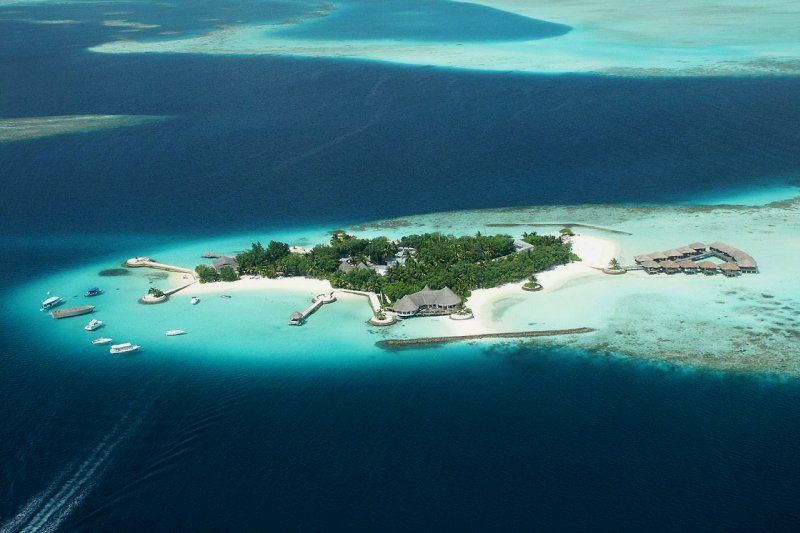
Labuan is an island 8 km off the coast of Borneo. It is one of the three Federal Territories of Malaysia. The Labuan Federal Territory comprises the main island, Labuan, which is 75 sq km, and six other smaller islands namely Pulau Burung, Pulau Daat, Pulau Kuraman, Pulau Papan, Pulau Rusukan Kecil, and Pulau Rusukan Besar. Together, they have a combined total area of 92 sq km. The islands are adjacent to the Malaysian state of Sabah and the independent state of Brunei Darussalam, on the northern edge of Brunei Bay facing the South China Sea. Labuan Island is mainly flat and undulating and the highest point is only 85 metres. Over 70% of the island is still covered with vegetation. The main town is Bandar Labuan, formerly known as Victoria. It is a port town facing Brunei Bay.
History of Labuan
Labuan was historically a part of the Brunei Sultanate. In the 1840's the previously-uninhabited Labuan was proposed as a base for British operations against piracy in the South China Sea. The Sultan of Brunei ceded Labuan to Britain in 1846, and the island became a Crown Colony in 1848. The first White Rajah of Sarawak, James Brooke was appointed first commander-in-chief and Governor of the territory. In 1849 the Eastern Archipelago Company became the first of many companies trying to exploit its coal deposits and establish it as a coaling station for the China trade. It later became a station for the submarine cable between Singapore and Hong Kong.
Labuan was made a part of North Borneo on 1 January 1890, and on 30 October 1906, it became part of the Straits Settlements.
During World War II, Labuan was occupied by Japan from December 1941 to June 1945 and governed as part of the Northern Borneo military unit by the Japanese 37th Army. Labuan was renamed Maida Island after Marquis Toshinari Maeda, the first commander of Japanese forces in northern Borneo. The island was retaken by Australian forces in Operation Oboe Six, in June 1945. Labuan assumed its former name and was under British military administration, along with the rest of the Straits Settlements. It was then joined to British North Borneo on 15 July 1946, and in turn became a part of Malaysia within the state of Sabah in 1963.
In 1984, Labuan was ceded by Sabah to the federal government and made a federal territory. In 1990, it was declared an international offshore financial centre and free trade zone. The Labuan International Business and Financial Centre (Labuan IBFC) was created as an offshore financial hub on October 1990 and was operating under the name of Labuan International Offshore Financial Centre (IOFC). At the time it was established to strengthen the contribution of financial services to the Gross National Products (GNP) of Malaysia as well as to develop the island and its surrounding vicinity. The jurisdiction, under the robust but progressive regulatory body called Labuan Offshore Financial Services Authority or LOFSA, offers benefits such as 3% tax on net audited results or a flat rate of Malaysian Ringgit (MYR) 20,000 to trading companies; low operational costs; liberal exchange controls; and a host of other advantages including readily available, experienced and professional service providers.
Labuan IBFC is Malaysia’s only offshore centre, strategically located on Labuan island off the north west coast of Sabah which is itself part of the Borneo land mass. Since its inception, the jurisdiction has developed by leaps and bounds such that today, it is home to more than 6,500 offshore companies and more than 300 licenced financial institutions including world leading banks. Supported by a well developed infrastructure that includes modern amenities as well as a full range of service providers for the business community, Labuan IBFC is embarking on an aggressive growth strategy to become the premier international business and financial centre in the Asia Pacific region.

There are five core areas that Labuan IBFC intends to focus on, levaraging on its key strengths. These five are offshore holding companies, captive insurance, Shariah-compliant Islamic Finance structures, public and private funds and wealth management. Given the burgeoning interest around the world in Islamic finance, Labuan IBFC is well placed to enhance its lead as an Islamic financial hub. Labuan IBFC’s position is further enhanced by the formation of the Malaysian International Islamic Finance Centre initiative that was launched in August 2006.
The Labuan Financial Exchange or LFX was officially launched on 23 November 2000 and offers a global exchange with listing and trading facilities for a wide range of financial and non financial products.
Tourist Attractions of Labuan
There are several attractions and places of interest on Labuan. The military cemetery contains various war graves and memorials to the fallen of World War II. This includes British, Australian, Indian, Sarawakian, Bruneian, North Borneo and Empire troops. There is also a memorial celebrating the surrender of the Japanese to the Australian Forces in 1945. There are also remnants of Labuan's history as a Royal Navy Coaling station, including 'the chimney', a well known local landmark. There is also a Labuan Maritime Museum.
Labuan is also the base for diving on four popular wreck dives: the Cement wreck, the American wreck, the Australian wreck and the Blue Water wreck. Labuan has many schools. However, it has only one international school, Labuan International School. Other places of interest to visit such as Labuan International Sea Sport Complex at Jalan Tg. Purun.Newly proposed places is the Marina centre and Labuan Square project which is expected to be completed in next two years from 2008.
Labuan also own institution of higher education which is Universiti Malaysia Sabah Labuan International Campus,[3] branch of Universiti Malaysia Sabah in Sepanggar Bay, Kota Kinabalu, Sabah.
Getting there
Labuan is connected to Kuala Lumpur with daily flights by Malaysia Airlines and AirAsia. It is also linked to Miri with three flights per day on MASWings, a wholy owned subsidiary of Malaysia Airlines that took over the operations of FlyAsianXpress.
Labuan Location Map
View Labuan in a larger map
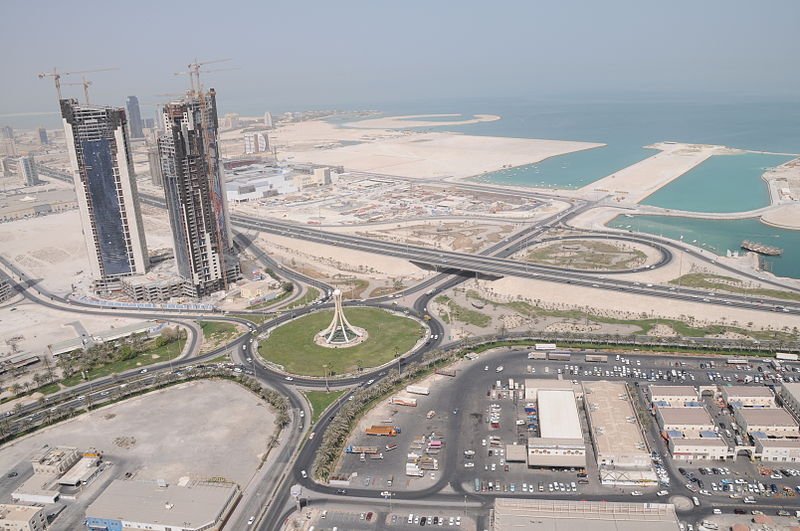
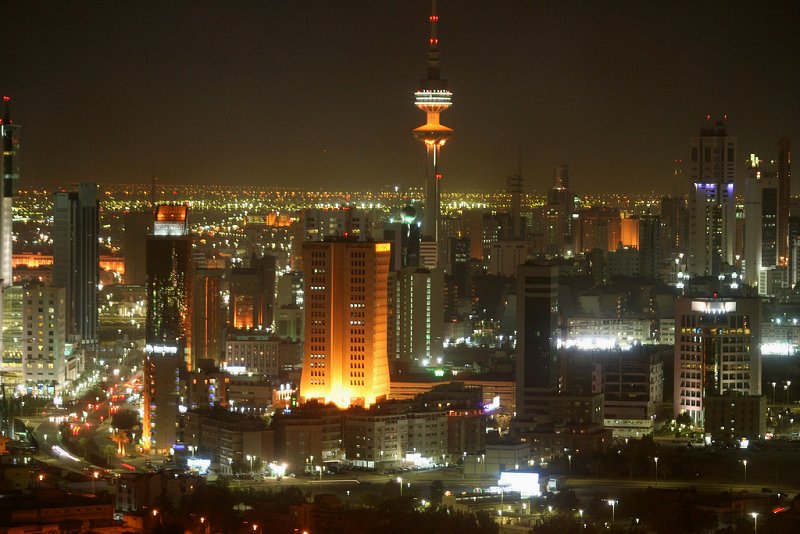
 Labuan Financial Park Author: JKT-c (GFDL)
|