Top Tourist Attractions of Malaysia
The following are some of the biggest tourist attractions in Malaysia, in alphabetical order:
States of Malaysia
Listed below are the States in Malaysia in alphabetical order. Click to enter.
Culture, Arts & Food
Languages
The official language of the country is Bahasa Malaysia, but many other languages are also spoken.
Environment
Development
Infrastructure
Famous Malaysians
Legendary Personalities
The following are people whose existence could be both historical as well as legendary, that have become part of the fabric of the history of the country.
Getting there
By Plane
The international airports in Malaysia include Kuala Lumpur International Airport (KUL), Kota Kinabalu International Airport (BKI), Penang International Airport (PEN) and Langkawi International Airport (LGK). Other domestic airports in Malaysia include Kuching International Airport (KCH) and Johor Bahru's Senai International Airport (JHB).
By Train
You can enter Malaysia by train from Bangkok and Hatyai in Thailand and Singapore.
By Road
The following are the land crossing into Malaysia:
From Satun in Thailand to Wang Kelian in Perlis, Malaysia.
From Padangbasar in Thailand to Padang Besar in Perlis, Malaysia.
From Sadao in Thailand to Bukit Kayu Hitam in Kedah, Malaysia.
From Betong in Thailand to Pengkalan Hulu in Perak, Malaysia.
From Sungai Golok in Thailand to Rantau Panjang in Kelantan, Malaysia.
From Woodlands in Singapore to Johor Bahru in Johor, Malaysia.
From Tuas in Singapore to Tanjung Kupang in Johor, Malaysia.
From the Sungai Tujoh crossing on the road between Bandar Seri Begawan, in Brunei, and Miri in Sarawak, Malaysia.
From the Tebedu-Entikong checkpoint on the road between Pontianak in Kalimantan, Indonesia, and Kuching in Sarawak, Malaysia.
By Sea
Port Klang in Selangor and Port Swettenham in Penang are two of the entry points for cruise ships arriving in Malaysia. In addition, there are regular ferry services between the following ports:
Batam in Indonesia with Batu Pahat and Johor Bahru in Johor, Malaysia
Medan in Indonesia with Penang in Malaysia
Dumai in Indonesia with Malacca, Port Dickson, Port Klang in Malaysia
Pekanbaru in Indonesia with Malacca in Malaysia
Nunukan in Indonesia with Tawau in Sabah, Malaysia
Zamboanga Peninsula in the Philippines with Sandakan in Sabah, Malaysia
Changi Point in Singapore with Tanjung Belungkor in Johor, Malaysia
Satun in Thailand with Kuah in Langkawi, Malaysia
Tak Bai in Narathiwat Province, Thailand with Pengkalan Kubor in Kelantan, Malaysia
Getting Around
By Plane
The national carrier is Malaysia Airlines. It provides connections to most of the major cities and towns in Malaysia. The low cost carriers Air Asia and Firefly provides budget flights to many of the towns in Malaysia. In addition, Berjaya Air flies to Pangkor, Pulau Redang and Pulau Tioman, while MASWings provides connections to the interiors of Sabah and Sarawak.
By Train
There is a limited number of lines connecting the major cities of Malaysia. The train services is generally regarded as underdeveloped due to competition from road transport. In Malaysia presently, only in Kuala Lumpur is the train used as a commuter service, in the form of KTM Komuter, RapidKL LRT and KL Monorail.
By Road
Malaysia has an excellent network of expressways, highways, state road and rural roads. The North-South Expressway (E1 from Bukit Kayu Hitam to Kuala Lumpur, E2 from Kuala Lumpur to Johor Bahru) is the main road transport network for the west coast of the peninsula. It is supported by the older trunk road. Driving is on the left side of the road in Malaysia.
About Malaysia
Malaysia is a country in the middle of Southeast Asia. It comprises thirteen states and three federal territories. Malaysia has an area size of 329,847 sq km (127,355 sq miles). The country is composed of two land masses: West Malaysia is a peninsula on the Asian mainland while East Malaysia is on the northern portion of the island of Borneo. The two regions are separated by the South China Sea.
The capital of Malaysia is Kuala Lumpur, which along with Putrajaya and Labuan, are the federal territories. The country has a population of 27 million (Dec 2006 estimate). It shares a land border with Thailand, Indonesia and Brunei. Malaysia and Singapore are linked by a causeway and a bridge. It is separated from the Philippines by the Sulu Sea.
Malaysia is a constitutional monarchy with the king, called the Yang di-Pertuan Agong, as the head of state. The government is headed by a Prime Minister, in a system of government modelled after the Westminster system.
| |
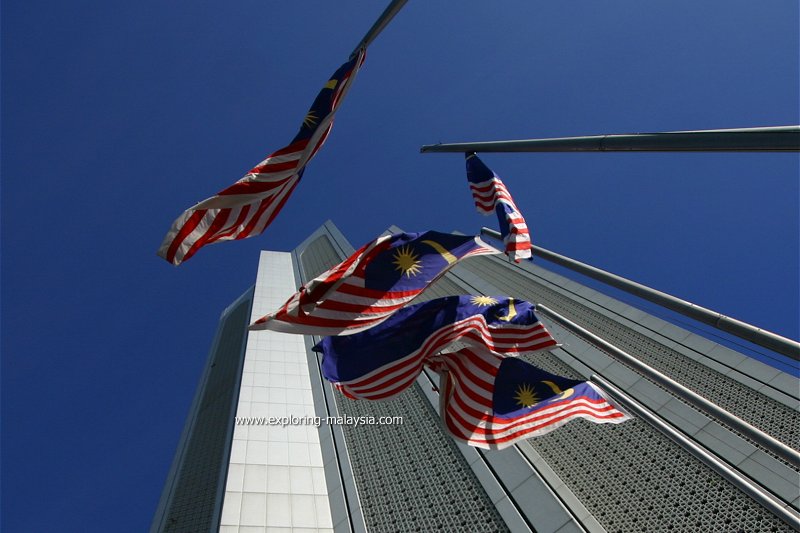
 Jalur Gemilang, the Malaysian Flag (8 February 2006) © Timothy Tye using this photo
 Sarawak Cultural Village Dances (2 October 2004) © Timothy Tye using this photo
 Pulau Rawa (9 April 2004) © Timothy Tye using this photo
 Scene at Siti Khadijah Market, Kota Bharu (12 February 2006) © Timothy Tye using this photo
 Soot covered charcoal factory, Matang (1 July, 2007) © Timothy Tye using this photo
 Majestic Kek Lok Si Temple in Penang (28 January 2006) © Timothy Tye using this photo
 Gua Kelam, Perlis (30 April, 2005) © Timothy Tye using this photo
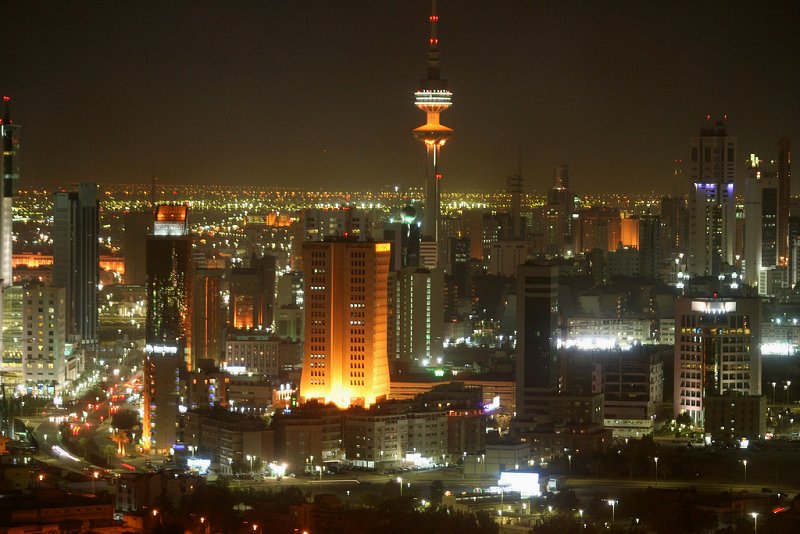
 Bright Lights, Big City - Kuala Lumpur (28 December 2006) © Timothy Tye using this photo
 Lush Sungai Sedim (2 May 2005) © Timothy Tye using this photo
 Elegant Ubudiah Mosque (31 January 2006) © Timothy Tye using this photo
 Sungai Palas Tea Plantation, Cameron Highlands (17 September 2005) © Timothy Tye using this photo
 Mammoth Batu Caves (28 December 2006) © Timothy Tye using this photo
 Sungai Kuantan Promenade, Kuantan (31 December, 2006) © Timothy Tye using this photo
 Sri Muthu Mariamman Festival, Malacca (3 May 2009) © Timothy Tye using this photo
 Picturesque Pantai Cenang, Langkawi (6 June 2005) © Timothy Tye using this photo
 Medieval Fort Duyung, Kuala Terengganu (31 December, 2006) © Timothy Tye using this photo
|