World Travel GuidesMount Kinabalu


Exotic Tours of Asia
 Compare Hotel Room Rates from different Booking Sites  Asia Travel Guide     
About Mount Kinabalu

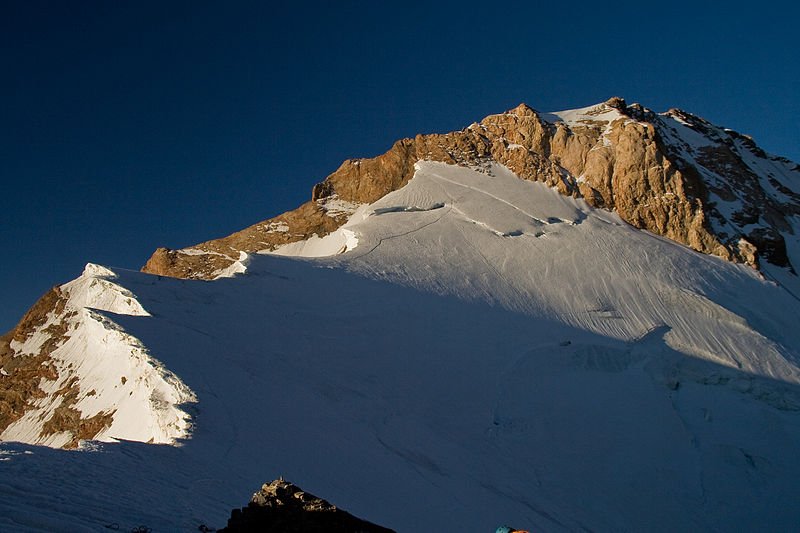
Mount Kinabalu is the tallest mountain in Malaysia. According to the survey conducted in 1997, the height of Mount Kinabalu is 4095 meters (13,435 feet) above sea level. It is the tallest mountain in the Malay archipelago, and the fourth tallest mountain in Southeast Asia after Hkakabo Razi of Myanmar (5881 meters), Puncak Jaya (5030 meters), Trikora (4751 meters) and Mandara (4701 meters), all of Indonesia. The mountain is located within Kinabalu Park, a UNESCO World Heritage Site.
The summit of Mount Kinabalu is called Low's Peak. It was named after Hugh Low, the British colonial administrator and naturalist who made the first documented ascent up Mount Kinabalu in 1851. Both the summit as well as the deep gully at the other side of the mountain were named after him.

The vegetation of Mount Kinabalu ranges from lowland dipterocarp forest that graduates to montane oak, rhododendrons, and conifers. As one continues to climb higher, one comes upon alpine meadows, and eventually stunted shrubs that cling tenaciously to the ground. The summit is almost barren.

Due to the poor soil condition, Mount Kinabalu has several species of carnivorous plants, including Nepenthes rajah. Endemic to Mount Kinabalu, Nepenthes rajah is one of the biggest pitcher plants. It was first collected by Hugh Low, the British administrator, in 1858.

In addition to the flora, Mount Kinabalu is also home to a few endemic animals, including the Kinabalu Giant Red Leech aned the Kinabalu Giant Earthworm.

There are many theories as to how Mount Kinabalu got its name. A popular belief is that the name was derived from the Kadazan-Dusun word "Aki Nabalu", which means "reverred abode of the dead". The second most popular theory postulates that the name comes from "Cina balu", meaning "Chinese widow". The theory draws upon a quintessential love story of a Chinese prince who was rescued by natives in Sabah after his ship sank off the coast. He fell in love with a local girl but was forbidden by the emperor from returning to his native wife in Sabah. The wife climbed up the mountain to look for her husband's ship which never returned. Heartbroken, she fell ill and died at the top of the mountain, whereupon she was turned into a stone by the mountain spirits. St John's Peak on Mount Kinabalu is commonly believed by the locals of Ranau to be the embodiment of the woman.

Getting there

There are buses between Kota Kinabalu and Kinabalu Park - you can enquire with your hotel or ask at the bus station in Inanam. On the way, you can see the mountain from the window if you sit on the left side of the bus. The journey takes about 2 hours and costs around RM15.

Climbing Mount Kinabalu

Mount Kinabalu is among the most popular mountains for climbers in Southeast Asia. Located within Kinabalu Park, the mountain is climbed by close to 50,000 people every year.

Entrance fees into Kinabalu Park is RM15 for non-Malaysian visitors and RM3 for Malaysians. In addition, those who want to climb Mount Kinabalu have to pay a climbing fee of RM100 for non-Malaysians and RM30 for Malaysians, plus RM7 for insurance. In addition, one has to hire a guide, which costs around RM85-RM120, depending on selected climbing route.

From the park headquarters, at height 1585 meters (5200 feet), there is a bus service to the climbing path, a 5-kilometer journey. The fare is RM5 one way. Climbers start their ascend from there to Laban Rata at 3270 meters (10,728 ft), where a resthouse is located.

Most climbers overnight at Laban Rata, and continue their ascend to the peak at the early hours of the morning, usually around 2:00 - 3:00 am, in order to reach the peak by sunrise. The final league from Laban Rata require climbs along steep ledges over bare granite terrain.

Preparing for Mount Kinabalu

Would-be climbers should pack warm, waterproof clothing, hat, gloves, undergarments and spare clothing. Good walking shoes are a requirement. In order to see your way in the dark, you should also bring along good headlamp with ample supply of batteries. Headlamps are preferred over hand-held torches so that you can use both hands for climbing. A whistle to call for help is useful, and a selection of high-calorie snacks such as chocolate and nut will boost your energy.

Accommodation

For online booking of budget accommodation in Sabah, use the Budget Accommodation Guide. For accommodation at Mount Kinabalu, contact Sutera Sanctuary Lodges (tel: 088 243629, www.suterasanctuarylodge.com)

Mount Kinabalu Location Map


View Mount Kinabalu in a larger map

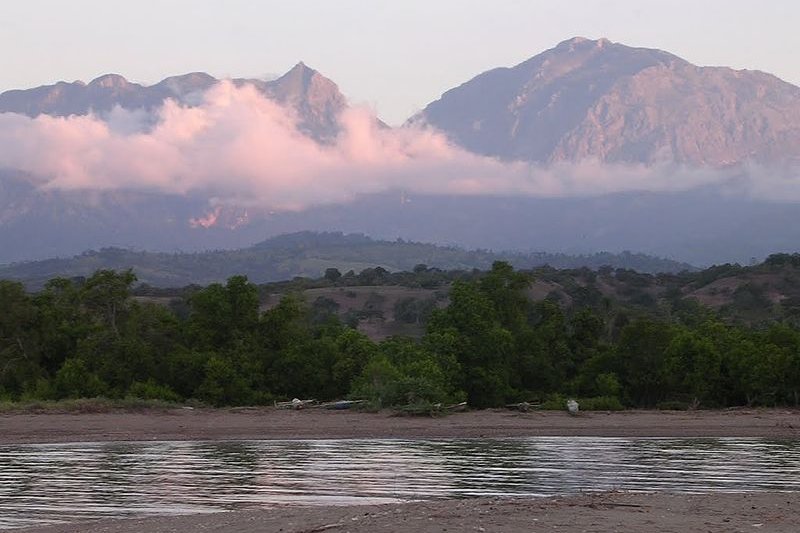
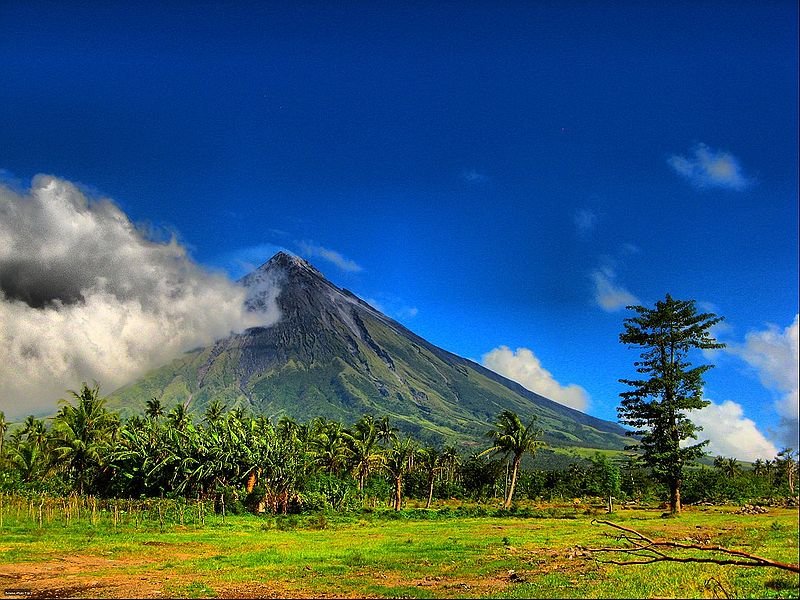
Mount Kinabalu
Mount Kinabalu
Author: Ariel Steiner, Israel (cc-by-3.0)

Mount Kinabalu
Mount Kinabalu
Author: Tony Jones (cc-by-3.0)

Mount Kinabalu
Mount Kinabalu
Author: Oscark (cc-by-3.0)


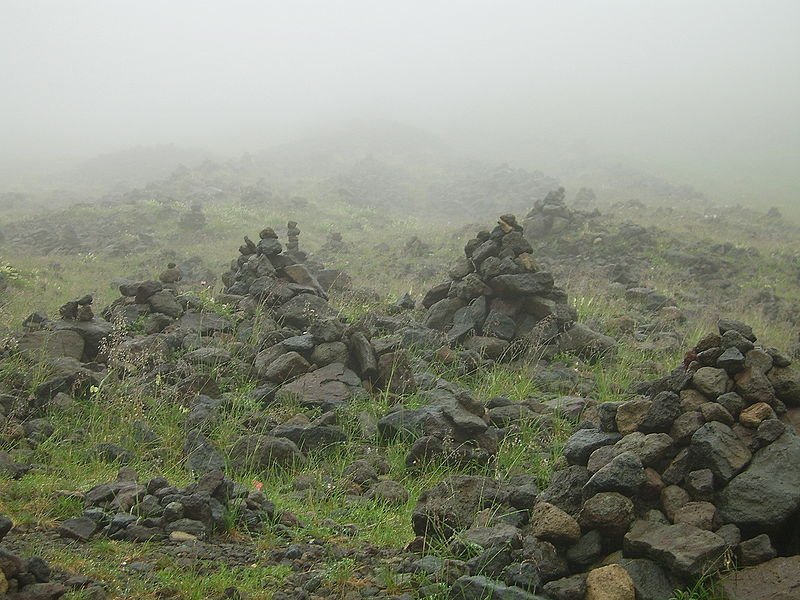
Mount Kinabalu on a wet day
Author: K N Y
Photos provided by Panoramio are under the copyright of their owners


At the summit of Mount Kinabalu
Author: Al Ronberg
Photos provided by Panoramio are under the copyright of their owners


Get my latest updates on Google+


Find a hotel


Point - Click - Discover!

Thanks for visiting this webpage. To continue exploring, choose another destination!


My World Travel Guides - celebrating a beautiful world beautifully.

Accessories for your trip