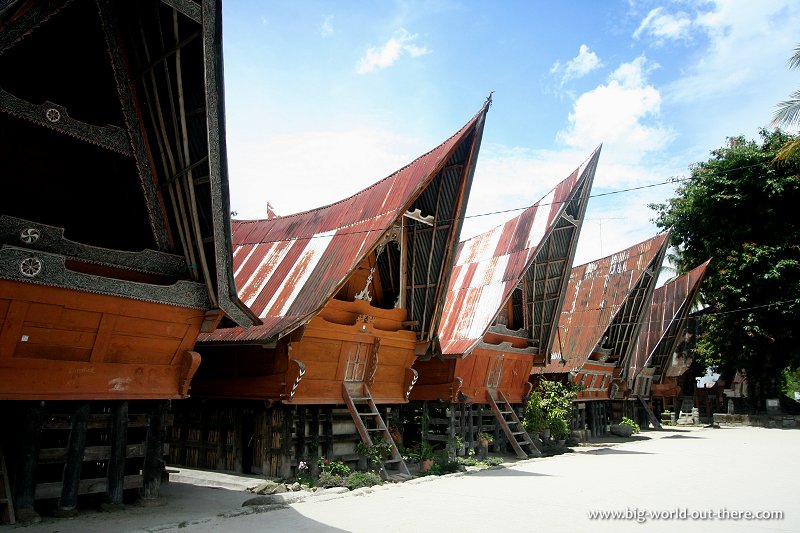
The Orang Ulu Longhouse provides an idea of how the Orang Ulu tribe lives in Sarawak. The Orang Ulu, whose name means "upriver people", is a tribe consisting a few groups of people, including the Kenyah, Kayan, Kelabit, Lun Bawang and Penan. They constitute 5.3% of Sarawak's population. Formerly animists, most Orang Ulu are today Christians.
Orang Ulu maiden performing a dance to entertain guests.
Among the Orang Ulu, the Kenyah and Kayan live in the middle and upper reaches of the main rivers in Central and Eastern Sarawak. They originate from the Kalimantan side of Borneo. Traditionally hill padi farmers, Kenyah and Kayan have now turned to cash crops. The Kelabit live in the remote mountains of upper Baram, while the Lun Bawang the interiors of Miri and Limbang divisions. These two groups of Orang Ulu cultivate irrigated padi. The Penan, the most primitive group of Orang Ulu, continues a nomadic lifestyle.
The Kayan, Kenyah, Kelabit and Iban practise tattooing as a form of body ornamentation. In the old days, a tattoo on the back of a man's hand signify he has taken a skull. The Kayan believe that the tattoo serves as torch for their journey into the underworld. While the Orang Ulu men wear tattoo on almost all parts of their bodies, Orang Ulu women confine it to their wrists and hands.
Although beads are not locally produced, the Orang Ulu have a tradition for beadwork. The Orang Ulu obtain the beads through barter trade. Large, antique beads are fashioned into head-dresses, bracelets, necklaces and girdles, while smaller ones are used on baskets, baby carriers, belts, just about anything they fancy.
An important contribution of the Orang Ulu to Sarawak culture is woodcarving. Skilled carvers embellish Orang Ulu houses, boats, tools and musical instruments with their elegant designs. The most important Orang Ulu motif is called "dragon dog", a figure with long snout, curling fangs and bulging eyes. Many woodcarving designs have found their way into tattoos, and these designs have also been received enthusiastically in the West.
Orang Ulu longhouses are built to last. Built from solid ironwood, these houses may last for generations. Unlike many other tribes, the Orang Ulu practise settled agriculture. They maintain developed rice fields, doing away with having to find new fresh fields every now and then.
Entrance to the Orang Ulu longhouse at the Sarawak Cultural Village.
View of the Orang Ulu longhouse.
Basketware hung on the wall.
An Orang Ulu woman preparing snack in one corner of the longhouse.
The dining area.
Intricate designs on the columns of the longhouse. The Orang Ulu are famous for their adornment.
Thank you, thank you, thank you, for the opportunity to explore the world, to document, to photograph, and to share the information with you. My name is Tim, I'm the writer of this website, and I want to tell you how grateful I am for your visit. This is one of over a dozen websites that I write - you can click my thumbnail photo above to randomly visit any one of them. All my photos are available for commercial printing - find out the photo usage rights here. If you wish to share you photos on this website, upload them to www.panoramio.com and send the URL to me for consideration. And, if you'd like to correspond with me, send your mails to my address as shown below:
AsiaExplorers is researched and written by Timothy Tye. We take reasonable care to check and verify the accuracy of the content. However, we disclaim any responsibility for any inconvenience, mishap, injury or death resulting from following the advice provided directly or indirectly by AsiaExplorers and the comments on its pages. Photographs in AsiaExplorers may not be reused unless you first obtain permission. Click here for licensing terms to use the photographs. EarthDocumentary disclaim responsible for the use of information on this website. The author is a Christian. Click here if you are interested to know more about his Christian beliefs. To contact AsiaExplorers, use the following email address: