Putrajaya Tourist Attractions
Bridges in Putrajaya
Other Sights in Putrajaya
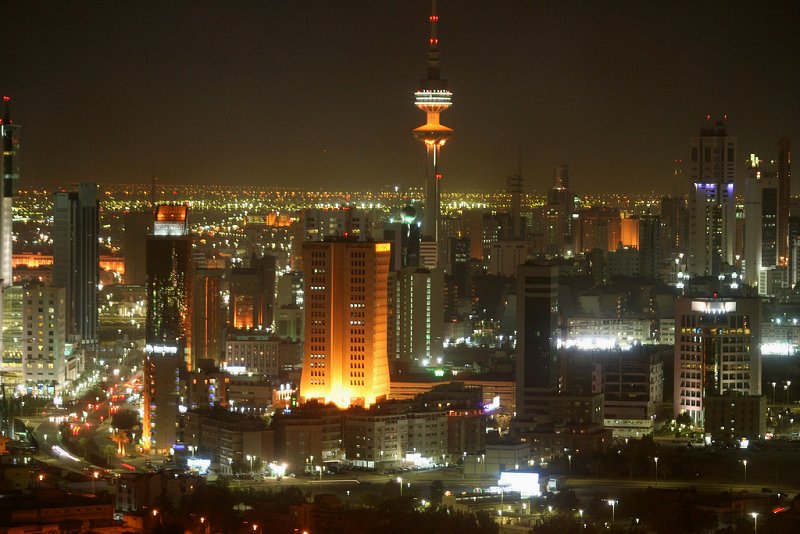
Menara Putrajaya
Millennium Monument
Putrajaya, Administrative Capital of Malaysia
View Putrajaya Tourist Attractions in a larger map
 Istana Darul Ehsan, Putrajaya (6 June 2004) © Timothy Tye
 Perdana Putra Building (6 June 2004) © Timothy Tye
 Seri Saujana Bridge, Putrajaya (6 June 2004) © Timothy Tye
 Palace of Justice, Putrajaya (6 June 2004) © Timothy Tye
|
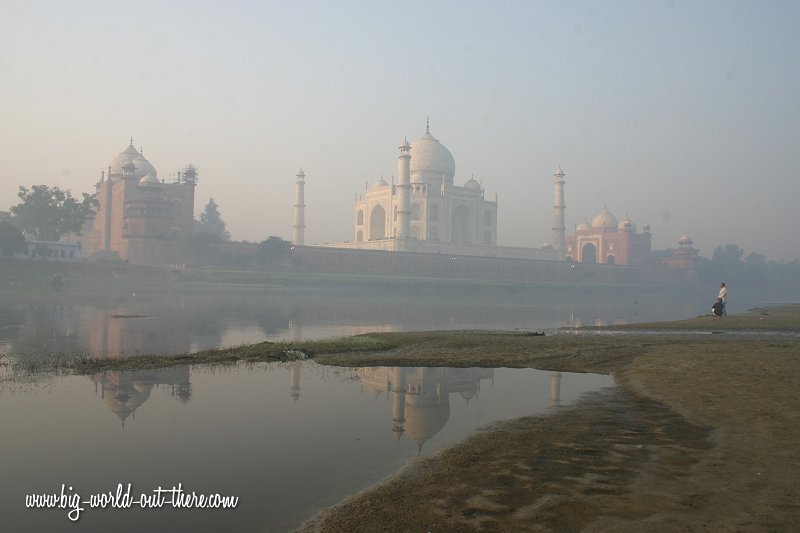
Putrajaya is the administrative capital of Malaysia. It is a planned city built over land that was once palm oil plantations and disused tin mines. A visit to Putrajaya is similar to visiting Epcot Center in Disney World - the architectural styles transport you to various countries of the world, from the Taj Mahal to Central American pyramids to some of the state of the art buildings. I have visited Putrajaya a few times, during the day, evening and night. The shots you see on this page were taken from two of those trips. One of them was made with a few of my former school mates, friends whom I have not met for many years. I am thankful for their patience as I run around with my heavy tripod taking photographs while they waited for me in the car. I think it could be a rather taxing experience travelling with me, unless you happen to be a travel photographer, and in a way, I am giving them a personal glimpse of travelling with the founder of AsiaExplorers.
The shots enable me now to give you an online tour of Putrajaya. If you have never been there, I hope one day you would have the chance to explore it, whether on your own, or with a group of your friends.
Getting to Putrajaya
By Plane: If you arrive by flight at the Kuala Lumpur International Airport (KLIA), you can reach Putrajaya by taking the taxi as well as the express train (see below).
By Taxi: If you are taking the taxi from Kuala Lumpur, there is a fixed fare at KL Sentral of RM35 to Putrajaya. If you're coming from KLIA, the fare is approximately RM60.
By Train: The KLIA Transit train makes a stop at Putrajaya on its way to KL Sentral. The train runs once every 30 minutes, and takes 20 minutes to reach Putrajaya. The fare is RM9.50 one way or RM15 return.
By Bus: There are buses from Sinar Kota in Kuala Lumpur to Putrajaya. They run from 6:30am to 10:00pm every day. The fare is RM3.50 and the journey takes from 30 minutes to one hour, depending on the traffic condition. From KL Sentral, you can take the RapidKL bus to Putrajaya, for RM5.00.
Getting around Putrajaya
There is inadequate public transport within Putrajaya, and to view all the sights, you are encouraged to self-drive. To charter a taxi, the cost is from RM30 per hour, and but can be negotiated down.
Accommodation in Putrajaya
There is as yet no budget or even mid-range accommodation in Putrajaya, perhaps under the misguided assumption that only CEO's need a place to sleep. There are three hotels available at Putrajaya, listed here in alphabetical order:
Marriott Putrajaya is a palatial 500-room hotel. If you are lucky, you can get the "regular" rooms, going for as low as US$25.
Palm Garden Hotel is located within the IOI Resort, this hotel was formerly the Renaissance.
Shangri-La Hotel Putrajaya is centrally located right next to Istana Melawati. Rates start at US$70 and up.
Use the Accommodation Search Engine to book hotels in Putrajaya online.
History of Putrajaya
The idea that the administrative capital of Malaysia should be moved out of Kuala Lumpur was hatched as far back as late 1970's. When Janda Baik, near Bukit Tinggi in Pahang, was deemed not suitable, a search was made to find a more appropriate site. Eventually in June 1993, Prime Minister Dato' Seri Dr Mahathir Mohamed settled for Prang Besar in Selangor. One and a half years later, the site was renamed Putrajaya, in honour of Malaysia's first prime minister, Tunku Abdul Rahman Putra Al-Haj. Mahathir performed the ground-breaking ceremony in September of 1996. Three years later, on 4 June 1999, the staff of the prime minister's department moved into their new office in Putrajaya.
Geography of Putrajaya
Putrajaya covers 4581 hectares. The site runs northeast to southwest, surrounded by lakes and wetlands, and connected by bridges. In this tour, we will visit the different areas, so you have an idea where you are in Putrajaya.
You can divide Putrajaya into two major areas: the Core Area and the Peripheral Area. The Core Area covers 1069 hectares and is divided into five precincts, namely the Government Precinct, Commercial Precinct, Civic & Cultural Precinct, Mixed Development Precinct, and Sports & Recreational Precinct. Forming the spine of Putrajaya is a 4.2km boulevard that runs right through the middle linking the Core Area precincts.
The Peripheral Area comprises 15 precincts, twelve of which will be used for residental development. A total of 67,000 homes of various sizes have been planned here, served with schools, hospitals, shopping centres, mosques, multipurpose halls, learning centres and neighbourhood parks.
Do we need Putrajaya?
We probably don't. To many Malaysians, it represents the excesses of our leaders to build big. The amount spent to built it could probably go to better use elsewhere. How well will it be maintained goes to be seen. Yet to others, Putrajaya is the epitome of the Malaysia Boleh spirit - that if others can do it, so can Malaysians. As for myself, since we are getting Putrajaya whether we like it or not, we might as well enjoy it!
Let's now pay a visit to Putrajaya, visiting the many different places around it. By scrolling downwards, you will have visited all the major landmarks of Putrajaya.
Precinct 1: Government Precinct
Located on the northern end of the Core Area, this is where most of the federal government ministries are located. Two important landmarks of Putrajaya are located here, namely the Perdana Putra Building (also known as the Prime Minister's Department) and the Putra Mosque. Three bridges link Precinct 1 with other parts of Putrajaya. They are the Seri Perdana, the Putra and the Seri Bakti bridges.
Precinct 1: Istana Melawati
Istana Melawati is the royal retreat of His Majesty the Yang di Pertuan Agong and his family. It is also the venue of meetings of Rulers and Yang Di Pertua Negeri, as well as functions hosted by the Yang Di Pertuan Agong. Located in Precinct 1 on the northwestern slope of the hill within Persiaran Persekutuan, it is one of the first sights to greet visitors arriving from Kuala Lumpur.
Precinct 1: Putra Mosque
The Putra Mosque is the biggest mosque in Putrajaya, and one of its most prominent landmarks. Sitting as if afloat on Putrajaya Lake, the mosque consists of three main functional areas - the prayer hall, the "Sahn" or courtyard, learning facilities and function rooms. The prayer hall is supported by 12 columns, with the highest point below the dome being 250 feet above ground level. The "Sahn" is landscaped with decorative water features and bordered by colonnades. The minaret is 116m tall - the tallest in the region.
Putra Mosque is capable of accommodationg 15,000 worshippers at any one time also houses. The mosque is modeled after Persian Islamic architecture of the Safavid period with several elements derived from other Muslim cultures. As with all mosques, the Putra Mosque faces Kiblat, the direction of Mecca. The main entrance is patterned after gates to public buildings in Muslim Persia. The building was constructed mainly with rose-tinted granite, offset by brown-stained cengal woodwork to enhance the decorative features on the doors, windows and panels.
Precinct 1: Dataran Putra
Directly in front of the Putra Mosque and immediately below the Perdana Putra is the 300m circular Dataran Putra. It is designed for the purpose of staging national events and formal parades. The square is divided into 11 segments, in the pattern of 11-pointed star, representing the 11 states of Malaya when the country gained independence in August 1957. Within this is 13 pointed stars representing the 13 states that formed Malaysia in 1963, and within this a 14-pointed star representing the 13 states and the Federal Territory.
Precinct 1: Perdana Putra Building
The Perdana Putra Building has a shape resembling either the Taj Mahal or the Jami Masjid of Delhi. This is where the Prime Minister's Office is located. With its stone façade and green onion-shaped dome, the Perdana Putra Building is the central landmark of Putrajaya. The Prime Minister's Office is in the Central Main Block and is distinguished by the dome that is supposed to resemble the the Zahir Mosque in Alor Setar, Kedah.
Precinct 1: Putra Bridge
Spanning 435 metres, the Putra Bridge connects Dataran Putra in the Government Precinct to the Boulevard in the Mixed Development Precinct. It is inspired by the Khaju Bridge of Isfahan, Iran. The upper level forms part of the Boulevard. One level down is the service tunnel, with provision for LRT track, service road and pedestrian walkway. The lowest level will be used for restaurants and for boat berthing.
Precinct 1: Seri Perdana Bridge
The 370 metre long Seri Perdana Bridge crosses Putrajaya Lake. Its design reflects Islamic elements. There are 8 rest areas on the bridge for visitors to appreciate the scenery which includes the Putra Mosque and the Perdana Putra. From this bridge, you can see the official residence of the prime minister, the Seri Perdana, from the distance.
Precinct 1: Seri Bakti Bridge
Linking the Government Precinct in the north with the Deputy Prime Minister's Residence in the south is the Seri Bakti Bridge. Like the Seri Perdana Bridge, the Seri Bakti also borrows Islamic architectural influences, featuring minaret-type pavilions overflowing with bougainvilleas.
Precinct 2: Mixed Development Precinct
This is the first precinct along the Boulevard after the Government Precinct. Occupying an area of 155.2 hectares, it forms the urban character of the Boulevard. Among the ministries houses here are the Ministry of Finance and Ministry of Foreign Affairs (Wisma Putra). The notable bridges here are Putra Bridge, Seri Wawasan Bridge and Seri Bistari Bridge.
Precinct 2: The Boulevard
The Putrajaya Boulevard is one of the most distinctive feature of the city. It is 100m wide and 4km long. Along the way it is embellished by four squares namely Dataran Wawasan, Dataran Rakyat, Dataran Putrajaya and Dataran Gemilang. As in elsewhere in Putrajaya, the Boulevard is lit with special ornamental lighting.
Precinct 2: The Ministry of Finance (Kementerian Kewangan)
The Ministry of Finance is housed in a building with a "seventies-ish style" on the north side of the core island, in Precinct 2, fronting the Boulevard and Dataran Wawasan, and set against Taman Wawasan. This imposing building with a crescent-shaped façade forms a landmark that is visible from the Putra Bridge.
Precinct 2: Menara Putrajaya
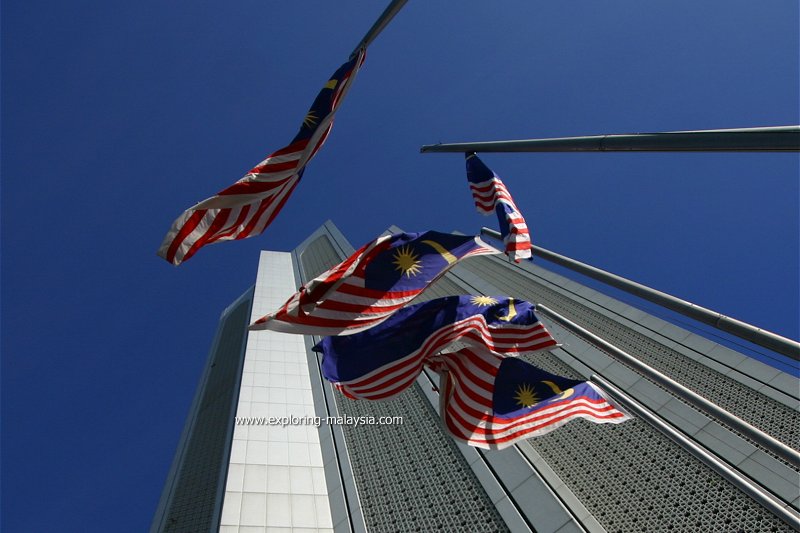
Itself a rather unimpressive 9-storey building, the Menara Putrajaya is strategically located adjacent to the famous Putrajaya Lake. This building is owned by Putrajaya Holdings Sdn Bhd, the lead developer for Putrajaya which was incorporated on 19 October 1995.
Precinct 2: Seri Bistari Bridge
Linking Wisma Putra in Precinct 2 with Precinct 16 is the 152.6m Seri Bistari Bridge. It is a continuous structure with the piers supported to the pilecaps.
Next we come to four similar buildings clustered together. Their shape resembles the ancient pyramids from Mesoamerica, like those of the Maya and Aztecs. They care located on both sides of the Boulevard, on Lots 2G3, 2G4, 2G5 and 2G6 respectively. The following ministries are housed in them.
Precinct 2 Lot 2G3: Domestic Trade and Consumer Affairs Ministry (Kementerian Perdagangan Dalam Negeri Dan Hal Ehwal)
The Domestic Trade and Consumer Affairs Ministry at Lot 2G3will move here from its present premises at Dayabumi Complex. The 14-storey building with an eight-storey podium occupies a 1.5 hectare piece of land.
Precinct 2 Lot 2G4: Ministry of Primary Industries & Commodities and Immigration Department (Kementerian Perusahaan Perladangan dan Komuditi & Jabatan Imigresen)
The Ministry of Primary Industries occupies the western portion of the building while the Immigration Department occupies the eastern portion.
Precinct 2 Lot 2G5: National Registrar (Jabatan Pendaftaran Negara)
The National Registrar is housed in a 13-storey block in Lot 2G5. As part of the Ministry of Internal Affairs, the National Registrar is the department that registers everything from births, marriage, divorces, death and the issuer of the National Identity Cards.
Precinct 2 Lot 2G6: Ministry of Entrepreneur and Cooperative Development (Kementerian Pembangunan Usahawan dan Koperasi)
This is the ministry entrusted as the lead agency in developing Bumiputera entrepreneurs. It is one of the four buildings massed together on both sides of the Boulevard.
Precinct 3: Civic and Cultural Precinct
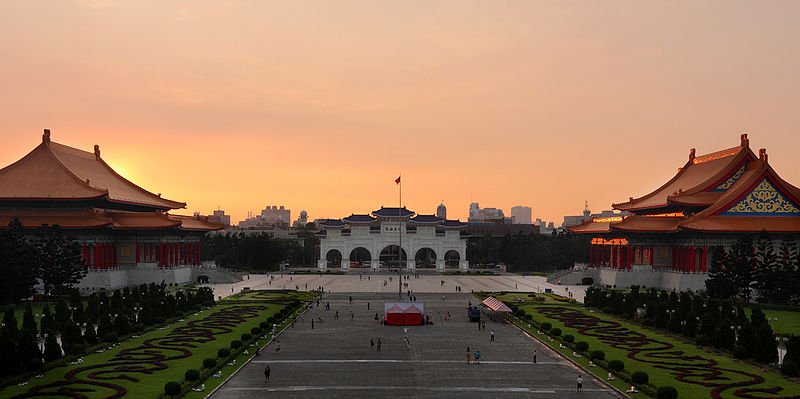
This precinct is being developed to house Ministries and Institutions related to the development of the arts and culture. Among the notable structures of this precinct include Dataran Putrajaya, Dataran Mahkamah, Putrajaya Holdings Complex and the Palace of Justice.
Precinct 3: Dataran Putrajaya
The Dataran Putrajaya is flanked by the Putrajaya Holdings Complex and the Palace of Justice.
Precinct 3: Putrajaya Holdings Complex (Kompleks Perbadanan Putrajaya)
I cannot pin down which futuristic building the Putrajaya Holdings Complex is supposed to resemble - perhaps I should just give them credit for being totally original here. Anyway, the Putrajaya Holdings Complex is supposed to be a contemporary interpretation of traditional Islamic architecture. The main feature of this building is the Gateway or Gerbang with a public viewing deck on the top most level providing a panoramic view of the city skyline that includes the Palace of Justice and the Grand Mosque. The gateway will also provide a vantage point during parades.
Precinct 3: Jabatan Perdana Menteri, Bahagian Hal Ehwal Undang Undang
I had earlier mistaken this for a mosque, but was advised by someone at Perbadanan Putrajaya that this is part of the Jabatan Perdana Menteri.
Precinct 3: Palace of Justice (Kompleks Kehakiman dan Mahkamah)
And then we come to another tropical Taj Mahal. The Palace of Justice is an elegant edifice that houses the judicial department in a five-storey administration building, and the courts in a two-storey annexed building. In total, the Palace of Justice occupies about 71,913 square meters of gross floor area. The internal spaces houses six Courts of Appeals and two Federal Courts and 20 Judges' Chambers. Space is also provided for a Banquet Hall, Judges' Conference Hall, Library, Museum, and Cafeteria. Don't get me wrong, I like this building, I think it is beautiful, but I've seen the Taj Mahal and the Palace of Justice looks like a plastic replica in comparison.
Precinct 4: Business & Commercial Precinct
The Business & Commercial Precinct, that's what Precinct 4 is called, but to me, Precinct 4 is simply a continuation of the lower-numbered precincts. In other words, more government ministries here. The following ministries are housed in four futuristic glass structures on both sides of the Boulevard, within Lot 4G1, 4G2, 4G3 and 4G4.
Lot 4G1: Ministry of Agriculture, Dept of Basic Industry and Veterinary Department (Kementerian Pertanian & Industri Asas Tani & Jabatan Perkhidmatan Haiwan)
Lot 4G2: Agricultural Department, Fisheries Department, and Animal Services Department (Kementerian Pertanian dan Industri Asas Tani)
Lot 4G3: Ministry of Natural Resources and Environment (Kementerian Sumber Asas dan Alam Sekitar)
Lot 4G4: Youth and Sports Ministry (Kementerian Belia dan Sukan)
Precinct 4: Seri Saujana Bridge
I remember crossing this bridge on foot, in the dead of night, with a heavy tripod over my shoulder, while my friends waited in the car. They must be thinking that their old schoolmate is crazy, to go to such lengths to photograph all of Putrajaya's major sights. This futuristic and elegant cable-stayed bridge has a span of 300m and a width of 32m. There is a dual three-lane carriageway across it. It links Precinct 4 to Precinct 7, allowing traffic from the south to enter the core island of Putrajaya from Route B15 and the KL-KLIA highway.
Precinct 4: Seri Gemilang Bridge
Located on the southern axis of the Putrajaya Boulevard is the Seri Gemilang Brige. It links Precinct 4 to Precinct 5. It is 240m long, consisting of a main span of 120m long and two smaller spans 60m at each. There are dual three-lane carriageways of 10.5m each comprising of 3 x 3.5m width for the lanes.
Precinct 5: Sports & Recreational Precinct
With an area of 330 hectares, this is the second largest of the five core precincts of Putrajaya. The purpose of this precinct is mainly for the development of recreational activities inclusive of sports and entertainment events. A theme park, sports and recreational complexes are planned for this precinct.
Precinct 5: Putrajaya Convention Centre
Covering an area of 51 acres at 60 meters above sea level, the Putrajaya Convention Centre is situated on top of a commanding hill in Precinct 5, the Sports and Recreational Precinct. The largest meeting hall is the Plenary Hall at 4,302 square meters and with a capacity of seating 3,000 people. The Banquet Hall is 4,347 square meters and can accommodate a maximum of 4,500 pax cocktail style and 2,000 pax banquet style. The Head of States Hall is 518 square meters and can seat 184 theatre style. There are about 1,200 parking bays provided.
Precinct 5: The Pedestrian Bridge (Seri Empangan Bridge)
Specially designed for pedestrians and cyclists to admire the scenic beauty of Putrajaya, the Seri Empangan Bridge, formerly the Pedestrian Bridge, at Precinct 5 is located near the Seri Gemilang Bridge and the Putrajaya Convention Centre. This 135m footbridge consists of a butterfly-like arch with curved deck.
Notable Structures in other Precincts
Apart from the buildings and bridges mentioned above, the following structures located in the other precincts of Putrajaya are worth mentioning as well.
Precinct 7: Prime Minister's Gallery (Yayasan Kepimpinan Perdana)
Located by Putrajaya Lake, between roads leading into the residential area of Precinct 8, is the European styled Istana Darul Ehsan. You can identify it by the huge Selangor flag on its ground. This is the weekend palace of the Sultan of Selangor, Sultan Sharafuddin Idris Shah. Work on Istana Darul Ehsan began on Nov 22, 2000, during the reign of the sultan/s late father Sultan Salahuddin Abdul Aziz Shah who passed away in 2001 before work on the palace was completed.
Precinct 8: Istana Darul Ehsan
Located by Putrajaya Lake, between roads leading into the residential area of Precinct 8, is the European styled Istana Darul Ehsan. You can identify it by the huge Selangor flag on its ground. This is the weekend palace of the Sultan of Selangor, Sultan Sharafuddin Idris Shah. Work on Istana Darul Ehsan began on Nov 22, 2000, during the reign of the sultan/s late father Sultan Salahuddin Abdul Aziz Shah who passed away in 2001 before work on the palace was completed.
Precinct 8: Putrajaya Clubhouse (Kelab Tasik Putrajaya)
The Kelab Tasik Putrajaya started operations on 1st Jun 2002. The membership is open to all citizens aged 21st and above living within a 100km radius of Putrajaya.
Precinct 10: Seri Perdana, the Prime Minister's Official Residence
Located in Precinct 10, the Seri Perdana overlooks Putrajaya Lake, Putrajaya Wetlands and Taman Botani. It is modelled after the rumah bumbung limas of Malacca with its distinctive pitched roof. The house employs Malay house design elements such as decorative fascia boards, rows of windows, grills and voids.
The Seri Perdana complex consists of the Main Reception Facilities, Banquet Facilities and Private Facilities. Main Reception Facilities include the Dome, the Main Lounge, the Surau and the Dining Hall while Banquet Facilities consist of Main Banquet Hall, Banquet Gallery and the Souvenir Room. In addition, the residence includes a garden called 'Laman' which is divided into Laman Tiba, Laman Depan, Laman Sari and Laman Tengah. Seri Perdana has facilities for official use whilst serving as the private living quarters of the prime minister of the day.
|
|