This sight is located in Kuching, Sarawak, Malaysia. For travel information on Kuching, read the Kuching. To prepare for a trip to Malaysia, read also the Malaysia. Looking for accommodation in Kuching? Use the Budget Accommodation Guide to find hostels, guesthouses and inns in Malaysia and elsewhere in the world.
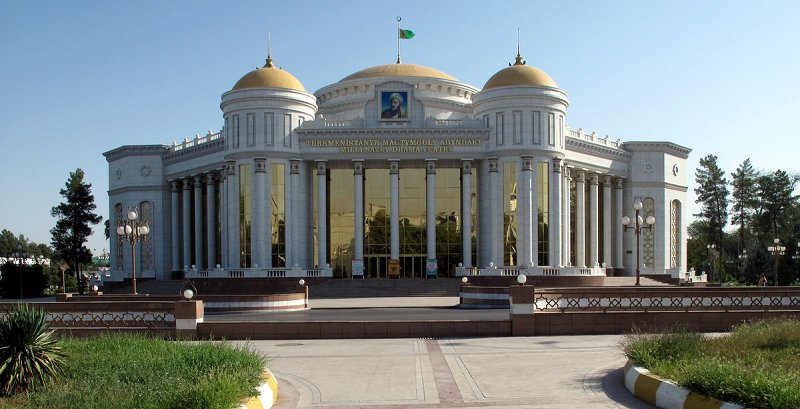
Sarawak Museum in Kuching is one of the oldest and most renowned museums in Southeast Asia. It is also reputably to be one of the best museums in this region. Although it is not the most sophisticated museum, the Sarawak Museum displays a collection that reflects the passion of its founder, the White Rajah of Sarawak, Charles Brooke.
The Sarawak Museum is brightly lit at night.
The Sarawak Museum was built by Charles Brooke, on the encouragement of his friend, the emminent naturalist, Alfred Russell Wallace (famous for the Wallace Line that separates Bali from Lombok). Wallace has spent a few months in Borneo and collecting specimens. The original building was built in 1891 and extended in 1911. It holds a permanent display of native arts and crafts as well as Wallace's extensive collection of stuffed specimens of local fauna.
Located between McDougall Road and Jalan Tun Haji Openg, the Sarawak Museum building is rectangular in shape, 44 ft wide by 160 ft in length. The walls are of bricks while the roof is of belian hardwood and concrete. The façade is said to have been styled according to a Normandy manor house, as was suggested by Brooke's French valet.
Jalan Tun Haji Open divides the two wings of the Sarawak Museum between the original building and the annex. But as you enter the original building, you find yourself transported from the city of Kuching, and into the very heart of Borneo. In one display, you see 60 varieties of ancient glass beads of the Kenyah tribe. Another houses figurines of the now extinct Sru Dayaks.
A majestic mural stands in the middle of the Sarawak Museum. It is the Tree of Life of the Kenyah tribe, reproduced for the museum after an original found in a Kenyah longhouse. The most interesting - and gruesome - sections of the museum is the longhouse replica, complete with simulated fires and real human skulls. Indeed, the Sarawak Museum is one of the most fascinating - and original - attractions for those who are keen to learn about the history of Borneo.