On a small lane in the back quarters of George Town, there stands a 1870's shophouse, one of many in this old city. 120 Armenian Street appears particularly stark when compared to the ornate architecture of the clan temples down the street. But this is a house that is worth documenting. While it looks like a typical George Town shophouse, the things that happened in it is anything but typical.
Portrait of Dr Sun Yat Sen in the reception hall at 120 Armenian Street, Penang.
The last dynasty in China came to an end from decisions made here. Amazing but true, that the activities that took place in this nondescript shophouse has a greater impact on world events that most people in Penang as well as those living within its immediate neighbourhood would realise.
I think the name Dr Sun Yat Sen will ring a bell among older generation members of AsiaExplorers, while the younger generation would say Dr Who? Well, Dr. Sun Yat Sen, also known as Sun Chong San, is reverred in both China and Taiwan as the architect of the new, republican China. Disgruntled by an imperial China ruled by the Manchu court that he considered inefficient and corrupt, Dr Sun founded the Tung Meng Hooi (also written as T'ung Meng Hooi). The Tung Meng Hooi is a political party founded in 1905 in Tokyo with an agenda to turn China into a republic. Dr Sun travelled to various Chinese communities scattered around the world to drum up support for his movement to create this China sans Emperor. In 1909, the Southeast Asia headquarters of the Tung Meng Hooi was moved from Singapore to Penang, where it remained till 1911.
The decision to use Penang was swayed by the support Dr Sun received from the Chinese community here. I gather he would not be successful without the weight of support from his Penang contemporaries - Sino supremos like Cheong Fatt Tze and perhaps Kapitan China Chung Thye Pin. (Read footnote) Both were decorated figures in the Qing Dynasty court. Supporting Dr Sun would amount to treason to the emperor. Still, I believe that Cheong Fatt Tze had reconciled that the bureaucracy of a weak China - a basket case at the mercy of European forces - is not good for business, and a modern China is the way forward. So even if they could not openly support Dr Sun, some form of backdoor support must have been forthcoming. Probably due to this, when Dr Sun's revolutionaries managed to overthrow the imperial government, Cheong Fatt Tze was awarded a position in the newly formed government.
But why chose a shophouse in this rather obscure corner of town as the Tung Meng Hooi headquarters? We need to understand that at that time, much of the activities of the Tung Meng Hooi is considered "underground" - what else would you call a party whose purpose is to overthrow a government? At any time at all, the authorities may raid the premises, so the choice of neighbourhood has to be one that provides easy escape when the need arises. The backdoor of this elongated shophouse opens into the Indian Muslim neighbourhoods of Kampung Kaka and Kampung Kolam.
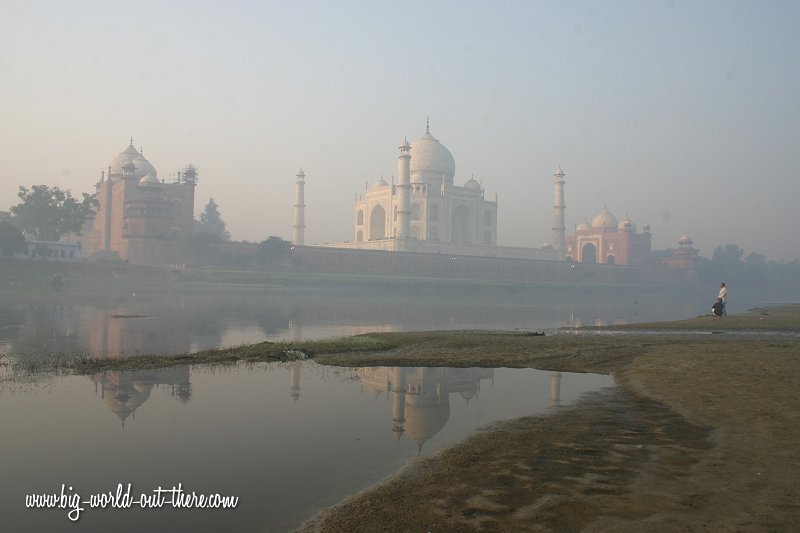
Kampung Kaka and Kampung Kolam are not the neat, spacious, sunny neighbourhoods that you would know today. In the 1910's, the area within earshot of the Kapitan Keling Mosque's azan was hemmed with stalls, stores, sheds and bullock carts, all providing ample nooks and crannies to hide and worm away. I can't begin to provide you a true mental picture of this place in the early 20th century: walk the streets in Jaipur or Agra, and you'd get the idea. Now, the Muslims of Kampung Kaka, Kampung Kolam and the adjacent Kampung Aceh and Pitt Street are probably aware of what's transpiring within their midst. Dr Sun and his people don't look like the typical Chinaman. They wear Western attire, and certainly no pigtails (towchang) for them - these they have snipped off as a symbolic separation from imperialism. To the Muslims, Dr Sun Yat Sen and his followers are the "Orang Cina Potong Towchang" (Chinamen without pigtails).
At the Tung Meng Hooi's Penang Conference that took place at 120 Armenian Street on 13 November 1910, the Canton Uprising was planned. It is the second of two important Tung Meng Hooi conferences held in Penang, the first was at Dr Sun's Dato Keramat Road office. Although the Canton Uprising was unsuccessful, it marked the turning point in Dr Sun's nationalist revolution, which culminated with the establishment of the first republic in Asia.
In that year (1910), Dr Sun Yat Sen lived in Penang for about six months together with his family, including his second wife Chen Cui Fen - not at 120 Armenian Street, but at his office in Dato Keramat Road which has since been demolished. The house in 120 Armenian Street was used as his base, and his followers did live there. The Kwong Wah Jit Poh newspaper was started by him and his followers there; today it holds the distinction of being one of the oldest Chinese language newspapers in the world. Dr Sun moved the base for the Kwong Wah Pao from Yangon to Penang; he relaunched and renamed it Kwong Wah Jit Poh, making it a daily newspaper, and used it as a vehicle for spreading nationalistic propaganda. During that time, the house was owned by Lim Boon Yeow, and taken over in 1926 by merchant Ch'ng Teong Swee, who later used it as the godown for his company Ch'ng Eng Joo. The company signboards still hang in the living room of the house. Today 120 Armenian Street is maintained as the base for Areca Books and Lestari Heritage Network (www.lestariheritage.net) by Ch'ng Teong Swee's granddaughter, writer Khoo Salma Nasution (nee Khoo Su Nin) and her husband.
Dr Sun never lived long enough to see his republic consolidate its power. For good or otherwise, his legacy is a China without an emperor, two China's in fact, and the political geography of over a billion people that was shaped within the walls of a humble shophouse in Penang.
(top) Visitors filing past an old style dining set behind the filigree screen at 120 Armenian Street. (left) Front façade of the Penang headquarters of Tung Meng Hooi. (below) Table with wedding photo of past occupants of 120 Armenian Street.
(top) Portrait of Madam Tan Ean Siew, matriach of the Ch'ng household. (left) A graceful timber staircase leads to the upper floor. (below left) Mother-of-pearl furniture and lacquerware trays are on display in the house. (below right) Furnishing in the house are from the 1920's.
(above) Baskets and tiffin carriers reflect the lifestyle in Penang in the early twentieth century. (right)Mother-of-pearl furniture on the well-conserved traditional floor tiles. (below) Earthenware pots and cookery items kitchen.
Penang Overview
Get to know Penang and explore its many fascinating sights!
Penang Travel Tips
A new website created to provide travel tips to people planning a visit to Penang!
Penang Travel Map
Detail map pointing out all the tourist attractions in Penang!
There are many heritage sites in Penang - indeed it has one of the densiest concentration of sites in Malaysia. Explore these many sites with AsiaExplorers.
Acknowledgement
AsiaExplorers wishes to thank Khoo Salma Nasution and Loh-Lim Lin Lee for their help in reviewing this feature and verifying the information contained therein.
Footnote
According to Khoo Salma, "Assuming that Dr Sun Yat Sen received support from Cheong Fatt Tze would be jumping to conclusions. Cheong Fatt Tze was given a position by Yuan Shih Kai; although the latter was head of the Republican government, he and Dr. Sun were not exactly on good terms. Before the revolution, there were the royalists, the revolutionaries and a third group, the reformists, who did not support the Empress Dowager but supported the Emperor. I think the picture is complicated because of the many factions."
According to Loh-Lim Lin Lee, Chung Fatt Tze was totally expedient as were most of the [successful] overseas Chinese. Under the Manchus, Cheong Fatt Tze served as Special Trade Commissioner for the Empress Dowager, and he had a queque (pigtail). However, he also worked as well with the move to liberate the country, which explains his early appointment as "Special Economic Advisor to the New Government of China soon after 1911. Incidentally, he was reputed to be one of the first to cut off his queque.
Cheong Fatt Tze's little group on Leith Street was known as very powerful Hakkas. However they also served the Manchu Government as Vice-Consuls (6 in all) - Cheong Fatt Tze, his nephew (no2) Cheah Choon Seng (where MWE is - no3), Leong Fe (across the rd - no 4), Tye Kee Yoon (next to CFTM - no5) and Tye's son (no.6). Cheong Fatt Tze was also Consul General in Singapore.
Thank you, thank you, thank you, for the opportunity to explore the world, to document, to photograph, and to share the information with you. My name is Tim, I'm the writer of this website, and I want to tell you how grateful I am for your visit. This is one of over a dozen websites that I write - you can click my thumbnail photo above to randomly visit any one of them. All my photos are available for commercial printing - find out the photo usage rights here. If you wish to share you photos on this website, upload them to www.panoramio.com and send the URL to me for consideration. And, if you'd like to correspond with me, send your mails to my address as shown below:
About the Author: AsiaExplorers is researched and written by Timothy Tye. We take reasonable care to check and verify the accuracy of the content. However, we disclaim any responsibility for any inconvenience, mishap, injury or death resulting from following the advice provided directly or indirectly by AsiaExplorers and the comments on its pages. All the photographs in AsiaExplorers are available for publication. Please contact AsiaExplorers at the following email address for your enquiries: