Exploring Bagan (Pagan) Finest ancient city and heritage site of Myanmar (Burma)
Your base for exploring this tourist attraction is the heritage city of Bagan (formerly called Pagan). For travel information about Bagan, go to Bagan Travel Guide. To prepare for a trip to Myanmar, read also the Myanmar Travel Guide. Looking for budget accommodation? Use AsiaExplorers Budget Accommodation Guide, the no-frills website to cover your budget accommodation needs.
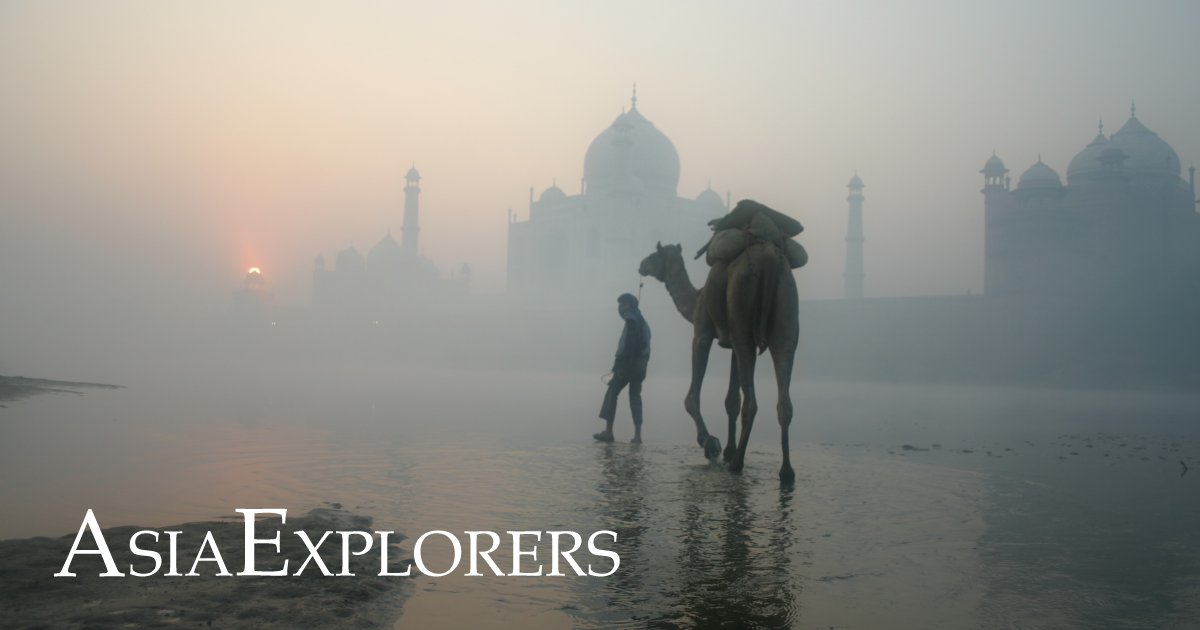
"A light rain was falling and the sky was dark with heavy clouds when I reached Bagan. In the distance I saw the pagodas for which it is renowned. They loomed huge, remote and mysterious, out of the mist of the early morning like the vague recollections of a fantastic dream."
Somerset Maughham
The Gentleman in the Parlour (1930)
It was Bagan that spark my desire to visit Myanmar. I first learn of Bagan - at that time going by its former name of Pagan - through the pages of the National Geographic. Over the years, I have put Bagan as one of those must-see destinations.
Bagan is the place to admire ancient ruins. It ranks alongside Angkor and perhaps Luang Prabang as one of the most amazing sights in Southeast Asia. If you're into ancient ruins, there's more in Bagan than you could ever bargain for. Bagan is located on a dusty plain 300 km from Yangon.
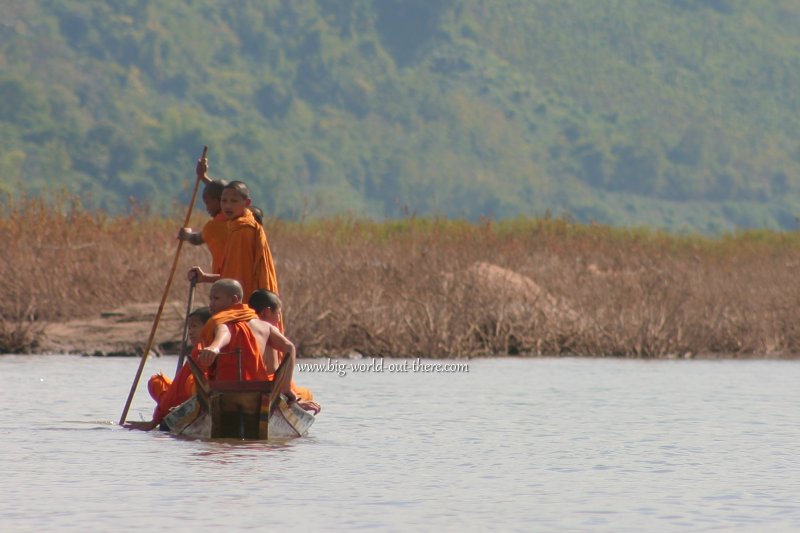
Novice monks sharing a joke, at Shwezigon Pagoda, Bagan.
Along this eastern bank of the Ayeyarwady river are over 2000 temples. That is already a lot, and yet, during the height of Bagan's power, between Anawrahta's conquest of Thaton in 1057 and Kublai Khan's invasion of Bagan in 1287, there were some 13,000 temples. It was a tradition in Bagan at that time build temples as a form of earning merit. The eleventh and twelfth centuries were a time of great prosperity in Bagan. Not only do royalties engage in the pursuit of temple building, Bagan noblemen and the well-to-do were also joining in the fray as well.
Today there are still hundreds of temple ruins in Bagan. Of these, the four most important temples in Bagan are:
The plains of Bagan has been settled as early as the 2nd century, but it was only when King Anawrahta ascended to the throne in 1044 (after liquidating his predecessor King Sokkate), that the fortunes of Bagan took a different turn. At that time Theravada Buddhism has not yet reached Upper Burma, where Bagan is located. It was brought over by Shin Arahan, a young monk from Thaton, of the Kingdom of Mon in the south. Shin Arahan was instrumental in converting King Anawrahta to Theravada Buddhism, and influential in a lot of decisions made by the king thereafter.
An eager disciple of this new belief, King Anawrahta of Bagan wanted to spread the belief to his people. So he sent a messenger to the court of King Manuha of Thaton requesting several copies of the Buddhist scriptures, Tipitaka. But Manuha disregarded the request - with terrible consequence. Angry at being snubbed, Anawrahta sent his troops to Thaton and conquered the Mon kingdom. He ransacked Thaton, and brought back to Bagan everything of value: thirty sets of Tipitaka, Mon architects, Buddhist monks, and thirty thousand prisoners including King Manuha and the entire royal family.
The immediate result of this transplant to Bagan was that King Manuha became a prisoner under house arrest in Bagan, along with his men and family. With skilled Mon architects and artisans in his hands, King Anawrahta embarked on a massive temple building campaign in Bagan that was to intensify under the reign of his son, King Kyanzittha, who built the most famous Bagan temple, Ananda. The indirect consequence is that Mon culture became dominant in Bagan, and indeed the Mon language replaced Pali and Sanskrit in the Bagan royal inscriptions. And quite naturally, Theravada Buddhist became the Bagan state religion.
Despite the vast amount of history and heritage that Bagan has to offer, it has yet to make it into the list of Unesco World Heritage Sites. Perhaps it's a political reason. Let's hope that one day it too will be recognised as such, for it is a place that any travel enthusiast keen on heritage should visit.
Bagan ruins featured in the AsiaExplorers
Ananda Temple
Ananda Temple is the most impressive temple in Bagan. It is located to the east of the old city wall of ancient Bagan and was built by King Kyanzittha.
Bagan Plains
The Bagan Plains is where the highest concentration of ancient ruins of Bagan is located.
Dhammayangyi Pahto
Dhammayangyi Temple is the biggest temple in Bagan. It was built by King Narathu, who murdered his father to take over the throne
Gawdawpalin Temple
Gawdawpalin Temple is located near the Ayeyarwady River in old Bagan. It was built in the 12th century by King Narapatisithu, but only completed by his successor King Nadaungmya, who also built Htilominlo Temple.
Htilominlo Pahto
Htilominlo Temple is 1.5km from Bagan old town, on the way to Nyaung U village. It was built around 1211 by King Nadaungmya, who introduced the parliamentary council to Myanmar.
Kyanzittha Cave
Kyanzittha Cave was probably built during the time of King Anawrahta, although named after his successor.
Manuha Temple
Manuha Temple was built by the defeated monarch of the Mon kingdom, Manuha, who was incarcerated in Bagan.
Mingalazedi
Mingalazedi is the last great stupa to be erected before the Mongol invasion put an end to the kingdom.
Nanpaya Temple
Nanpaya Temple is believed to be either the palace for King Manuha, or was built on the site of his palace.
Nyaung U Market
Nyaung U Market is a village market that offers an insight into the daily life in Myanmar.
Shwesandaw Temple
Shwesandaw Temple was built by King Anawrahta in 1057 to commemorate his victory over the Mon kingdom at Thaton.
Shwezigon Temple
Shwezigon Temple was built by King Anawrahta to enshrine a copy of the Tooth Relic of the Buddha which he obtained from Sri Lanka.
Tharabar Gate
Tharabar Gate is the gate into old Bagan.
Thatbyinnyu Temple
Thatbyinyu Temple is the tallest pagoda in Bagan, and was built by King Alaungsithu in 1144.
Mount Popa
Mount Popa is the centre of Nat worship in Myanmar.
Popa Taungkalat
Popa Taungkalat is a volcanic outcrop with a shrine to Nat spirits.
Exploring the places of interest in Myanmar
Let AsiaExplorers take you to the many wonderful sights in Myanmar. The sights are grouped according to cities, so that you can use this guide when you explore them in person. Click enter to view.
All photographs appearing in AsiaExplorers are copyrighted and available for licensing. If you are interested to use any of them, please click here for details.
AsiaExplorers takes every reasonable care to check and verify the content on this website. However we disclaim any responsibility for any inconvenience, mishap, injury or death resulting from following the advice provided directly or indirectly by AsiaExplorers and the comments on its pages. All the photographs in AsiaExplorers are available for publication. Please contact AsiaExplorers at this email address for your enquiries.