Myanmar Travel Information


Myanmar, also known as Burma, is a country that reminds us of the saying, that what we do not know, we do not love. And what we do not love, it is easy for us to criticise. That, unfortunately, is the case with Myanmar, a country that has remained suspended in time while the rest of Asia marches forward to embrace a new millenium.
It is not difficult to find people who refuse to visit Myanmar because they cannot agree with the regime that runs the country. AsiaExplorers take a difficult position however. As founder of AsiaExplorers, I maintain that all countries in Asia, regardless their political climate, is worth a visit, as long as it is safe to go there. And as far as Myanmar is concerned, it is still relatively safe. By visiting a country, we get to see things for ourselves. While we may not be in full agreement with the government of Yangon, we should also ask ourselves whether ostracizing the country will at all benefit its people. And if we were to do that, for how long?


While it may be true that in cases like Myanmar, tourists only get to visit the sanitized regions, and not places which the government is embarrassed to show, nonetheless the influx of tourist and the tourist dollar is much needed to alleviate the suffering of the people. Visitors to Myanmar may be keen to note that just fifty years ago, this was one of the richest countries in Asia, a nett exporter of rice, wealthier than Korea and Taiwan. How is it possible that within a short space of time, Myanmar has regressed from the richest to the poorest?

To say that Myanmar is poor ... may also be incorrect. It all depends on the yardstick we use to measure wealth. If wealth is measured in dollars, then Myanmar is way behind the rest of Asia. But if it is measured by living standard, then they may not be so far behind. Bear in mind that Myanmar is predominantly a rural community. Generally, the people are religious. Their devotion to Buddhism is visible from the amount of gold leaf that clad the many stupas and Buddha images throughout the country. If a dollar amount is placed on all the gold and precious gems cladding the temples, then Myanmar is far from poor. The wants of the people is vastly different from those living in Singapore or Hong Kong. Moreover, the people's aspiration may be vastly different from those of other Asian nations. Becoming a monk may hold a greater sense of fulfillment than the 4Cs of car, condo, credit cards and career.


Visitors at the Dhammayangyi Paya in Bagan, shot during an AsiaExplorers tour of Myanmar.


Myanmar Geography

With a surface area of 676,577 sq km, Myanmar is the largest country in mainland Southeast Asia. It is bounded by Bangladesh and India on the northwest, China on the northeast, Laos and Thailand on the east, the Andaman Sea on the south, and the Bay of Bengal on the southwest. The highest peak in Myanmar, Hkakabo Razi, is also the tallest peak in Southeast Asia. It is 5887 m (19,314 ft), and located at the far north of the country, close to the border with Tibet.
75% of Myanmar population lives in the rural villages. The capital Yangon (Rangoon), with a population of 3 million, is by far the largest city in Myanmar. Coming in a distant second is Mandalay (pop 700,000), Pathein (Bassein, pop 350,000) and Mawlamyaing (Moulmein, pop 300,000). The country can be divided into Upper Burma, centred around Mandalay and Bagan, and Lower Burma, around Yangon and Bago.

The Ayeyarwady (Irrawaddy) River runs though the central region. It enters Myanmar from the Himalayas, and makes a journey of 2170 km to empty into the Andaman Sea. Along the way, it passes places like Bagan and Mandalay, where the earliest Myanmar kingdoms first appeared. The British called it the "Road to Mandalay" because it is Myanmar's transportation route. Steamers can navigate the Ayeyarwady for 1500 km, all the way to Bhamo in the north, close to the border with China.

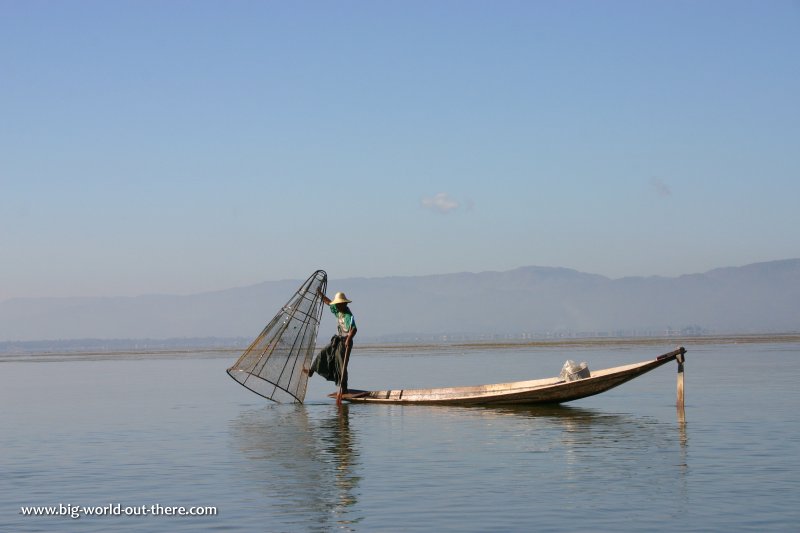
9 out of every 10 tourists visiting Myanmar explore central Myanmar. The major tourist destinations include the capital, Yangon, the ancient capitals of Bagan, Bago and Mandalay, the ancient cities near Mandalay, such as Amarapura, Sagaing and Mingun; major pilgrimage sites such as Mount Popa, Pindaya Caves and the Golden Rock, and scenic countryside around Inle Lake.

Myanmar History

Read the History of Myanmar in chronological order.

Much of what we know of Myanmar's written history comes from The Glass Palace Chronicle. This is the work of a group of scholars who were appointed by the Burmese King Bagyidaw in 1829. These group, consisting of monks, brahmans and ministers, were assigned to compile a record documenting the history of the country, from the early Burmese kingdoms, to the fall of Bagan. The resulting chronicle got its name from Bagyidaw's Palace of Glass where the compilation work was carried out.

In the history of Myanmar, we see not one, but several different kingdoms flourishing at different periods of its long history. Where the different kingdoms overlap, clashes may occur, resulting in one overcoming the other. A total of 16 kingdoms or dynasties appeared in Myanmar history, and are listed as follows:


Bee Throne Hall, Kanbawzathadi Palace, Bago.
  1. Beikthano Pyu City State: Located in middle part of Myanmar at the north of Kookogwa Village, 11 miles north of Taung Dwingyee.
  2. Thuwunna Bonmi (Ramanya) City State (AD 100): Located in southern Myanmar near Beelin, at the foot of Mount Kaylartha.
  3. Tharay Kittarar Pyu City State (AD 400-1000): Located in lower Myanmar, 5 miles southeast of Pyay.
  4. Hanlin Pyu City State (AD?-832): Located in upper Myanmar in Shwebo District, Wetlet Township.
  5. Waytharlee Kingdom (BC 500-?): Located in western Myanmar about 6 miles north of Myauk Oo.
  6. Bagan (Pagan) Dynasty (AD 107-1287): Located in upper Myanmar.
  7. Pinya Dynasty (1309-1360): Located in central Myanmar.
  8. Sagaing Dynasty (1315-1364): Located in upper Myanmar in Sagaing.
  9. TaungNgoo Dynasty (1486-?): Located in central Myanmar.
  10. Innwa Dynasty (1364-1555): Located in central Myanmar.
  11. Bago/Hantharwaddy Dynasty: Located in lower Myanmar in Bago.
  12. Kone Baung Dynasty (1752-1885): Shwaybo Palace: built by King Ahlaung Pharar
  13. Kone Baung Dynasty, Ava Palace: built by King ???
  14. Kone Baung Dynasty, Amarapura Palace: built by King Bodaw Pharar
  15. Kone Baung Dynasty, Mandalay Palace: built by King Mindon
  16. The present capital city: Yangon (Rangoon)


The Manuha Temple in Bagan,
built by King Manuha while in house arrest.

The earliest people to inhabit the land of Myanmar are the Mons. Archaeologists believe the Mons originated from Central Asia. They speak a language that belongs to the Mon-Khmer family. They migrated to Myanmar and settled on the estuaries of the Thanlwin (Salween) and Sittoung (Sittang). According to legend, it was the Mons who laid the foundation for the Shwedagon 2500 years ago.

Then, 2000 years ago, another group of people, the Pyu, settled in Upper Burma. Their first capital was Sri Ksetra, near present-day Pyay (Prome). Unlike the Mons, their language belongs to the Tibeto-Burman family. Around the 8th century, the Pyu moved their capital to Halin, in Shwebo, 100 km north of Mandalay.

Another group of people, the Tai, started moving southwards from their ancestral home in Yunnan, also around the 8th century. They established the Nan Chao Kingdom in the 9th century, capturing Halin, and assimilating the population.

At around the same time, the Bamar people made their first appearance. They originated in the area around the Chinese-Tibet border. Moving south along the Ayeyarwady, they established themselves in the rice-cultivating region of Upper Burma. There, they founded the city of Bagan (Pagan), from where they controlled the trade passing through the Ayeyarwady and Sittoung rivers.

So, the main ethnic groups who featured prominently in Myanmar history are the Bamar people (also called the Burmans), the Mon people, and the Shan people. The Burmans are by far the largest ethnic group, and the one that contributed most significantly to Myanmar history, culture and politics.

First Burmese Empire
There is some dispute as to the exact date of the First Burmese Empire. Some sources place the date as 1057, when King Anawrahta conquered the Mon Kingdom at Thaton. Other sources place it earlier, at 849, and regard Anawrahta not as the first king of the Burmese Empire, but one who seized the throne in 1044. And then, there are those who trace it back all the way to the first king of Bagan, which is King Thamu Darit, in 107AD. AsiaExplorers will simply lay the information down as it is.

The first Burmese empire was established by King Anawrahta in Bagan in 1057. At that time, Theravada Buddhism has not yet reached Upper Burma. Then one day, Shin Arahan, a young monk from Thaton, capital of the Mon Kingdom in Lower Burma, arrived in Bagan. He was so successful in converted King Anawrahta to Theravada Buddhism that the king became consumed to spread the doctrine. So he sent a messenger to King Manuha of Thaton, requesting several sets of the Buddhist scriptures, the Tipitaka. When Manuha turned down his request, Anawrahta sent his troops to invade Lower Burma. They ransacked Thaton, and brought back everything his men and elephants could carry, including 30 (some say 32 ... does it matter?) sets of the Tipitaka carried by white elephants, and almost everybody in Thaton, the craftsmen, artisans, architects, Buddhist monks, and even the royal family including King Manuha himself. All together 30,000 Thaton people were marched off to Bagan. This resulted in a transplant of Mon culture into Upper Burma, for instead of the Mons adopting the culture of Bagan, Bagan adopted Mon culture. The Mon language even replaced Pali and Sanskrit in royal inscriptions. Upon his return to Bagan, King Anawrahta began a monumental construction project to embellish his country with Buddhist monuments. The first one to be built was the Shwesandaw Pagoda, completed in 1057. Its name means Pagoda of the Golden Holy Hair, for it enshrines some hair relics of the Buddha given to Anawrahta by the King of Bago.

The last king of Bagan, Narathihapate, ruled over a weakened nation and his lavish spending bankrupted the country. Mingalazedi was the last Bagan pagoda to be built, in 1274, and after that, no more major project was built. In 1287, the Mongol invasion by Kublai Khan put an abrupt end to the First Burmese Empire. Although Narathihapate did put up a fight, dismantling 6,000 temples for use to fortify the walls of Bagan, when Bagan fell to the Mongols, he fled to Pathein (Bassein), causing his people to call him Tarok-pyemin, which means, "the king who ran away from the Chinese". He died soon after, poisoned by his own son. His son then battled his two brothers for the throne. He succeeded, but was still disposed in 1298, marking the end of the First Burmese Empire.

With the fall of Bagan, the Mons - who were brought there by Anawrahta over two hundred years ago, returned to Lower Burma, and founded a new kingdom, with its capital in Bago (Pegu). Meanwhile in Upper Burma, the Shan people filled the power vacuum by establishing a new kingdom in Inwa (Ava).

Name Game: Changes in names of places in Myanmar


An AsiaExplorers trip down the Ayeyarwaddy River.

In 1989, the military government changed the name of the country from Burma to Myanmar, saying that Burma is a relic from a colonial past. The opposition disagreed, and continued to use Burma. But who is right? According to language experts, both. Myanmar is the formal, royal term for the country, while Bama - of which Burma comes from - is the colloquial term. Indeed Myanmar has been the official Burmese name of the country since the time of Marco Polo's 13th century mention. However, puritans among the opposition pointed out that the term Bama tend to include the majority Bamar people, as well as the other minority groups in the state, whereas the term Myanmar tends to imply the Bamar majority only. For this reason, the opposition party, as well as the minorities such as the Mons, Shan, Kayin, Kachin, Chin and Kayah, refused to acknowledge the name change.

AsiaExplorers has no intention of taking sides. We will use the official name in our travel guide, not because we are in agreement with the official line, but because we believe this is the most practical approach, and will make it easier for visitors when travelling around Myanmar.

Nevertheless, whenever we encounter a place name that is changed, we will place the colonial name in brackets immediately after the present official name, like this: Ayeryawady (Irrawaddy). This is done on the first appearance of the place name on a given page; thereafter, the official name is used.

You will encounter words like Myanmar, Burma, Burmese, Bamar and Burman. What is which? Myanmar and Burma will refer to the country. Often, you will encounter Myanmar spelled without the final r, like this, Myanma, as in Myanma Air or Myanma Railway. The r is added to lengthen the preceding "a" vowel. Bamar refers to the main ethnic group in Myanmar whereas Burmese refers to all Myanmar ethnic groups. Burman is the adjective to describe things of Bamar origin.

Shopping in Myanmar

There is no lack of creativity among the Burmese. The following are handicrafts that make worthy souvenirs of Myanmar: a) lacquerware
b) marionettes
c) textile
d) gold leaf


Myanmar sights

Exploring the places of interest in Myanmar

Let AsiaExplorers take you to the many wonderful sights in Myanmar. The sights are grouped according to cities, so that you can use this guide when you explore them in person. Click enter to view.

Sights of Myanmar


History of Myanmar

AsiaExplorers presents the history of Myanmar, in chronological order, showing its relationship with the history of neighbouring countries in Southeast Asia.


Expedia.com

Click here to return to the AsiaExplorers Homepage

How much have you explored Myanmar? Through AsiaExplorers, you can now explore these places in Myanmar from the comfort of your desk: Myanmar, People of Myanmar, Myanmar History, Bagan (Ananda Temple, Bagan Plains, Dhammayangyi Pahto, Gawdawpalin Temple, Htilominlo Pahto, Kyanzittha Cave, Manuha Temple, Mingalazedi, Nanpaya Temple, Nyaung U Market, Shwesandaw Temple, Shwezigon Temple, Tharabar Gate, Thatbyinnyu Temple), Bago (Htaukkyant World War II Cemetery, Kanbawzathadi Golden Palace, Kyaikpun Pagoda, Shwemawdaw Paya, Shwethalyaung Buddha), Inle Lake (Kalaw, Nga Phe Kyaung Monastery, Padaung People, Phaung Daw U Pagoda, Shwe Yaunghwe Kyaung Monastery, Ywama), Kyaiktiyo, Pagoda of the Golden Rock, Mandalay (Amarapura, Mahagandhayon Monastery, U Bein Bridge, Atumashi Monastery, Ayeyarwady River, Inwa Bridge, Kuthodaw Paya, Maha Myat Muni Paya, Mandalay Hill, Mandalay Palace, Shwenandaw Monastery), Mingun, (Mantara Gyi Pagoda, Mingun Bell, Myatheindan Pagoda), Mount Popa, (Popa Taungkalat), Pindaya Caves, Sagaing, Yangon (Botataung Pagoda, Kyaukhtatgyi Buddha, Shwedagon Pagoda, Sule Pagoda)

Grab this swicki from eurekster.com


Copyright © 2003-2008 AsiaExplorers.  All rights reserved.

About the Author: AsiaExplorers is researched and written by Timothy Tye. We take reasonable care to check and verify the accuracy of the content. However, we disclaim any responsibility for any inconvenience, mishap, injury or death resulting from following the advice provided directly or indirectly by AsiaExplorers and the comments on its pages. All the photographs in AsiaExplorers are available for publication. Please contact AsiaExplorers at the following email address for your enquiries: