Mingun
Ancient capital of Myanmar by the Ayeyarwady River


Your base for exploring this tourist attraction is the heritage city of Mandalay. For travel information about Mandalay, go to Mandalay Travel Guide. To prepare for a trip to Myanmar, read also the Myanmar Travel Guide. Looking for budget accommodation there? Use AsiaExplorers Budget Accommodation Guide, the no-frills website to cover your budget accommodation needs.

Mingun, on the west bank of the Ayeyarwady River, north of the Sagaing hills, is home to a few superlatives. Mingun has never been a capital, unlike Inwa, Amarapura and Mandalay, but it holds its own as home to two world-record superlatives. Visitors to tiny Mingun will find the world's largest intact bell, one that can still toll. It was made for an unfinished pagoda. Remnants of this unfinished pagoda, still visible in Mingun, is described as the "world's largest pile of bricks". If completed, this pile of bricks would have been the world's largest pagoda. In front of this brick pile is a massive sculpture which is in ruins. This is all that remains of what would have been the world's largest guardian lion-dog - the chinthe. Only the hind portion remains, and it still reaches a formidable height.


The Hsinbyume Pagoda, Mingun.


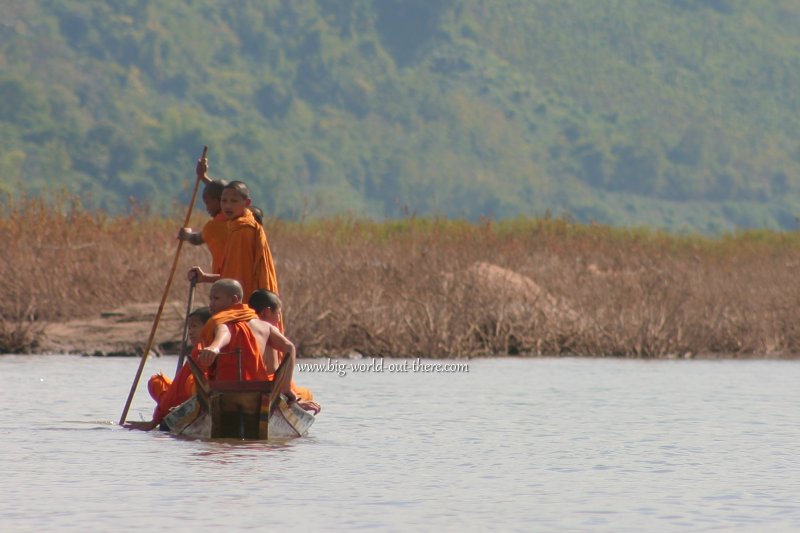
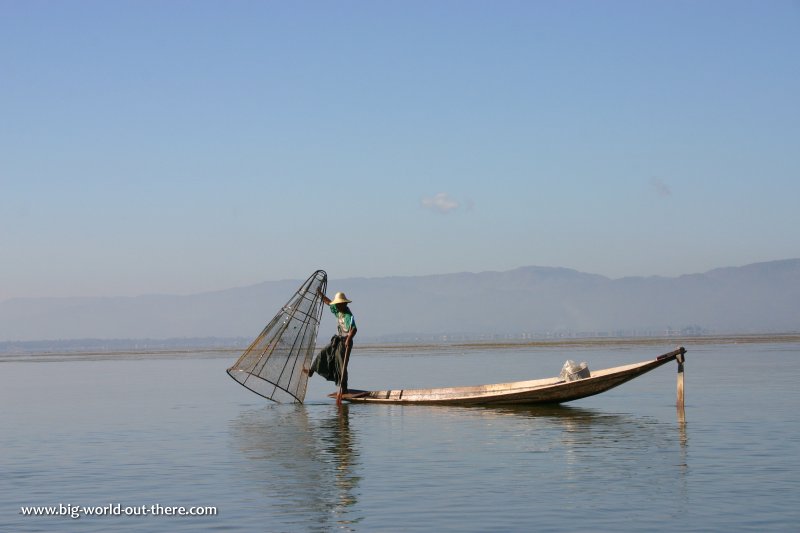
Mingun is reachable from Mandalay by boat across the Ayeyarwady. The journey takes about an hour upriver from Mandalay to Mingun, and 40 minutes downriver from Mingun back to Mandalay. Even from far, you can see the Mingun Pagoda, as it is so huge. Along the way, you see ferries, bamboo rafts and diesel-powered riverboats, and fishermen in their small sampans.

Mingun is where you can see ambitious and vanity get the better of men, and it comes in the form of the incomplete Mingun Pagoda, also known as Mantara Gyi Pagoda and Mingun Pahtodawgyi. The pagoda was conceptualised by King Bodawpaya. Having just succeeded in bringing the Maha Muni Buddha from Rakhaing to Amarapura, and becoming owner of a white elephant, he wanted to further emphasize his supremacy by putting up the world's tallest pagoda. The intended height was 500 feet.

Construction lasted from 1790 to 1797. And then, labour problems brought it to a halt. Unable to get workers, and compounded by economic crisis at the beginning of the 19th century, Bodawpaya could not complete his pagoda project. When he died in 1813, none of his children continued the building. Nonetheless, even as it stood, it was a massive sight, and if anything, claims the record as the world's biggest pile of bricks.

A short distance north of the incomplete pagoda is the bell intended for it. Just as the pagoda, the Mingun bell was cast to monstrous dimensions. Weighing 87 tons and standing at 12 ft, it is the world's biggest bell that is still used.

Tim's Mingun Travelogue, 23 November, 2003

Mingun was the final destination for a day that included visiting Amarapura and Sagaing on the earlier part of the day. We had to arrive at Mingun around 3:30pm, since the boat journey alone would have consumed close to two hours. It was a great experience to travel on the boat to Mingun, passing clusters of riverside huts on stilts, and watching life along Myanmar's main artery.

Upon arriving in Mingun, we first visited the Mingun Pagoda. Seeing that the sun was already descending on the western horizon, I hurried to the other side of the pagoda, to get the best blue skies. I was not disappointed. It was a clear day and rewarded me with a deep blue sky.

From the pagoda, we continued to explore the Mingun bell. I even climbed under the bell. The bell is covered with graffiti, which is a shame, for a see a lot of it the handiwork of tourists. Guard should have been stationed at this heritage object to prevent such a defilement.

The final attraction we visited was the Hsinbyume Pagoda, which is a beautiful white-wash structure. In between, we had the opportunity (or rather, the opportunity was pressed on us) to do a little bit of souvenir shopping. I bought an umbrella which our tour guide Henry told me I couldn't use anywhere in Myanmar. Why not? Because it's a monk's umbrella, and in Myanmar, only monks are allowed to use it. I still have it stored in the storeroom of my house today.


Sights in Mandalay

Exploring Mandalay and its surroundings

Mandalay was the capital of the old Burmese kingdom. There are lots of sights within Mandalay as well as in the cities nearby that are worth visiting. Click enter to view.

Sights of Mandalay


Expedia.com

Click here to return to the AsiaExplorers Homepage

How much have you explored Myanmar? Through AsiaExplorers, you can now explore these places in Myanmar from the comfort of your desk: Myanmar, People of Myanmar, Myanmar History, Bagan (Ananda Temple, Bagan Plains, Dhammayangyi Pahto, Gawdawpalin Temple, Htilominlo Pahto, Kyanzittha Cave, Manuha Temple, Mingalazedi, Nanpaya Temple, Nyaung U Market, Shwesandaw Temple, Shwezigon Temple, Tharabar Gate, Thatbyinnyu Temple), Bago (Htaukkyant World War II Cemetery, Kanbawzathadi Golden Palace, Kyaikpun Pagoda, Shwemawdaw Paya, Shwethalyaung Buddha), Inle Lake (Kalaw, Nga Phe Kyaung Monastery, Padaung People, Phaung Daw U Pagoda, Shwe Yaunghwe Kyaung Monastery, Ywama), Kyaiktiyo, Pagoda of the Golden Rock, Mandalay (Amarapura, Mahagandhayon Monastery, U Bein Bridge, Atumashi Monastery, Ayeyarwady River, Inwa Bridge, Kuthodaw Paya, Maha Myat Muni Paya, Mandalay Hill, Mandalay Palace, Shwenandaw Monastery), Mingun, (Mantara Gyi Pagoda, Mingun Bell, Myatheindan Pagoda), Mount Popa, (Popa Taungkalat), Pindaya Caves, Sagaing, Yangon (Botataung Pagoda, Kyaukhtatgyi Buddha, Shwedagon Pagoda, Sule Pagoda)

Grab this swicki from eurekster.com


Copyright © 2003-2008 AsiaExplorers.  All rights reserved.

About the Author: AsiaExplorers is researched and written by Timothy Tye. We take reasonable care to check and verify the accuracy of the content. However, we disclaim any responsibility for any inconvenience, mishap, injury or death resulting from following the advice provided directly or indirectly by AsiaExplorers and the comments on its pages. All the photographs in AsiaExplorers are available for publication. Please contact AsiaExplorers at the following email address for your enquiries: