By Air
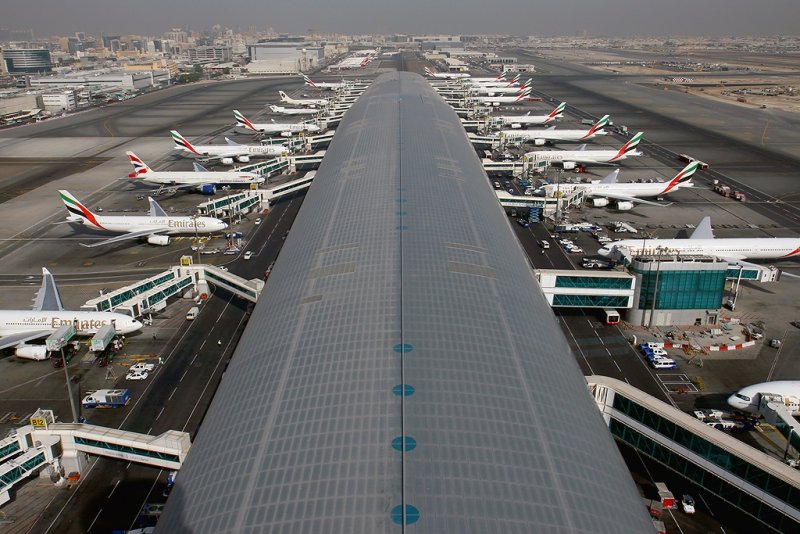
Changi Airport (SIN) is the main entry point to Singapore by air. It is the second busiest airport in Southeast Asia after Bangkok's Suvarnabhumi (BKK). Located on a 1300 hectare site, Changi is 20 km from the commercial centre of Singapore. It consists of 3 terminals. Most airlines use Terminal 1 while Singapore Airlines and its Star Alliance partners use Terminal 2. At the time of writing (May 2007) Terminal 3 is scheduled for opening in 2008. In addition, there is a Budget Terminal which presently handles flights by Tiger and Cebu Pacific.
From Changi airport, you have the following options for reaching the city:
Taxi (cab): Follow the taxi sign after clearing customs. Taxis in Singapore use the meter, and a trip to the city costs between $20 and $30, inclusive of a $3-5 airport surcharge. If you take the taxi between midnight and 6:00pm, there is an after-hour surcharge of 50%.
Limousines: A flat $35 to anywhere in the city. No after-hour surcharge, making it an attractive option after midnight. You can also charter van-sized MaxiCabs, which are good for large families or if you arrive with lots of baggage.
Shuttle: These are six-seater MaxiCab shuttle service to designated areas/hotels. They cost $7.00 and can be booked in advance or in the arrivals hall. They run every 15 to 30 minutes, from 6:00am to 2:00am.
Subway: The MRT has a station at Terminal 2. To reach the city, you need to change train at the Tanah Merah Station. A ride to the City Hall Interchange takes 30 minutes and costs S$1.40. The trains run from 5:31 AM to 11:18 PM.
Bus: Bus terminals are located at the basement of Terminal 1 and 2. Buses run from 6:00am to midnight. Fares are below S$2.00, but you need exact change as no change is given.
By Bus
One may reach Singapore from different cities in Peninsular Malaysia. These buses enter through the Woodlands Checkpoint. Leaving Singapore, the buses use the Second Link. There isn't a central bus station so the buses depart Singapore from different parts of the city. The following bus companies operate between Malaysia and Singapore:
Aeroline, tel: +60-3-6258-8800 (Kuala Lumpur), +65-6341-9338, web: www.aeroline.com.my Buses ply between Singapore and Kuala Lumpur, Petaling Jaya and Bandar Utama. Departs from HarbourFront Centre.
Gunung Raya, tel: +65-6294-7711
Hasry Express, tel: +65-6294-9306, web: http://www.hasryexpress.com/, Departs Lavender Street for Malacca, Batu Pahat, Muar and Kuala Lumpur.
Transtar, tel: +65-6299-9009 (Singapore), +60-3-2141-1771 (Kuala Lumpur), web: general@transtar.com.sg; trips to Kuala Lumpur, Malacca and Genting Highlands, departs from Golden Mile Complex, Beach Road.
Specially licensed Singapore taxis can take passengers from anywhere in Singapore to the Kotaraya shopping mall in Johor Bahru. Tel: Johor Taxi Service, +65-6296-7054.
Taxis can be taken from the Kotaraya shopping mall in Johor Bahru, to anywhere in Singapore for S$30, and to Changi Airport for S$40.
By Driving
There are two land links from Peninsular Malaysia into Singapore:
Causeway: ever congested, but the popular choice for those coming from Johor Bahru. It links Johor Bahru with Woodlands in northern Singapore.
Second Link: faster and less congested than the Causeway. It links Tanjung Kupang in Johor, Malaysia, with Tuas in western Singapore.
To enter Singapore with a foreign-registered car, you need to buy an AutoPass (AP) card for S$10, and use it to pay for a Vehicle Entry Permit (VEP) of S$20 per day. Then, you need to rent an In-Vehicle Unit (IU) to pay the electronic road pricing, or pay a flat fee of S$5 per day. Peninsular-Malaysia registered vehicles need to show a valid road tax and Malaysian insurance coverage. All other foreign vehicles need a Vehicle Registration Certificate, Customs Document (Carnet), Vehicle Insurance purchased from a Singapore-based insurance company and an International Circulation Permit.
Procedure to enter Singapore by car:
Go through immigration and get your passport stamped. Then follow the Red Lane to buy the AutoPass from the Land Transport Authority (LTA) office. At the parking area, an LTA officer will verify your car, road tax and insurance cover note. He will issue you a small chit of paper which you take to the LTA counter. Fill in a form and then go to the counter to buy the AP and/or rent the IU. Then proceed to customs where you will have to open the boot for inspection. After that, you are ready to drive anywhere in Singapore. When you exit Singapore, the VEP fees, road pricing charges and tolls will be deducted from your AutoPass. You do this by slotting the AutoPass into the reader at the immigration counter while you get your passport stamped. This procedure applies only to Peninsular Malaysia registered cars. As of 1 June 2005, all foreign registered cars and motorcycles can be driven in Singapore for a maximum of 10 days in each calendar year without paying VEP fees. After the 10 VEP free days have been utilised, VEP fees for subsequent days are chargeable if you continue to use or drive your foreign-registered car or motorcycle during VEP operating hours. For more details, refer to the Land Transport Authority's webpage: http://www.lta.gov.sg/motoring_matters/index_motoring_guide.htm
By Train
Malaysia's Keretapi Tanah Melayu (KTMB, web: http://www.ktmb.com.my/) runs two day trains (the Ekspres Sinaran Pagi and Ekspres Rakyat) and one sleeper service (Ekspres Senandung Malam) between the Tanjung Pagar station in Singapore and Kuala Lumpur. The Sinaran Pagi leaves Singapore at 08:40, the Ekspres Rakyat at 13:00 and the Senandung Malam at 22:15. In addition, there are two train services to Tumpat, near Kota Bharu; Lambaian Pagi departs Singapore at 06:00 while the sleeper service Ekspres Timuran departs at 18:15.
KTMB tickets are priced in ringgit in Malaysia, and in Singapore dollars in Singapore, at the same rate. In other words, a RM10 ticket sold in Malaysia is sold at S$10 if bought in Singapore. To avoid paying the extra amount, do one of the following:
If coming from Malaysia, book return tickets.
Cross the border and board the train in Johor Bahru.
Buy the cheapest ticket to go from Singapore to Johor Bahru, and then another ticket from Johor Bahru to your final destination, and change seat upon arriving in Johor Bahru.
When leaving Singapore for Malaysia, your passport will be checked but not stamped by the Malaysian immigration at Tanjung Pagar. At the Woodlands station half an hour later, you will get a Singapore exit stamp. Why something so bizarre? It's all due to the ups and downs of the Malaysia-Singapore bilateral relations. Previously, both Singapore and Malaysia handled their immigration controls in Tanjung Pagar. However, Singapore moved their checkpoint for trains to Woodlands in 1998. Malaysia however refused to move. As a result, the Malaysian immigration checks at Tanjung Pagar will only "view" the passports of people entering Malaysia but not stamp them.
In the other direction, for trains coming from Malaysia to Singapore, the Malaysian immigration formalities are done on board the trains in Johor Bahru. Arriving at Woodlands, you have to disembark and walk through immigration.
Also note that you will not get a Malaysian entry stamp in your passport if you enter the country by train, so don't panic. Passports are checked (but not stamped) by Malaysian immigration before you enter the platform to board the train in Tanjung Pagar but you will only get a Singapore exit stamp at Woodlands station, about half-an-hour's journey away. For reasons why, see infobox in Malaysia | Get in section. Coming in from Malaysia, the situation is much more conventional - Malaysia stamps you out in Johor Bahru (you don't even need to get out of the train) and Singapore stamps you in at Woodlands (you will have to disembark and walk through immigration, though).
Thank you, thank you, thank you, for the opportunity to explore the world, to document, to photograph, and to share the information with you. My name is Tim, I'm the writer of this website, and I want to tell you how grateful I am for your visit. This is one of over a dozen websites that I write - you can click my thumbnail photo above to randomly visit any one of them. All my photos are available for commercial printing - find out the photo usage rights here. If you wish to share you photos on this website, upload them to www.panoramio.com and send the URL to me for consideration. And, if you'd like to correspond with me, send your mails to my address as shown below:
About the Author: AsiaExplorers is researched and written by Timothy Tye. We take reasonable care to check and verify the accuracy of the content. However, we disclaim any responsibility for any inconvenience, mishap, injury or death resulting from following the advice provided directly or indirectly by AsiaExplorers and the comments on its pages. All the photographs in AsiaExplorers are available for publication. Please contact AsiaExplorers at the following email address for your enquiries: