This glossary of Northern Thai temple terms list down words used in this website and its description in English. Refer also to the page on Northern Thailand Temple Architecture.
Arannavasi: a sect of Buddhism that excludes itself from the daily life of the community, preferring a life of isolation and meditation in a forest temple.
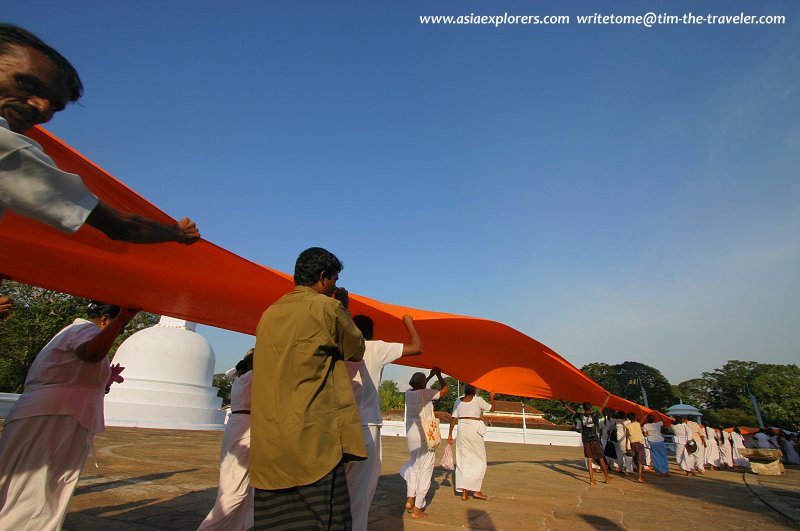
Chedi: stupa. This is the pagoda-like structure used to .
Garuda: mystical bird, found in the design of the roof ridge finial.
Ho trai: manuscript repository
Kuti: monks' living quarters. These are usually one-roomed buildings.
Makara: mystical water beast. The makara is often shown disgorging the naga, appearing in the design of the nak sadung.
Mondop: square pavilion with multi-tiered pyramidal roof.
Naga: serpent or dragon, in Thai temple design.
Nak kieo: coiled naga, as appearing in the eave-brackets.
Nak sadung: undulating naga balustrade.
Pa: forest. Temples built in the forest usually have the word Pa in their name, i.e. Wat Pa Sak. A forest temple has to be about 500 bow-lengths from a settlement. That's about one kilometer.
Pan lom: bargeboard which covers the end of the gable. This is made to shape like a naga.
Phra Phutthabat: stylised footprint of the Buddha, usually carved in stone and enclosed with railing or sheltered.
Phra rabieng: cloister. This is the sheltered corridor which are often lined with Buddha images.
Putthawat: sacred enclosure. This is the compound upon going through the main entrance of the temple.
Sanghawat: Non-sacred part of the wat that includes the living quarters of the monks.
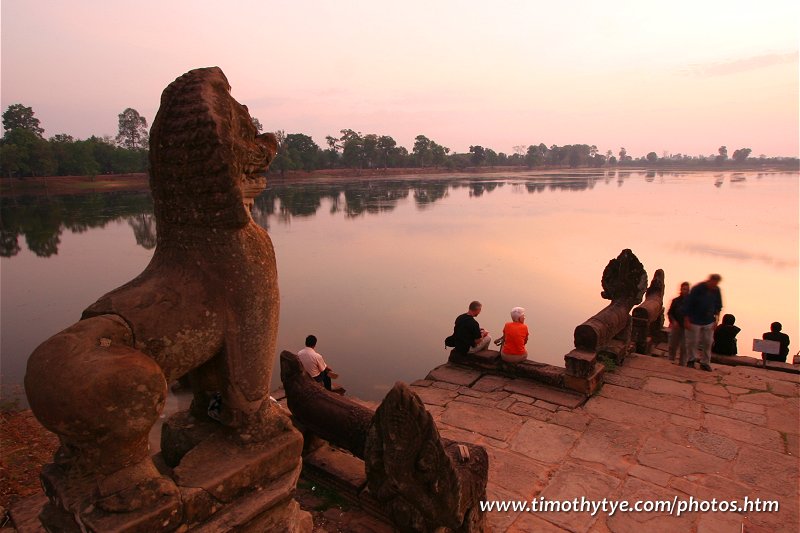
Singh: lion. This is the mystical lion that stands guard at the entrance of temples and temple halls. The singh in Northern Thai temples are similar to the Burmese style.
Wat: Thai temple or monastery. The term wat denotes a Thai Buddhist religious complex. It could be places of worship or monastery.
[an error occurred while processing this directive]