| Preparing for Krabi? Let us help! |
|
|
Krabi is a small town of fishermen in the midst of mangrove swamps that has recently - as with so many other places in South Thailand - been discovered and transformed by mass tourism. However, Krabi joined the tourism trade rather late, if compared to Phuket and Koh Samui.
What made Krabi hidden was access. Krabi was without an airport until 1999, before which the only convenient access was via Phuket, a good two hours' drive away.
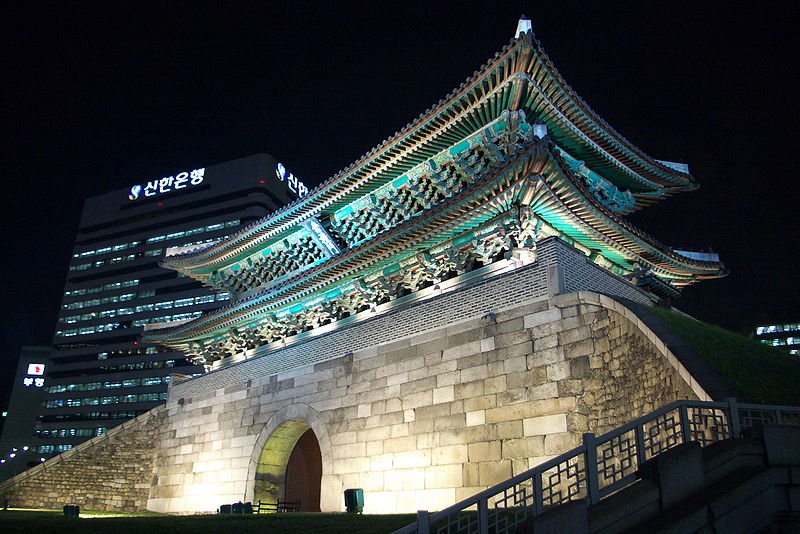
 Krabi has many sights of natural beauty such as Sra Morakot, the Emerald Pool.
Tourist Attractions in Krabi
 | Aonang Bay Major beach belt in Krabi
|
 | Hat Noppharat Thara Beach in Krabi frequented mostly by the locals
|
 | Khao Chang Elephant Hill, Krabi
|
 | Klong Thom Hot spring waterfall in Krabi
|
 | Koh Kai Chicken Island, so called due to its rock formation
|
 | Koh Maiphai Bamboo Island, one of the small islands off the coast of Krabi
|
 | Koh Poda One of the picnicking islands off Krabi
|
 | Koh Tap Tiny isle off Krabi
|
 | Sra Morakot Naturally coloured emerald pool of Krabi
|
 | Susaan Hoi Fossil beach in Krabi
|
 | Tha Pom Crystal river of Krabi
|
 | Wat Thamsua Tiger Temple
|
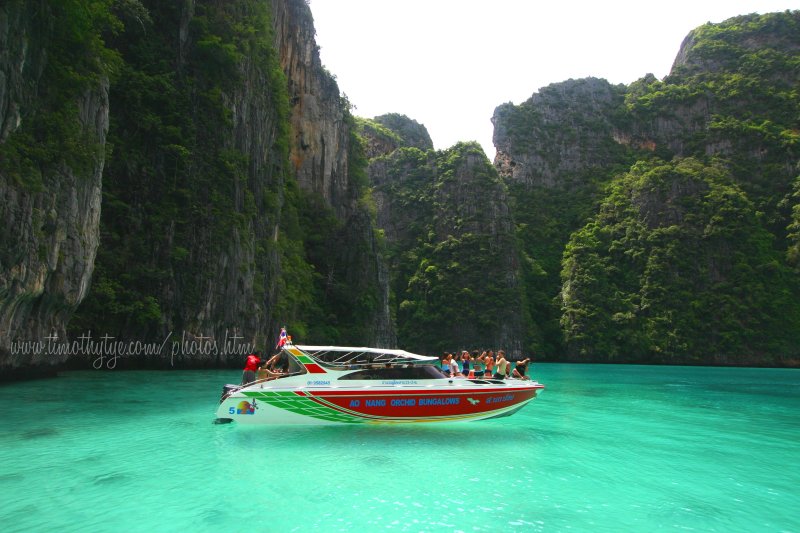
Visitors to Krabi will find an abundance of natural beauty. The province is characterized by spectacular karst outcrops that seem to leap out of the ground like gargantuan mounts.
Although Krabi is located within a mangrove area, there are pockets where the water is crystal clear, such as Sra Morakot (Crystal Pool) and Tha Pom (Crystal River).
The provincial capital, Krabi town (all provincial capitals in Thailand share the same name as the province themselves) is a short distance from the sea, on the estuary of the Krabi river. It is a neat town with a waterfront, from where one may take a ferry or hire a boat to explore the surrounding islands.
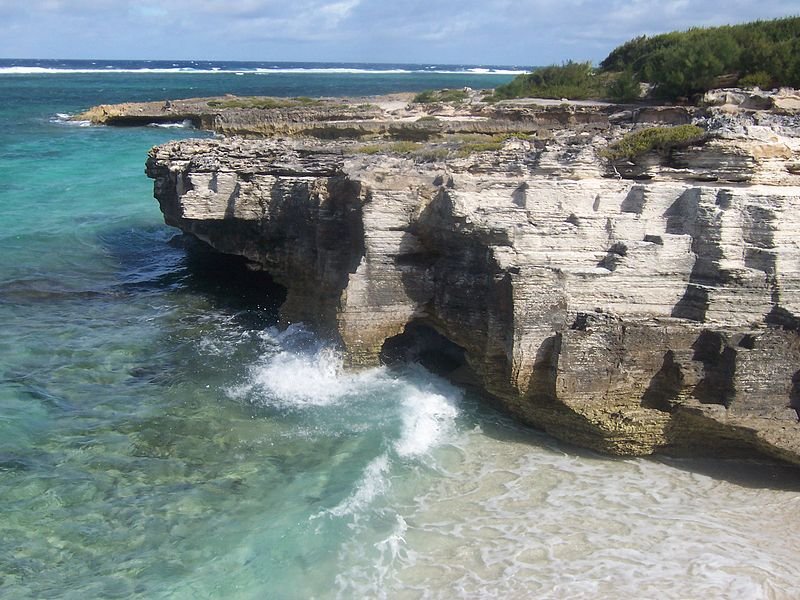
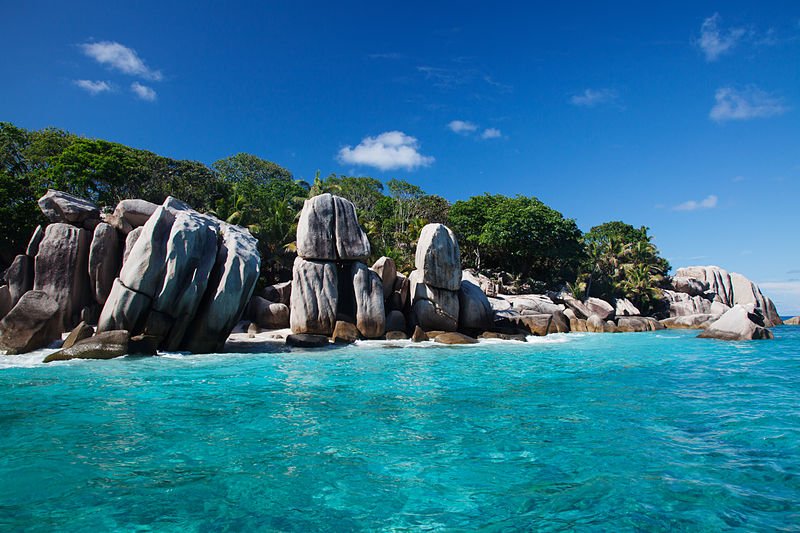
The main attraction of Krabi - for most Western visitors at least - must surely be the beach. Soft white sandy beaches are lapped by the waves of the Andaman Sea, with a backdrop of verdant rainforest and dramatic limestone cliffs, some soaring to 1000 ft or more. There are three stretches of beach in Krabi: Aonang, Nopparat Thara and Laem Phra Nang.
Aonang is a bay about 18 km away from Krabi Town. As it is the most accessible part of Krabi, it has been developed with good tourist infrastructure. Next to it is Nopparat Thara, which has more of a local feel to it. This is where the local population come out to play and picnic during weekends, where hawkers sell ice cream, kites and charboiled cuttlefish. Within Noppharat Thara, and close to Ao Nang, is Susaan Hoi, the seashell cemetery.
Probably the most scenic is Laem Phra Nang, a cape that juts out into the emerald sea.Laem Phra Nang, although the most scenic, is not accessible by land, as a ridge of high peaks cuts it off from the main coastline. The only option is by boat. The cape has three sides, and each overlooks a beach. To the south is Phra Nang beach, while on opposites sides of the cape are west Railay beach and east Railay beach. At the southern end of Phra Nang beach is Tham Phra Nang Nok, or Princess Cave. Dedicated to an ancient fertility deity, the cave contains a combination of large phallic symbols, garlands and offerings in the hope of increased potency and prosperity. Local fishermen still leave offerings although it's now becoming a local tourist attraction.
Climate
Due to the influence of the tropical monsoon, there are only two seasons in Krabi; the hot season from January to April and the rainy season from May to December. Temperatures range between 17ºC and 37ºC.
Up
History of Krabi
Krabi is perhaps the region with Thailand's oldest history of continued settlement. Archaeological escavation uncovered a bronze necklace, skeletons and earthenware, as well as numerous drawings in the limestone caves of the province. It can be concluded that this area has been inhabited for more than 30,000 years. In recorded times, the town was known as "Muang Banthai Samoe" and bear the symbol was a monkey. In 1872 King Rama V raised the town to become a province covering 4708 square kilometres and with a population of 298 000.
Some archeologists claim that Krabi is one of the older settlements in the country. There is archaeological evidence indicating that the area has been home to homosapiens during the prehistoric times or between 25,000 - 35,000 B. C. The assumption has been strongly supported by the discovery of stone tools, ancient colored pictures, beads, pottery and skeletal remains in the provinces cliffs and caves.
In 1200 A.D., the area was known as Ban Thai Samo, one of 12 royal cities that had a monkey as the town symbol. During that period, Krabi was ruled by the Kingdom of Ligor, a city better known today as Nakhon Si Thammarat.
During the reign of King Rama V (1868-1910), the community was known as Pakasai Sub-county and remained under the direct jurisdiction of Nakhon Si Thammarat province.
Around 1872, King Rama V elevated Pakasai Sub-county to Krabi Province with the provincial administration office situated at Krabi-yai Sub-county. (Currently, the office is located near the estuary at Pak Nam Sub-district) and in 1875, ordered the separation of Krabi Province from Nakhon Si Thammarat Province.
During the present reign, the people of Krabi and nearby provinces have collectively organized the construction of a royal residence at Laem Hang Nak Cape, thirty kilometers west of Krabi Town on the Andaman coast, as a present to His Majesty the King.
Up
Origin of the name Krabi
There are two legends connected to the origin of the name "Krabi". The first is that villagers presented to the governor a large ancient sword (or krabi) that was discovered by chance. Later when they discovered a smaller one, it was also presented to the governor. Regarded as sacred and auspicious, the governor decided to keep them in the province. As the process for the establishment of the province was still in progress, the swords were placed crossing each other in Khao Khanap Nam cave. Since then, the crossed swords have remained a part of the provincial seal.
The second legend is that "Krabi" was derived from the name of a local tree known as "Lumphi". The Malay and Chinese merchants mispronounced the name to "Ka-lu-bi" or "Kho-lo-bi" which finally resulted in "Krabi" (or sword).
Up
Offshore Islands of Krabi
Much of the Krabi coastline, from Phang Nga Bay in the north to Koh Lanta to the south is dominated by muddy shores and mangrove swamps. The note-worthy beaches of Krabi, numbering less than a half dozen, are all on off-shore islands. Without counting the Phi Phi islands – which, despite the distance off the coast, are also a part of Krabi province – there are three groups of islands in Krabi.
The first is seen offshore from the main tourist centres at Ao Nang and Phra Nang. This is called the Koh Dam group, after its two large members, Koh (island) Dam Hok and Koh Dam Kwan. These two, each of which offers a spectacular beach, are surrounded by about ten smaller, all-rock outcrops without a proper beach. During the tourist season longtail boats ferry hundreds of tourists from the mainland to these islands each day on 30-minute sprints. Although they are not lonely get-aways, they are still worth seeing for the unusual shape of their beaches.
The second island group, Koh Hong, is to the north and further afield, taking more than an hour by longtail boat. There is only one beach on the main island, and this too is stunningly beautiful. Koh Hong is named after the "hong", Thai for room, in the middle of the island. The hong began as a cave system that collapsed inwards and was eroded to sea level, leaving only a large lake with a small passage to the sea. At high tide longtails can enter this strange rocky arena, and one can swim in water a metre or more deep.
The last group of Krabi islands is a gathering of towering, rocky sea mountains with little space for beaches as their vertical rock walls drop straight into the sea. These are a little north of Koh Hong, and again can be toured by longtail in a day trip from Krabi. They are generally referred to by the name of the most interesting island here, Koh Pak Bia, which sports an unusual mini-beach.
Amongst all of these islands only one has any form of accommodation, Koh Dam Hok. The bungalows here, which are set back against the karst mountain and cannot be seen from the beach, are of good standard. They are run by Krabi Resort at Ao Nang, from where bookings can be made. There is a restaurant here that is also open to day visitors.
Up
Getting into Krabi
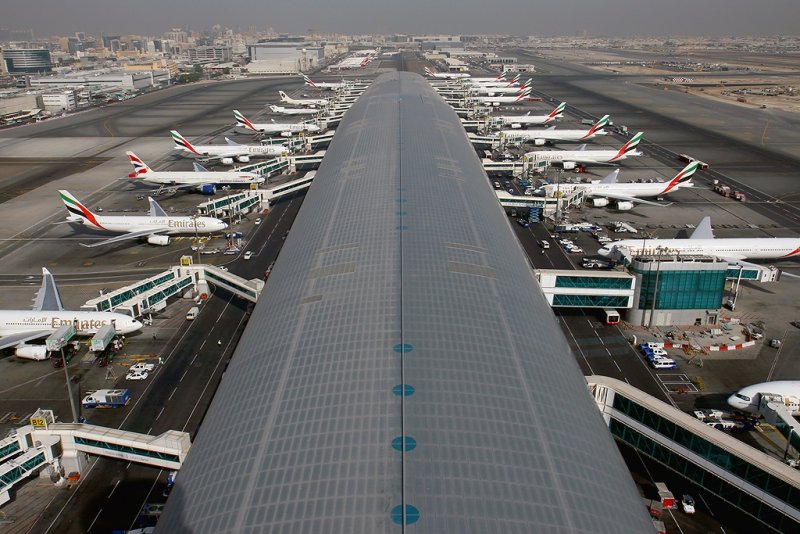
Krabi now has its own international airport. The Krabi International Airport (KBV) is 15km from the centre of Krabi, and 40km from Aonang Bay. International departure tax is 400 baht while domestic departure tax is included into the ticket. The airport has flight connections with the following places:
Bangkok: Thai Airways, One-Two-Go Airlines, Krabi Airways
Darwin: Tiger Airways
Singapore: Tiger Airways
Limousine taxis are available between the airport and Krabi town (500 baht), Aonang (800 baht) and Phuket (2500 baht). Coach buses travel from Bangkok, making the journey in 12 hours, leaving Bangkok's Southern Bus Terminal. The fare is 378 baht (second class bus), 486 baht (first class bus), 710 baht (VIP bus).

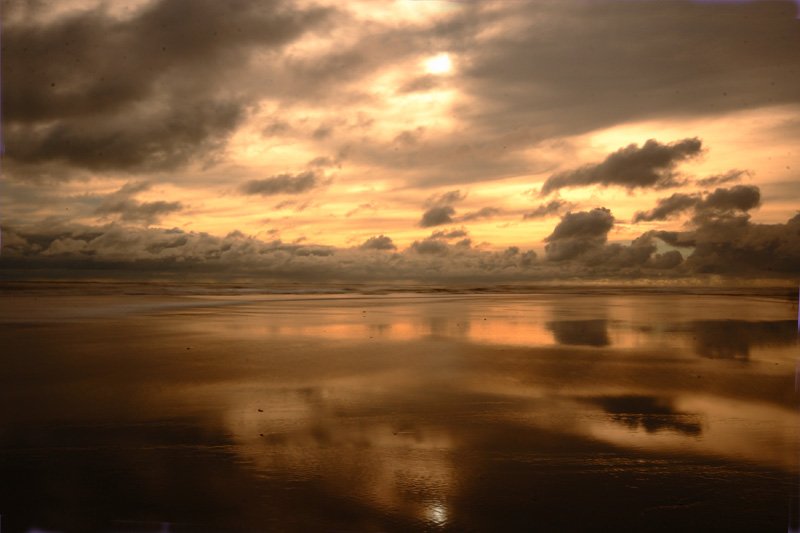
The beach at Noppharat Thara in Krabi.
|
|