Lampang, or Nakhon Lampang, is an ancient town located between Chiang Mai and Sukhothai in northern Thailand. Lampang was originally a Mon settlement (Mon is a people from Lower Burma). It was founded by one of the twin sons of Queen Chamathewi, and was called Khelang Nakhon and later Lakhon when it was part of the Haripunchai kingdom.
Lampang is situated in the Wang valley bordered by the Khuntan Range on the west and the Pi-Pan-Num range on the east. The Wang river is a major tributary of the Chao Phraya. It flows directly through Lampang.
History of Lampang
The history of ancient Thailand is characterised by warfare among small states, and it is no different with Lampang. When Mon kingdom of Haripunchai was conquered by the Tai King Mangrai of Chiang Mai, its king Yi Ba retreated to Khelang Nakhon, where his son was king. There they prepared a retaliation on the Tai forces. However, they were defeated once more, and Khelang Nakhon was absorbed into the kingdom of Lanna.
From the middle of the 16th century to 1774, Lampang fell under Burmese occupation. In 1774, Prince Kawila of Lampang joined forces with Phraya Chaban of Chiang Mai, and with help from the Siamese troops of the Kingdom of Ayutthaya, succeeded in defeating the Burmese army and ended two centuries of suppression. Kawila was enthroned as the king of Chiang Mai, and ruled the state as a vassal of Ayutthaya.
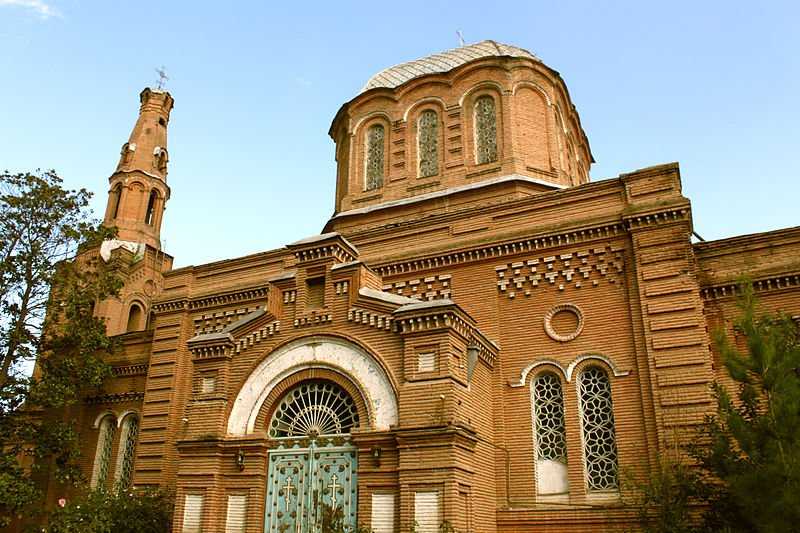
Wat Sri Chum in Lampang.
Tourist Attractions in Lampang
Although it is an ancient city with a lot of heritage attractions, Lampang has so far been spared from mass tourism which has altered the character of nearby cities such as Chiang Mai and Chiang Rai. Tourists typically stopover in Lampang on the way from Sukhothai to Chiangmai, just as we did too. Probably the most famous attraction in Lampang is the Thai Elephant Conservation Center and Wat Phra That Lampang Luang . Among the less well-known tourist attractions in Lampang are Wang Kaew waterfall and the Chae Son national park, a charming park with a natural hot spring and large waterfalls.
You will find that many of the temples in Lampang were built in the Burmese style, among them Wat Sri Boonreung and Wat Pa Fang. Traditional Lanna architecture can be found at Wat Phra That Lampang Luang. Wat Phra That Lampang Luang is famous for its murals from the 19th century. The city seal features a white rooster in the temple's gate. Wat Phra Kaeo Don Tao, on the West Bank of the Wanr River, is said to have housed the Emerald Buddha between 1436 and 1468.
Wat Sri Chum
Wat Sri Chum is a Burmese style monastery in Lampang, on Sri Chum Road. The monastery and the adjacent chedi are within a walled area set among coconut palms. The original usobot, or ordination hall, was built by craftsmen brought from Mandalay; unfortunately, it burned down in 1992. The replacement simply cannot compare to it in terms of refinement.
Another view of Wat Sri Chum in Lampang.
Hotel Room Price Checker
Before booking a hotel room, make sure you are getting the lowest price for it. Different hotel booking websites offers the same room at different prices. If you stick with one site all the time, you could be paying more for the same room. Now why pay more?
The form below is a Research Engine. It doesn't take bookings. Instead it lets you find the hotel booking website that offers the room you want at the lowest price. You can see and compare what different sites are offering, and then click to choose the one with the best price. Do this, and you're guaranteed to save a whole lot of money on your room reservations!
If you're flying somewhere, use our Flight Checker to compare the rates from different airlines. To use it, enter where you will be flying from, where you will be flying to, your departure date and return date. Select the number of passengers, and then click search.
Our engine will return you a list of possible flights that you can take. You can compare the fare of different airlines for your trip. Click on your selected airline, and we transfer you to the airline website.
AsiaExplorers is researched and written by Timothy Tye. Reasonable care is taken to check and verify the accuracy of the content. AsiaExplorers disclaims responsibility for any inconvenience, mishap, injury or death resulting from following the tips and advice provided directly or indirectly by this website. All pages may be printed out for your own personal, non-commercial use. You may use the information on this website on your blog or website so long as you place a dofollow link back to the page in AsiaExplorers where it appears. Photographs not credited to a third party belong to Timothy Tye and may not be reused in any form unless you are first given permission. Write in to inquire if interested. Third party photographs are governed by their respective licenses. To contact Tim, write to the following email address: