Exploring Phi Phi Islands
Major Beach Destination of Thailand
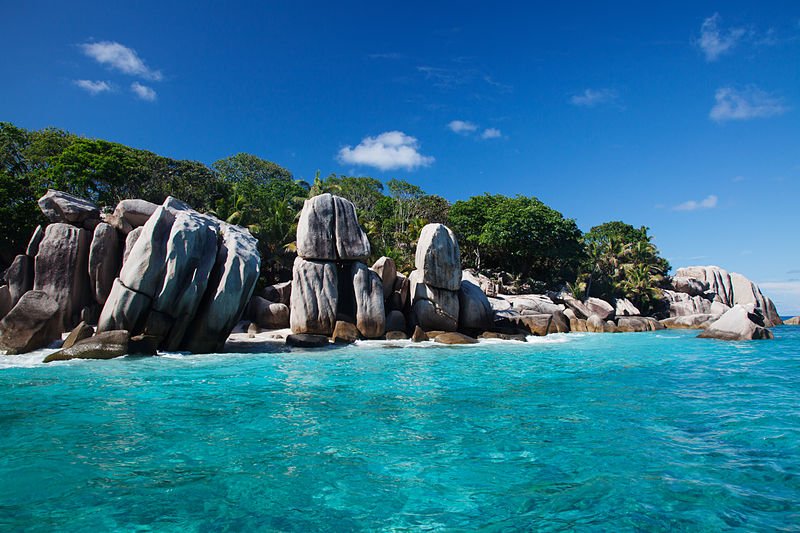
The Phi Phi Archipelago is among the most scenic cluster of islands in the Andaman Sea. The Phi Phi Islands are 48 km east of Phuket and 42 km south of Krabi. This archipelago consists of six islands. The biggest are Koh Phi Phi Don and Koh Phi Phi Le. These supremely scenic islands juts out of the emerald sea with towering limestone cliffs clad in a verdant vegetation. Underneath the surf grows a bank of coral reefs visited by a rainbow of marine life.
The islands of Phi Phi are said to have derived their names from the mangrove tree, Avicennia, which in Malay is pokok api-api. In fact, as late as 1945, Phi Phi islands were still uninhabited, visited on occasion by Sea Gypsies, who are of Malay ancestry. They gave the name to most of the places in Phi Phi. Phi Phi Don, for example, is Thai for Pulao Api-Api Darat, Phi Phi Le is Pulao Api-Api Laut, Loh Bakao was Teluk Bakau, Loh Samah is Teluk Samah, and so on.
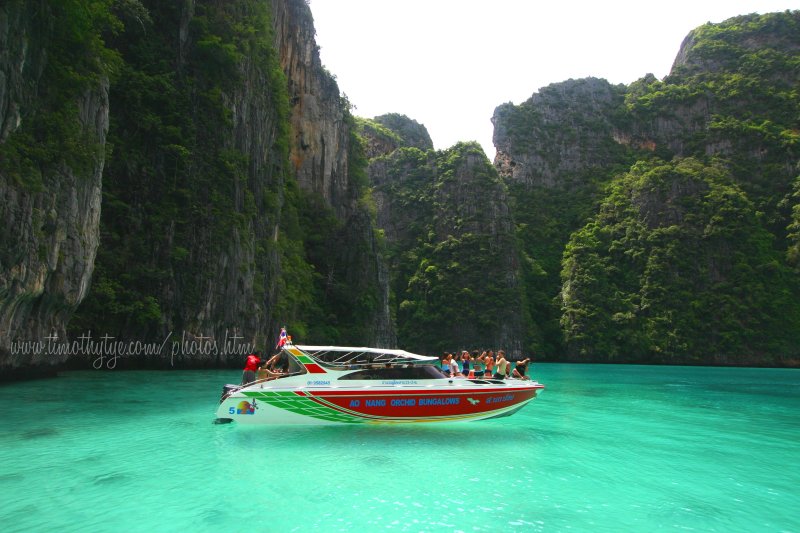
 The emerald lagoon of Pileh on the craggy island of Phi Phi Ley, Thailand.
Ko Phi Phi Don
Phi Phi Don is the bigger of the two major islands. It covers an area of 28 square kilometres. Shaped like a butterfly, it is 8 km long and 3.5 km across at the widest point. Phi Phi Don is the only one permanently inhabited. At the northernmost is the cape of Laem Tong, which is where a sea gypsy village is located. The gypsies were said to have migrated here from Koh Lipe, in Tarutao, further south, near the Malaysian border.
Laem Hua Raket, Hat Yao and Hin Phae are all excellent diving spots. The only major settlement in Phi Phi, apart from the sea gypsy village at Laem Tong, is concentrated around Ao Ton Sai (Tonsai Bay), a lovely curving beach that forms an isthmus linking two hilly sections of Phi Phi Don. On the opposite side of Ao Ton Sai is another bay, Ao Lo Da Lam (Loh Dalam Bay).
Koh Phi Phi Ley
Phi Phi Ley is a only 6.6 square kilometres, but it is stunningly beautiful. Phi Phi Ley measures just 3 kilometers in length and 1 km at its broadest point. The sea around it averages about 20 meters in depth, reaching 34 meters at the deepest point off the island's southern tip. Composed almost entirely of limestone mountains that soar right out of the sea, Phi Phi Ley has a number of fjord-like tongues of sea that lead into sheltered lagoons.
Phi Phi Ley has some of the most beautiful bays in Thailand: Pileh, Maya and Loh Samah. Ao Pileh is an emerald blue lagoon very nearly enclosed by the sheer limestone walls. Ao Maya, or Maya Bay, is now world-famous, having been featured in the Leonardi DiCaprio movie, The Beach. Ao Loh Samah is another quiet bay with a small sandy beach at the end.
On Phi Phi Ley's northeast is the famous Viking Cave. It was renamed by His Majesty King Bhumibol Adulyadej when he visited it in 1972. Coming across a stone in the cave that resembles a mythical creature, His Majesty renamed the cave Tham Phaya Nak, or Naga Cave. This cave is revered by the local people who come here to collect swift's nest, the main ingredient in bird nest soup, a Chinese delicacy. The eastern and southern walls of the cave contain colored drawings dating from earlier times. In addition to drawings of elephants, there were also drawings of various boats, including European, Arab and Chinese sailing ships. This provide an indication of their age, to a few hundred years. The cave probably provided early sailors a shelter to escape from rough seas, to transfer their cargo, or make repairs. It is quite likely that pirates and smugglers used this site as well.
The best time for a visit is between November and April.
Phi Phi Photo Gallery

In the verdant world of Ao Pileh, the emerald lagoon.

Motorized sampan leaving Ao Pileh.

Exploring Phi Phi by speed boat, near Loh Dalam.

An odd looking tree at Phi Phi Don.

The rough west coast of Laem Tong on Phi Phi Don.

Boat over emerald waters in Loh Samah.

Food galore - a restaurant spread at Tonsai Bay.
|