Sukhothai Historical Park
"Dawn of Happiness," Cradle of Thai Civilisation


Sukhothai is regarded as the first fully Thai kingdom to be established in Thailand. Sukhothai was in fact part of the great Khmer Angkor empire until 1238, when two Thai chieftains, Pho Khun Pha Muang and Pho Khun Bang Klang Hao, declared their independence from Khmer suzerainty, and established the first Thai-ruled kingdom. Pho Khun Bang Klang Hao later became the first king of Sukhothai, calling himself Pho Khun Si Indrathit (also written Intradit). This event has been taken as the founding of the modern Thai nation, even though around the same time a few other less well-known kingdoms also appeared, including Lanna, Phayao and Chiang Saen. Moreover the meaning of Sukhothai, which is "Dawn of Happiness", has the necessary marketing catch attached to it.


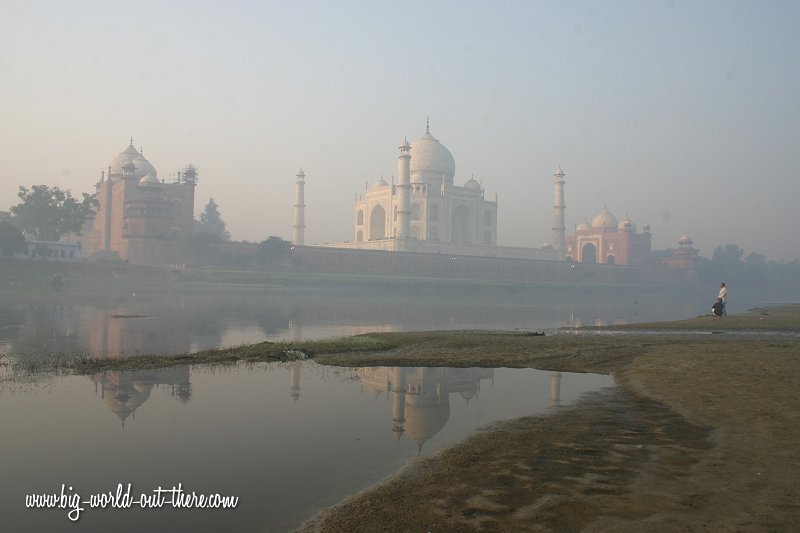
Reflections of Wat Mahathat in Sukhothai Historical Park.


Sukhothai expanded by forming alliances with the other Thai kingdoms. It adopted Theravada Buddhism as the state religion with the help of monks from Sri Lanka. King Intradit was succeeded by his son Pho Khun Ban Muang, who was followed in 1278 by his brother, Pho Khun Ramkhamhaeng, or King Ramkhamhaeng the Great.

Sukhothai enjoyed its golden age of prosperity under King Ramkhamhaeng. Ramkhamhaeng is also credited for introducing the Thai alphabet (This is attributed to the controversial Ramkhamhaeng stele, which is traditionally dated at 1283. This inscribed stone allegedly bear the earliest known Thai writing .) At its peak, the Sukhothai kingdom stretched from Martaban (now in Burma/Myanmar) to Luang Prabang (in Laos) and down the Malay Peninsula as far south as Nakhon Si Thammarat. Indeed the kingdom's sphere of influence at that time was larger than that of modern Thailand, although the degree of control exercised over outlying areas was variable.

After Ramkhamhaeng's death, his son Loethai succeeded him to the throne. From then on, the authority of Sukhothai began to decline rapidly. One by one, vassal states declared their independence, beginning with Uttaradit in the north, and followed by the Lao kingdoms of Luang Prabang and Vientiane (Wiangchan). In 1319 the Mon state to the west broke away, and in 1321 the Kingdom of Lanna placed Tak, one of the oldest towns under the control of Sukhothai, under its control. To the south the powerful city of Suphanburi also broke free.

Meanwhile the new kingdom of Ayutthaya has emerged and was strengthening itself until finally in 1378 King Thammaracha II of Sukhothai had to submit to this new regional power.

Sukhothai became a tributary state of Ayutthaya between 1365 and 1378. In 1412 Ayutthaya installed a chief resident, and King Thammaracha IV was installed on the throne by Ayutthaya. Around 1430 Thammaracha moved his capital to Phitsanulok, and after his death in 1438 the kingdom was reduced in status to a mere province of Ayutthaya.

Sukhothai Historical Park

Today the Sukhothai historical park covers the ruins of the ancient Sukhothai capital. The city walls of Sukhothai form a rectangle about 2 km east-west by 1.6 km north-south. There used to be a gate at the centre of each wall. Inside are the remains of the royal palace and twenty-six temples, the largest being Wat Mahathat. The park is maintained by the Fine Arts Department of Thailand with help from UNESCO, which recognised it as a World Heritage Site. The park is easily toured on bicycle, as did Tim of AsiaExplorers.

The protection of the Sukhothai historical area was first announced on August 2, 1961. In 1976 the restoration project was approved, and in July 1988 the park was officially opened. On December 12, 1991, the Sukhothai Historical Park was declared a World Heritage site, together with the related historical sites in Kampang Phet and Si Satchanalai.


Tim at Wat Si Chum, just outside the ancient Sukhothai city walls.


Expedia.com

Click here to return to the AsiaExplorers Homepage

How much have you explored Thailand? Through AsiaExplorers, you can now explore these places in Thailand from the comfort of your desk: Thailand, Ayutthaya (Ayutthaya History, Elephant Kraal, Phom Phet Fortress, Phukhao Thong, Queen Si Suriyothai Memorial, Royal Palace, Viharn Phra Mongkhon Bophit, Wat Chaiwattanaram, Wat Lokayasuttharam, Wat Mahathat, Wat Phra Ram, Wat Phra Si Sanphet, Wat Phutthaisawan, Wat Ratchaburana), Bangkok (Baiyoke Sky Tower, CentralWorld, Chatuchak Market, Chinatown, City Hall, Democracy Monument, Erawan Shrine, Ganesha Shrine, Gaysorn Plaza, Giant Swing, Golden Mount, Golden Shrine Foundation, Grand Palace, Hua Lamphong Railway Station, Jim Thompson House, Loha Prasat, Mahakan Fort, MBK Center, Mahatthai Uthit Bridge, National Museum, Phan-Fa-Lilat Bridge, Siam Center, Siam Discovery Center, Siam Paragon, Suvarnabhumi Airport, Thian Fah Hospital, Trimurti Shrine, Wat Arun (Temple of Dawn), Wat Mahaprutaram, Wat Pathumkhongkha Ratchaworawiharn, Wat Phra Kaeo (Temple of the Emerald Buddha), Wat Po (Temple of the Reclining Buddha), Wat Saket, Wat Samphanthawongsaram Worawiharn, Wat Theptidaram, Wat Traimit), Chiang Mai (Doi Suthep (Wat Phra Boromathat Doi Suthep), Wat Chedi Luang, Wat Cheitta, Wat Nong Jed Lin, Wat Phra Singh, Golden Triangle, House of Opium, Sop Ruak, Lampang, Mae Sai), Khao Sok National Park (Namtaloo Cave), Khanom, Koh Samui, (Angthong Marine National Park, Chaweng Beach, Hin Ta Hin Yai, Koh Nang Yuan, Koh Phangan, Koh Tao, Koh Wua Talap, Namuang Waterfalls, Wat Khun Aram (Temple of the Mummified Monk), Wat Phra Yai), Krabi, (Aonang Bay, Hat Noppharat Thara, Khao Chang (Elephant Hill), Klong Thom (Crystal River), Koh Kai (Chicken Island), Koh Mai Phai, Koh Poda, Koh Tap, Sra Morakot (Emerald Pool), Susaan Hoi (Fossil Beach), Tha Pom (Hot Waterfall), Wat Thamsua (Tiger Cave Temple)), Phi Phi, (Laemtong Cape, Phi Phi Ley, Rantee Bay, Ton Sai Bay, Viking Cave), Phuket, (Bang Pae Waterfalls, James Bond Island, Khao Rang Hills, Koh Hae (Coral Island), Koh Panyee, Nai Thon & Nai Yang Beaches, Patong Beach, Phang Nga Bay, Promthep Cape, Similan Islands, Wat Chalong), Sukhothai, (Wat Mahathat, Wat Mai), Thale Noi, Trang, (Ley Cave, Sairung Waterfall @ Rainbow Waterfall)

Grab this swicki from eurekster.com


Copyright © 2003-2008 AsiaExplorers.  All rights reserved.

About the Author: AsiaExplorers is researched and written by Timothy Tye. We take reasonable care to check and verify the accuracy of the content. However, we disclaim any responsibility for any inconvenience, mishap, injury or death resulting from following the advice provided directly or indirectly by AsiaExplorers and the comments on its pages. All the photographs in AsiaExplorers are available for publication. Please contact AsiaExplorers at the following email address for your enquiries: