Your base for this destination is the tourist destination of Krabi, Thailand. For travel information about Krabi, read the Krabi Travel Guide. To prepare for your trip to Thailand, read the AsiaExplorers Thailand Travel Guide!
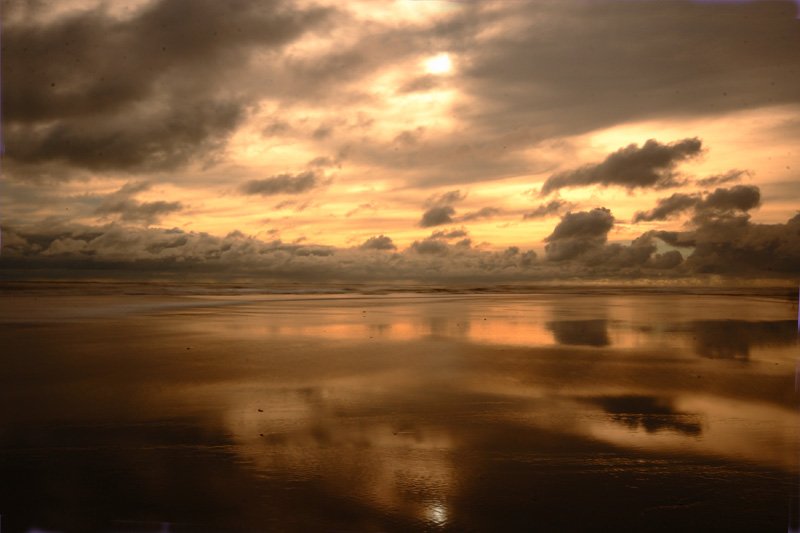
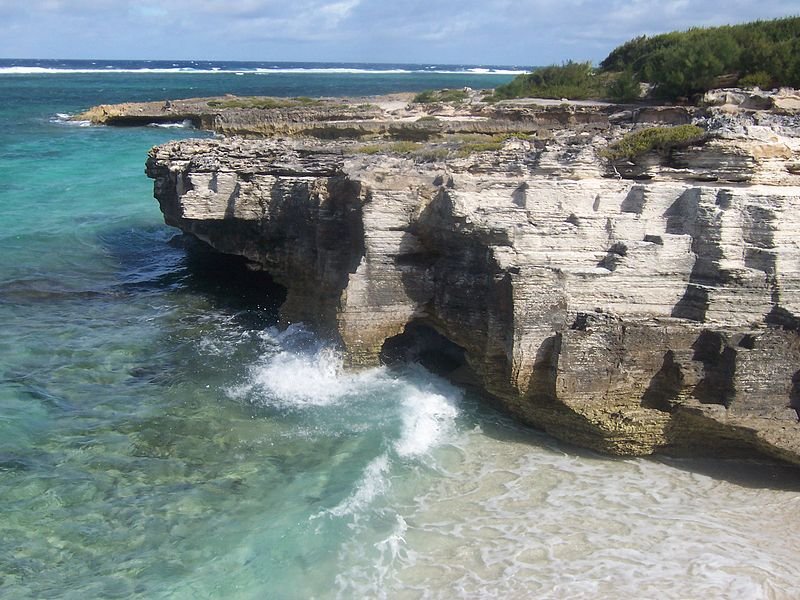
Susaan Hoi, or Fossil Shell Beach (literally Seashell Graveyard), is located at Ban Laem Pho in Krabi, in the vicinity of Hat Noppharat Thara - Mu Ko Phi Phi National Park. Susaan Hoi is a matter of curiosity and although visitors to Susaan Hoi are told that there exists only two other similar sites in the world, one in US and another in Japan, most are either engrossed to this or totally indifferent.
The age of the fossils at Susaan Hoi is placed as about 40 million years ago. At that time, Susaan Hoi was a large freshwater swamp. Eventually, it became landmass. Over time, successive layers of shell created rock slabs known as "shelly limestone" of over 40cm. These rest on 10 centimetres of lignite, below which was subsoil.
The fossilized shells at Susaan Hoi.
Due to geographic upheaval, this shelly limestone at Susaan Hoi is now distributed in great broken sheets on the seashore at Laem Pho. They look like broken chunks of cement flooring from afar.
There are three sites at Laem Pho to view the shells.
Susaan Hoi Site 1
Site 1 is located west of the Visitor Centre. It crops out as a rocky beach and can be clearly seen during maximum low tide. The pan-shaped outcrop is the result of the sinking of the underlying claystone beds. The fossil bed consists of stubby-shaped gastropods (Viviparidae family) ranging in size from 1-2 cm.
Susaan Hoi Site 2
Site 2 is located at the Visitor Centre. It is exposed as a 1-2 m thick limestone bed. This limestone bed contains millions of compacted gastropods and is underlain by 20-40 m thick lignite and claystone beds. These beds are easily eroded by wave resulting in the collapse of the gastropod beds.
Susaan Hoi Site 3
This site can be accessed along the track during low tide. Mollusc beds at this site are approximately 3 m thick, consisting of long gastropods and bivalves. The gastropod fossils from this site range in size from the stubby 1-2 cm to the elongated 4-5 cm forms.
Strata of these three sites of Susaan Hoi are interpreted as having been deposited in fresh-water lakes during 35 million years ago. Deposited events are summarized as:
Sediments were accumulated into the basins as clay mixed with plant remains and gastropod fragments. This indicates the presence of plants and animals in the lakes.
Plant remains were then accumulated upon clay layers and became peat and lignite.
In the final stage, clayey sediments were mixed with calcareous components and abundant shell fragements. This is due to huge population of gastropods living in fresh-water lakes. Changes in paleoenvironments and fluctuations of water level resulted in increasing and decreasing numbers of gastropod population as recorded in the fossil beds.
The presence of laterite, laterite soil, river and beach sands overlying mollusc beds indicates that fresh-water lakes became a landmass prior to 200,000 years.
Susaan Hoi Photo Gallery
If you'd like to see more photos of Susaan Hoi, please click on the thumbnail on the left to view some more photos which I took at this unusual beach destination.
About the Author: AsiaExplorers is researched and written by Timothy Tye. We take reasonable care to check and verify the accuracy of the content. However, we disclaim any responsibility for any inconvenience, mishap, injury or death resulting from following the advice provided directly or indirectly by AsiaExplorers and the comments on its pages. All the photographs in AsiaExplorers are available for publication. Please contact AsiaExplorers at the following email address for your enquiries: