Wat Chedi Luang
Monastery of the Great Buddha, Chiang Mai, Thailand
View of the modern vihard of Wat Chedi Luang as seen from the entrance at Pra Pokklao Road.
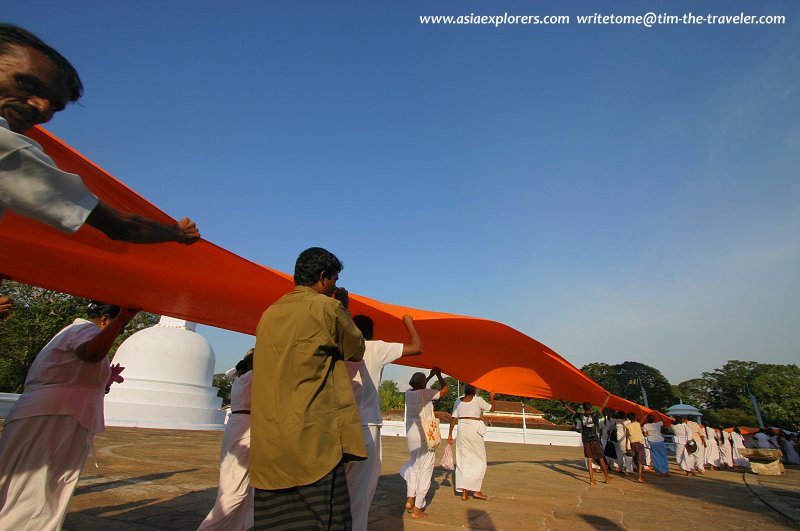
This tourist attraction is located in Chiang Mai, Thailand. For information on Chiang Mai, go to Chiang Mai Travel Guide. To prepare for a trip to Thailand, read also the Thailand Travel Guide. Looking for budget accommodation there? Use AsiaExplorers Budget Accommodation Guide, the no-frills website to cover your budget accommodation needs.
Wat Chedi Luang, or Monastery of the Great Stupa, has Chiang Mai's largest stupa, albeit in ruins. It was one of the major temples I visited with members of AsiaExplorers when we explored the Old City of Chiang Mai. The present monastery is actually a combination of three earlier ones, the original Wat Chedi Luang, along with Wat Ho Tham and Wat Sukmin. It was started in the 14th Century for King Saen Muang Ma to enshrine the ashes of his father, Ku Na. The reliquary was called ku luang rather than a chedi, as it contained no relics of the Buddha.
In 1468, the famous Emerald Buddha, Phra Kaeo Morakot, was installed in the eastern niche of the reliquary of Wat Chedi Luang. Four naga-balustraded staircases were added to ascend the base.
Wat Chedi Luang was only given its present name during the reign of King Tilokaraj in the middle of the 15th Century, when King Tilokaraj reinforced it with laterite. By then, it was the largest structure in the kingdom, standing at a height of 82 meters. It did not stay standing for long. In 1545 a massive earthquake broke the upper 30 meters. It fell down and stayed on the ground until 1992.
After the earthquake, the emerald Buddha was taken by the Laotian King Setthathirat - who ruled Chiang Mai for a brief period - when he returned to Luang Prabang on the death of his father.
The large modern viharn that we can see as we enter from Pra Kokklao Road was built in 1928. It somewhat hides the chedi behind it. Within this vihard is the large standing Buddha stuatue of Phra Chao Attarot, cast in the 14th Century.
View of the ruined chedi.
The naga balustrades of Wat Chedi Luang.
A large seated Buddha in the eastern niche of the chedi.
Thank you, thank you, thank you, for the opportunity to explore the world, to document, to photograph, and to share the information with you. My name is Tim, I'm the writer of this website, and I want to tell you how grateful I am for your visit. This is one of over a dozen websites that I write - you can click my thumbnail photo above to randomly visit any one of them. All my photos are available for commercial printing - find out the photo usage rights here. If you wish to share you photos on this website, upload them to www.panoramio.com and send the URL to me for consideration. And, if you'd like to correspond with me, send your mails to my address as shown below:
About the Author: AsiaExplorers is researched and written by Timothy Tye. We take reasonable care to check and verify the accuracy of the content. However, we disclaim any responsibility for any inconvenience, mishap, injury or death resulting from following the advice provided directly or indirectly by AsiaExplorers and the comments on its pages. All the photographs in AsiaExplorers are available for publication. Please contact AsiaExplorers at the following email address for your enquiries: