Varanasi is one of the oldest cities on earth. For Hindus, it is also one of the holiest. Varanasi is for many the ultimate pilgrimage site. Varanasi is one of the oldest continuously inhabited city in the world. Nobody really knows when Varanasi was founded. Variations to the spelling of Varanasi includes Banaras, Benares and Benaras. These were frequently used during the British administration, and indeed older books continue to show it as Benares. Today, however, only Varanasi and sometimes Banaras is commonly used.
Varanasi derives its name from two streams, the Varuna on the north of the city, and the Assi, a small trickle on the South. According to legend, the Varuna and Assi rivers originated from the body of the primordial person at the beginning of time. Varanasi is also known to the Hindus as Kashi, which means City of Light, and it is regarded as one of the seven Sacred Cities of Hinduism. The word Kashi originated from the word "kas", which means to shine. Varanasi is said to combine all the virtues of other pilgrimage sites, and anyone dying within the area marked by the Panch Kosi Road is believed to be transported straight to heaven.
The history of Varanasi is shrouded in the fog of time. According to myth, Varanasi was founded by the Hindu deity Shiva. For that reason, it is one of the most important pilgrimage sites in Hinduism. With many ancient text mentioning the city, suggesting that it has already been inhabited over 5000 years ago, Varanasi lays claim as being the oldest continuously inhabited city in the world.
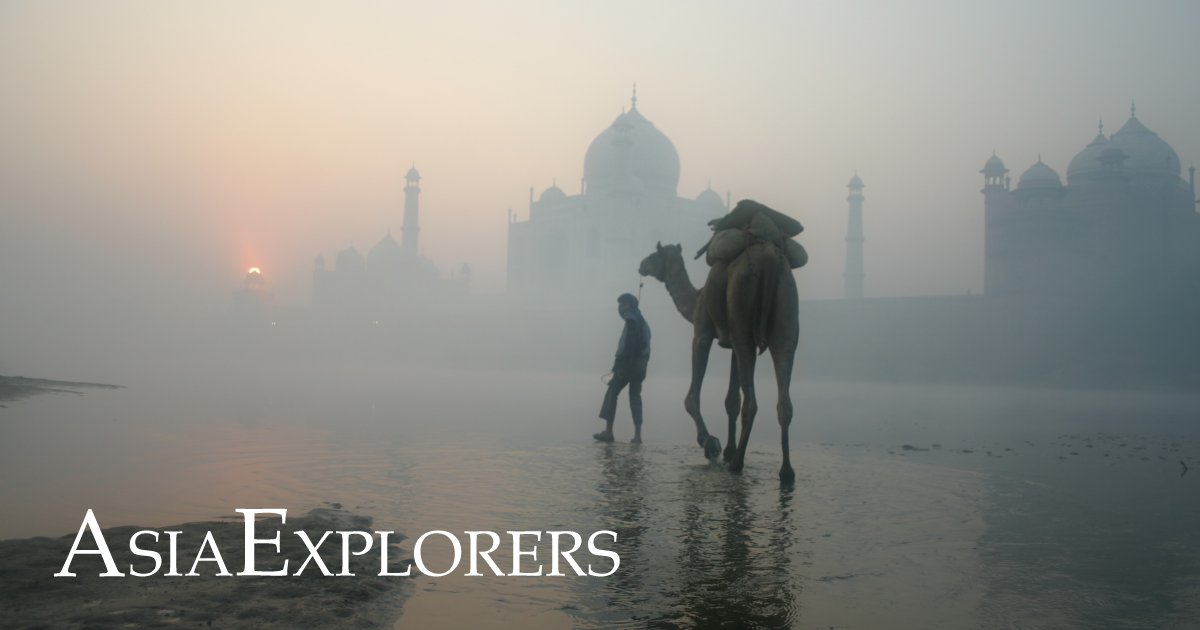
With about a thousand photos, I decided on the above shot as cover picture, to show you the labyrinthine world of Varanasi.
Varanasi was occupied by the Muslim from the 11th century, when it was conquered by Mahmud of Ghazni in 1033, resulting in the destruction of all its Hindu temples. The stones were taken from the temples to build mosques. Only in the 16th century, under the Mughal emperor Akbar was the freedom to worship relaxed. But this was shortlived, for under the reign of Emperor Aurangzeb, Hindus once again faced persecution. A Muslim zealot, Aurangzeb renamed Varanasi Mohammadabad. Varanasi was only freed of its Mughal overlords by the Marathas, a group of warrior-class Hindus, in the 18th century.
Varanasi became an independent kingdom in the 18th century, only to fall under British rule in the subsequent centry.
Thank you for reading this page and viewing the shots.
Varanasi is located on a curve of the Ganges. Like Varanasi, the Ganges is considered one of the holiest rivers in Hinduism. It is on the eastern part of the state of Uttar Pradesh. To arrive in Varanasi, I took an overnight train from Delhi, along with three other members of AsiaExplorers.
From personal experience, I can say that Varanasi is pretty hot, even in November, when I visited, hotter than Delhi, and certainly much hotter than Kashmir. This is especially so during the afternoon, which was when I explored the banks of the Ganges. I learn that the temperature only starts to drop between December and February, when the cold waves blows down from the Himalayan mountains. Fog is common in winter. In summer, a hot dry wind called loo further dehydrates the city.
There are auto rickshaws as well as "manpowered" rickshaws. Bargain and determine price before you climb on board, and even then, the rickshaw rivers will try to take advantage of you if they can. As earlier mentioned, you can come to Varanasi from Delhi by train. There is also an airport which is 25km outside the city centre.
Throngs of Hindus from around the world converge on Varanasi every day, although on a normal day, the ghats are pretty quiet during the afternoon, and you'd only see the locals by the banks of the Ganges, whether doing their laundry, bathing, repairing their boats, herded lifestock, or simply idling. Most of the pujas happen at dawn and after sunset, when the banks of the Ganges becomes crowded with worshippers and tourists.
Apart from Hindus, Buddhists also come to Varanasi because it is a mere 13 km from Sarnath, one of the holiest sites for Buddhists, for it is where Buddha is said to have preached his first sermon after achieving Enlightenment.
To be in Varanasi is in itself an experience, and for some, a journey of self discovery. I had the great privilege of visiting Varanasi in November 2004. I must tell you, Varanasi is an experience like no other city I have been before or since. Following an overnight journey from Delhi, we arrived at the Varanasi Railway Station, and then got a motor ricksaw to take us into the heart of Varanasi. There were four of us, all members of AsiaExplorers. There, within the labyrinth of alleyways, we booked into a guest house within walking distance of the Ganges river. We stayed in Varanasi for three days and two nights, and discovering a few days in the life by the banks of the holiest river in Hinduism.
A great part of the city of Varanasi consists of the labyrinthine alleyways. It is easy to get lost in the labyrinth, and I am sheepish to say that I did get lost once as well, though I prided myself for usually having a good sense of direction. It took me close to an hour of desperate retracing of my steps to get back to surroundings that looked familiar.
The main streets are hot, dusty, and congested with all forms of vehicular traffic, punctuated with pedestrians with seeming death wishes and mingled with loitering cows. The alleys, provide much sought-after shade and a great escape from the relentless Varanasi sun. Within the coolness of these Varanasi alleys are guesthouses where budget travellers like myself found accommodation. As soon as you step into one of these guesthouses, you immediately leave behind the din and congestion of the alleys and streets. Here you find a sanctuary away from all the noise and the heat.
The cows were everywhere in Varanasi. Even in the narrowest Varanasi alley, you would bump into them. I am not sure whether they have owners, but they don't seem to. Anyway, their presence cause most of the alley to carry a stench from the combination of rotten fruits and vegetables mixed with the cow dung, human urine and excrement. As I mentioned, Varanasi is quite an experience, and certainly not for the faint-hearted.
There were people in Varanasi who made it their trade to collect cow dung. I saw a wizened old woman doing just that, by the banks of the Ganges. While the dung was still fresh and warm, she scooped it up using her bare hands into a sort of rattan basket. The dung is then fashioned into dung cakes which she left to bake over the hot cement pavement. By the way, I was watching all this while seated in a restaurant along the riverbank. Luckily I had stronger constitution, otherwise, I'd lose my lunch.
Varanasi is built on a curve on the west bank of the Ganges river. Along this side of the Ganges are close to one hundred ghats. Ghats are staircase going down to the water's edge (the same word is found in Penang and Singapore such as Dhoby Ghaut). This is where you can observe the everyday life of Varanasi, with everything from laundry to cremation being carried out.
We woke early every day so that we could catch the sunrise from the ghats. As the first rays of sun illuminated the Varanasi ghats, I watched as thousands of devotees descend into the Ganges for a ceremonial dip. There are worship ceremonies - poojas - being performed twice a day, at dawn and at dusk. These are all great photographic opportunities, and while I try to describe these to you in words, there is nothing like viewing them in person.
On one morning, we hired a boat to take us along the Ganges, and I managed to capture several spectacular shots of the ghats, with the devotees bathing in the holy river, as the sun peeks over the horizon. We also hired the boat to take us around during dusk, and on this instance, we had the opportunity of going near the ghats where cremations took place. Taking photographs is taboo, so I only managed to capture a few shots from a safe and polite distance, and in any case, I am too respectful of the people in mourning to intrude into their most grievous moment.
I learned that above the ghats where the cremations took place, there are hospices where the terminally ill come, so that they can die in Varanasi, and be cremated in the ghats. I learned that cremation at the ghats is quite an expensive affair, as firewood is becoming scarce, and a great amount is required for a proper cremation. After the cremation is done, the ash is simply tossed into the sacred river. Then, there would be scavengers who dived into the river to salvage the valuables of the deceased. And a short distance from this, you'd find people bathing and washing their clothes. Often, the sight along the Ganges simply render me speechless.
In Varanasi, people are always out to cheat and swindle you, especially if they see you are a foreigner. And they hang around you like glue, pestering and persuading you as if they are so genuine to want to be your friend, until eventually they will start to ask for money, and you see their true colours. It happened to me more than a couple of times in Varanasi, so much so that I got really wary. And weary.
During the hot afternoon, I explored the ghats along the Ganges river, with my camera carted over a tripod. I saw how Varanasi carried on the day, with people bathing, repairing boats, scavenging for items in the river, devotees offering prayers at the many riverside temples, people asleep under the shade. I try to capture as much of this city as possible, for I know the likelihood of my returning here for a second visit is rather slim indeed. Varanasi is a great place to visit once, but I don't think I would want to repeat the visit.
To best present this destination in an orderly fashion, I separate my photographs of Varanasi into different categories, as represented by the thumbnails below. Click on any of the thumbnails to view the few days in the life of Varanasi that I managed to capture. I hope the photographs and write-ups will give you a glimpse into this unique Asia destination.
Varanasi Photo Album
A hole in the wall can become a shop in Varanasi.
This is the archway into the Chowk, the bazaar section which is a labyrinth of narrow alleys.
Sidewalk barber and other trades at work in Varanasi.
The hot, bustling street of Varanasi at midday.
Varanasi Photo Galleries
Galis
The labyrinthine alleyways of Varanasi are called galis. The form a maze over much of the city. I got lost here once. Please click the thumbnail on the left to view.
Varanasi by Night
Varanasi takes on a wholely different feel at night. Click thumbnail on the left to view Varanasi after the sun has gone down.
The Ganges
The Ganges is the holiest river in India, and at Varanasi, it is at its holiest. Ganges is an unforgetable experience. Please click thumbail to view.
Gyanvapi Mosque
This is one of the biggest mosques in Varanasi, and located on the site of what used to be the holiest temple in the city.
Varanasi Market Scenes
The sidewalk market of Varanasi presents a colourful glimpse of life in this vibrant city.
Malviya Bridge
This is the main bridge across the Ganges river in Varanasi.
The People of Varanasi
The people of Varanasi is a kaleidoscope of expressions. Please click thumbnail for a photoessay of the people of Varanasi.
Ghats of Varanasi Let me take you on an online journey to explore the ghats along the Ganges in Varanasi. Just click the thumbnails to view details of each ghat.
Ahilyabai Ghat
Babua Pandey Ghat
Bundi Parkota Ghat
Chousaiti Ghat
Darbhanga Ghat
Dashaswamedh Ghat
This is the main ghat in Varanasi, so I start and end my trips from here.
Thank you, thank you, thank you, for the opportunity to explore the world, to document, to photograph, and to share the information with you. My name is Tim, I'm the writer of this website, and I want to tell you how grateful I am for your visit. This is one of over a dozen websites that I write - you can click my thumbnail photo above to randomly visit any one of them. All my photos are available for commercial printing - find out the photo usage rights here. If you wish to share you photos on this website, upload them to www.panoramio.com and send the URL to me for consideration. And, if you'd like to correspond with me, send your mails to my address as shown below:
About the Author: AsiaExplorers is researched and written by Timothy Tye. We take reasonable care to check and verify the accuracy of the content. However, we disclaim any responsibility for any inconvenience, mishap, injury or death resulting from following the advice provided directly or indirectly by AsiaExplorers and the comments on its pages. All the photographs in AsiaExplorers are available for publication. Please contact AsiaExplorers at the following email address for your enquiries: